Healthcare Insights

Electronic Wheelchair & Mobility Solutions
Nuk Healthcare Articles & Guides

Expert insights, technical advice, and equipment selection guides for medical procurement and daily care.

Transfer & Care

Hydraulic Patient
Transfer & Hygiene Guides

Stainless steel construction and adjustable options engineered for safe patient transfers.

Accessibility

Foldable Aluminium
Ramp Solutions & Safety Tips

High load capacity portable designs for smooth and accessible patient transit.

Pressure Relief

Medical Air Cushion
Technology & Comfort Advice

Advanced pressure-relief air cushion technology for long-term seating protection.

Power Mobility

Heavy-Duty Electric
Wheelchairs for Demanding Use

Robust battery capacity and reclining options built for specialized clinical requirements.

0%

Choosing the right Foldable Wheelchair Ramp can turn a difficult doorway into a practical route. Yet the “best” option depends on the user, chair, caregiver, and surface.

A short ramp may fit neatly in a car. However, it can create a steeper climb. A longer model usually feels smoother, but it may weigh more and need extra storage space. Door thresholds, porch steps, van edges, and uneven pavement all demand different solutions. Small details matter. Hinge quality matters. So does the ramp’s grip in rain.

Randy Wiens, an accessibility-equipment expert, puts it plainly: “A ramp must make access easier, not create another obstacle.” That idea guides this comparison of seven popular foldable ramps. Each model is considered for portability, weight capacity, surface traction, setup time, and everyday stability. Manufacturer specifications remain important, but real handling can reveal problems that a product page misses.

A strong ramp should open without awkward effort. It should rest securely and support controlled movement. The user should not need to wrestle with it.

This guide also avoids pretending that one ramp suits everyone. A lightweight aluminum model may work well for travel, while a wider platform ramp may feel safer at home. Some options look convenient but become tiring after repeated lifting. I admit that rankings can seem too neat. Personal strength, wheelchair size, and doorway design may change the result.

Before buying, measure the rise and available landing space. Then compare these seven Foldable Wheelchair Ramp choices with patience, realism, and safety in mind.
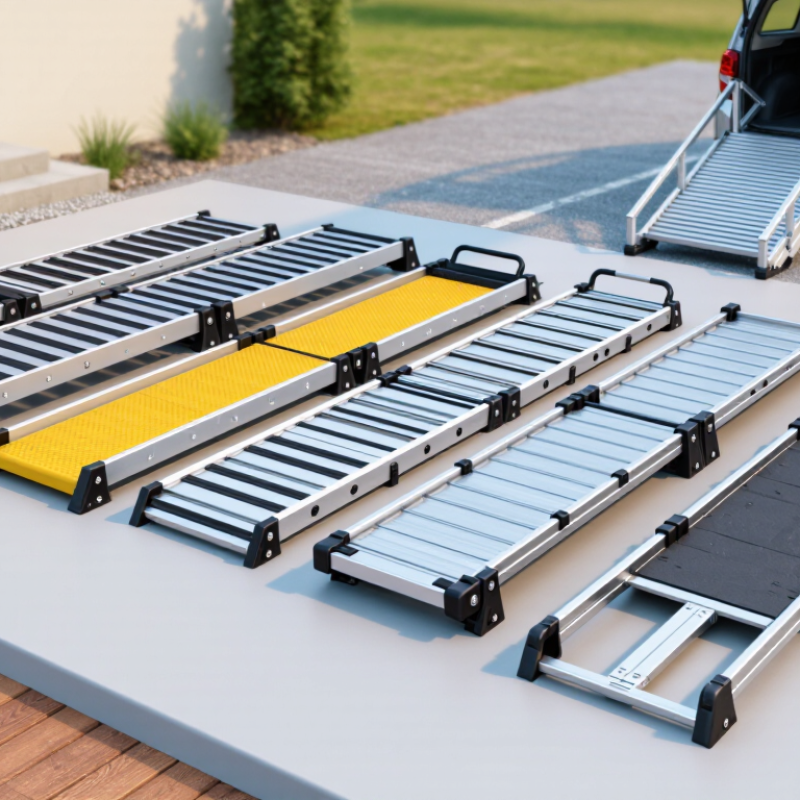
7 Best Foldable Wheelchair Ramps for Easy Access?

What Makes a Foldable Wheelchair Ramp Easy and Safe to Use

A foldable wheelchair ramp is easy to use when setup feels predictable, not merely lightweight. Look for carry handles, secure hinges, and a surface that remains firm in wet weather. The ramp should open without pinched fingers or sudden movement. Check its load rating carefully, including the wheelchair, user, and personal items. Measure the step height before choosing a ramp. A short ramp can feel steep and difficult to control. A qualified accessibility professional can help assess challenging entrances, especially where thresholds, narrow doors, or uneven ground are involved.

Safety depends on small details. Place the top lip fully against the threshold, and keep both lower ends flat on the ground. Gravel, loose mats, and rain can reduce stability. Inspect hinges, locking parts, and the walking surface before every use. I still find myself rechecking the ramp after a careful setup. My checklist is not flawless, but repeated checks prevent careless mistakes. A quiet test with an empty chair can reveal movement before someone rides over it.

Tips: Choose a ramp that one person can carry comfortably. Practice folding it in a clear area. Keep fingers away from the hinges. Ask another person to watch the first setup. Never ignore a rocking edge, even when the distance seems small. Store the ramp dry, and replace damaged parts according to the instructions.

7 Best Foldable Wheelchair Ramps for Easy Access? — What Makes a Foldable Wheelchair Ramp Easy and Safe to Use
Ramp Type Open Length Usable Width Approx. Folded Size Ramp Weight Typical Capacity Suggested Rise at 1:12 Safety and Best-Use Features
1. Threshold Foldable Ramp 24 in (61 cm) 27–29 in (69–74 cm) 24 × 14 × 3 in 6–9 lb 600 lb Up to 2 in Best for door thresholds and small lips; beveled ends, a high-friction surface, and a support lip help reduce movement and wheel impact.
2. Two-Foot Single-Fold Ramp 24 in (61 cm) 29–30 in (74–76 cm) 24 × 15 × 3 in 12–16 lb 600 lb Up to 2 in A portable choice for low steps; full-length side curbs, locking hinges, and carry handles improve stability and transport.
3. Three-Foot Multi-Fold Ramp 36 in (91 cm) 29–30 in (74–76 cm) 36 × 15 × 4 in 18–23 lb 600 lb Up to 3 in Suitable for curbs and shallow steps; a textured, non-slip deck and raised edges help keep wheelchair tires aligned.
4. Four-Foot Suitcase-Style Ramp 48 in (122 cm) 29–30 in (74–76 cm) 48 × 15 × 4 in 25–32 lb 600 lb Up to 4 in A practical balance of length and portability; locking mechanisms, safety curbs, and a stable top transition support regular home use.
5. Five-Foot Tri-Fold Ramp 60 in (152 cm) 29–30 in (74–76 cm) 30 × 15 × 7 in 34–42 lb 800 lb Up to 5 in Offers a gentler approach for higher steps; multiple locking points, anti-slip traction, and reinforced side rails improve confidence during use.
6. Six-Foot Bi-Fold Ramp 72 in (183 cm) 29–30 in (74–76 cm) 72 × 15 × 4 in 38–48 lb 800 lb Up to 6 in Helpful where a longer, smoother transition is needed; a center hinge lock, extended side curbs, and a secure upper lip are important.
7. Eight-Foot Multi-Fold Ramp 96 in (244 cm) 29–30 in (74–76 cm) 48 × 15 × 8 in 50–65 lb 800 lb Up to 8 in Designed for taller rises when vehicle and storage space allow; choose reinforced hinges, continuous side curbs, strong end plates, and a slip-resistant surface.
Safety note: Dimensions, weights, and load ratings shown are typical ranges for portable foldable ramps and can vary by construction and configuration. Confirm the ramp’s actual rating, usable width, hinge locks, and surface condition before use. For a smoother and safer approach, a 1:12 slope is commonly used as a planning guideline where space permits; always follow local accessibility requirements and the manufacturer’s instructions.

Key Features to Compare Before Choosing a Portable Ramp

Choosing among the seven best foldable wheelchair ramps requires more than checking price or appearance. Start with the ramp’s length, width, and rated load capacity. A longer ramp usually creates a gentler incline, but it may be heavier to carry. Confirm that the clear width fits the wheelchair wheels and hand rims. Some ramps look wide enough, yet their raised edges reduce usable space.

In practice, folding design affects daily convenience. Look for secure hinges, a comfortable carrying handle, and locking straps that prevent accidental opening. The surface should provide traction in light rain, while the edges should guide the wheels without catching them. Check whether the ramp rests firmly on the vehicle, step, or threshold. Never rely only on a product photograph. Read the technical measurements and inspect the setup instructions. Small differences matter.

Tips: Measure the exact rise before choosing a length. Test the ramp on a flat surface first. Ask another adult to steady it during initial use. Check the weight rating against the user, wheelchair, and any carried items. Avoid ramps that flex noticeably under load. A lighter model may be easier to transport, but it can feel less stable. No ramp is perfect. Reconsider your choice if setup feels rushed, awkward, or uncertain.

Seven Foldable Wheelchair Ramp Types for Different Access Needs

Foldable wheelchair ramps solve different access problems, not one universal problem. Choosing well means matching ramp design with doorway height, chair weight, storage space, and user strength. Single-fold ramps suit short steps and vehicles. They open like a book and provide a broad, continuous surface. Bi-fold ramps add length while folding into a narrower package. They work well at porch edges, but their center hinge needs careful inspection. Tri-fold ramps reduce carrying length further, although their extra hinges may feel less stable. Use them only on firm, level ground.

Multi-fold ramps offer greater length in a compact bundle. They can help with higher thresholds, but setup takes more time. Telescoping ramps collapse into slim sections and suit travelers with limited storage. Their tracks must stay aligned. Suitcase ramps include carrying handles and sometimes support legs. These legs improve stability on uneven approaches, yet they add weight. Folding threshold ramps bridge small door lips and sliding tracks. They are convenient indoors, but they cannot replace a longer ramp for stairs.

Measure the rise before choosing any type. Check the ramp’s rated load, surface texture, edge protection, and locking points. A lightweight ramp is not always the safest ramp. That is easy to forget. Keep both ends fully supported, and inspect hinges before every use. I would also test the setup with an empty chair first, because real access conditions can expose awkward angles or slippery surfaces. Local accessibility guidance may set additional requirements.

7 Best Foldable Wheelchair Ramps for Easy Access

Typical usable ramp length by foldable ramp type

Longer ramps generally provide a gentler approach and are better suited to steps, vehicle loading, and raised entrances. Threshold ramps are designed for small lips or door tracks, while suitcase, bi-fold, tri-fold, multi-fold, telescoping, and wide-platform ramps offer increasing flexibility for portable access. Actual capacity, width, slope, and surface conditions should always be checked before use.

How to Select the Right Ramp Length, Weight Capacity, and Surface

Choosing among the seven best foldable wheelchair ramps starts with measurements, not appearance. Measure the step from the ground to the threshold. The 2010 ADA Standards use a 1:12 slope as an accessibility benchmark. Therefore, a 12-inch rise generally needs a 12-foot ramp. An 8-inch rise needs about 8 feet. Portable ramps can be shorter, but the slope becomes steeper and harder to manage. It depends.

Weight capacity requires careful calculation. Add the wheelchair, user, and carried items together. Then choose a ramp with a meaningful safety margin, rather than matching the advertised minimum. The U.S. Access Board stresses that accessible routes must support expected wheelchair traffic and remain stable. A ramp that flexes under pressure can feel unsafe, even when its rating looks sufficient. The WHO’s Global Report on Health Equity for Persons with Disabilities estimates that 1.3 billion people experience significant disability worldwide, so dependable access equipment matters far beyond occasional convenience.

Surface design affects real-world control. Look for raised traction patterns, secure edge protection, and materials that remain grippy after light rain. Test the ramp with the actual wheelchair, because small front casters may catch on gaps or raised seams. A lighter ramp is easier to carry, but it may vibrate more on uneven pavement. That trade-off deserves honest thought. The CDC reports that roughly one in four U.S. adults has a disability, yet many homes still have awkward thresholds and limited storage space. Foldable convenience should never replace correct length, stable support, and confident handling.

Safe Setup, Storage, and Maintenance for Foldable Wheelchair Ramps

Safe Setup, Storage, and Maintenance for Foldable Wheelchair Ramps

The CDC’s Disability and Health Data System reports that about one in four U.S. adults has a disability. Reliable access equipment matters. The WHO Global Report on Health Equity for Persons with Disabilities also identifies inaccessible environments as a major barrier to daily participation. A foldable wheelchair ramp can help, but only when installed carefully. Measure the doorway rise before choosing among seven ramp styles. The ADA Standards commonly use a 1:12 slope guideline, meaning 12 inches of ramp length for each inch of rise. Follow the ramp’s instructions and local accessibility requirements.

Place both ends on firm, level surfaces. Check that the ramp cannot slide, lift, or twist. Keep its side edges aligned with the chair’s wheels. Confirm the stated weight capacity includes the wheelchair, user, and carried items. Small gaps near a threshold can catch casters. Wet metal can become surprisingly slick. Test the ramp slowly before regular use.

Tips: Inspect hinges, pins, fasteners, and traction strips before every use. Remove mud with mild soap, then dry the ramp fully. Store it folded in a dry area, away from heat and standing water. Do not stack heavy items on it. I still recheck the locks, even after a smooth setup. That habit feels repetitive, but skipped checks create avoidable risk. Replace damaged parts through qualified service support rather than improvising repairs.

FAQS

How do I choose the correct ramp length?

Measure the vertical rise from the ground to the threshold. A 12-inch rise generally needs about 12 feet for a gentler slope. Shorter ramps may fit storage better, but they feel steeper. That trade-off deserves honest thought.

What load capacity should a foldable ramp have?

Add the wheelchair, user, and personal items together. Choose a rating with a clear safety margin. Do not match the advertised minimum exactly. A ramp that flexes is a warning.

How can I check whether the ramp fits my wheelchair?

Compare the ramp’s clear width with the wheelchair’s wheels and hand rims. Raised edges reduce usable space. Test the actual wheelchair, especially if it has small front casters.

What features make folding and carrying easier?

Choose secure hinges, a useful handle, and locking straps. Practice folding it in an open area. Keep fingers away from moving hinges. Small details matter.

How should I position a ramp at a threshold?

Place the upper lip fully against the threshold. Keep both lower ends flat on the ground. Remove loose mats and unstable gravel. Rain can reduce grip and stability.

How can I test a ramp before someone rides over it?

Inspect the hinges, locks, and walking surface. Perform a quiet test with an empty chair. Ask another adult to watch the setup. I still recheck mine, because my checklist is not perfect.

What surface should a portable ramp have?

Look for traction patterns and protected edges. The surface should remain firm during light rain. Check for gaps or raised seams. A lighter ramp may vibrate on uneven pavement.

When should I seek additional accessibility advice?

Ask a qualified accessibility professional about narrow doors, high thresholds, or uneven ground. Reconsider the ramp if setup feels rushed or awkward. No ramp is perfect. Confidence can sometimes hide a poor choice.

Conclusion

Choosing the best Foldable Wheelchair Ramp begins with understanding how design affects safety, stability, and everyday convenience. This guide explains the features that make a portable ramp easy to use, including secure edge protection, a slip-resistant surface, reliable hinges, comfortable carrying handles, and a stable transition between levels. It also compares key factors such as ramp style, folded size, portability, weight capacity, and suitability for different entrances, vehicles, steps, and mobility equipment.

The article reviews seven common foldable wheelchair ramp types to help users match a ramp to their access needs. It also explains how to select the proper length and capacity by considering incline, available space, wheelchair dimensions, and total user weight. Finally, readers will learn safe setup practices, proper positioning, storage methods, and basic maintenance steps that help prevent damage and extend the ramp’s service life.

Ethan

Ethan

Ethan is a professional marketing specialist with a deep understanding of the company’s products, customers, and industry landscape. Through years of experience in product communication, market research, and content strategy, he transforms complex information into clear, practical, and engaging......