Choosing a Foldable Mobility Scooter in 2026 requires more than comparing prices and advertised travel distances. A reliable choice should match your daily movements, body support needs, storage space, and transport habits. Picture the real routine: lifting the scooter beside a car, rolling it through a narrow hallway, or using it across a supermarket floor. These details often matter more than impressive specifications. The lightest model may sacrifice stability. The longest-range model may be difficult to carry. There is no perfect scooter.
This guide examines practical factors, including folded size, total weight, seat comfort, turning radius, battery design, charging time, and braking performance. It also considers manufacturer documentation, warranty coverage, replacement parts, and qualified after-sales support. Check the user manual carefully, because published measurements may exclude baskets, armrests, or batteries. That small difference can affect storage and transport. Test the controls before purchase whenever possible. Your hands should reach them naturally, and the throttle should respond smoothly without sudden movement. I have found that convenience is easy to overestimate when viewing product photos. Real floors are uneven. Doorways are narrower than expected. A careful decision also means accepting personal limits and asking a healthcare professional or mobility specialist for advice when needed. The goal is not to find the most advanced Foldable Mobility Scooter, but one that feels secure, manageable, and dependable in your everyday life.
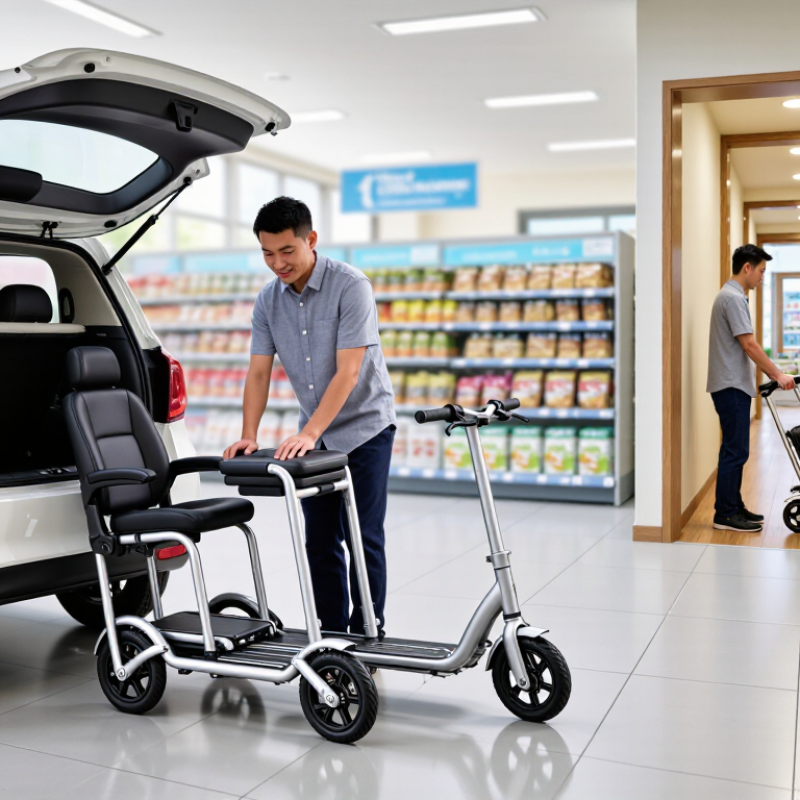
Define Your Mobility Needs and Daily Travel Conditions
Choosing a foldable mobility scooter in 2026 should begin with your daily movement, not a feature list. Ask how far you travel on an ordinary day. A short indoor trip needs different support from a three-mile outdoor commute. Measure doorways, lift entrances, and the storage space beside your bed. Small details matter.
Consider your real travel conditions. Smooth shopping floors are easier than cracked pavements, steep ramps, or wet paths. Check the scooter’s safe weight capacity, turning radius, ground clearance, and battery range. Treat advertised range carefully. Cold weather, hills, user weight, and frequent stops can reduce performance. A model that seems suitable on paper may struggle near your home.
Portability also depends on your strength. Can you fold it without twisting your back? Can you lift its heaviest section into a vehicle? Try the controls while wearing the shoes and gloves you normally use. Test the seat height and braking response. A short trial is valuable, though it may not reveal every weakness. If balance, pain, or fatigue changes often, discuss your needs with a qualified healthcare professional. Keep chargers dry, inspect tyres regularly, and allow extra range for an unplanned delay.
Compare Scooter Types, Folding Designs, and Portability Features
How to Choose a Foldable Mobility Scooter in 2026?
The WHO and UNICEF Global Report on Assistive Technology (2022) estimates that 2.5 billion people need assistive products worldwide. That figure may exceed 3.5 billion by 2050. Demand is rising, but convenience should not replace safe fitting.
Three-wheel scooters usually turn tightly in shops and narrow hallways. Four-wheel models offer steadier handling on uneven pavements. Folding scooters prioritize storage, often using one-piece folding frames or removable sections. One-piece designs open quickly beside a car. Removable designs can reduce lifting weight, but assembly takes extra time. Check the folded height against your vehicle’s trunk opening. Measure twice.
Weight matters more than many buyers expect. A scooter weighing 25 kilograms may still feel difficult on stairs. Look for a centered carry handle, locking hinge, and wheels that roll when folded. A small turning circle helps indoors, while larger solid tires handle cracked sidewalks better. Battery range claims often use ideal laboratory conditions. Real distance falls with hills, cold weather, rider weight, and frequent stops. The Global Report also stresses that assistive products work best when matched to individual environments, not selected from specifications alone.
During a practical trial, sit for ten minutes and test the brake release, steering, and seat height. I once focused too heavily on folded size and overlooked lifting posture. That mistake is easy to repeat. Ask about battery transport rules before flying, because carrier requirements can change. Fold it yourself. Try it on a ramp. Then inspect whether the design remains manageable after repeated use.
Check Weight Capacity, Battery Range, and Charging Requirements
Choosing a foldable mobility scooter in 2026 starts with three practical questions: Can it carry you safely, travel far enough, and charge conveniently?
Check the maximum weight capacity carefully. It should cover your body weight, clothing, shopping, and any small bag. A scooter rated close to its limit may feel slower on ramps or uneven pavements. Leave a safety margin. The folded weight also matters. I once underestimated it and struggled to lift a scooter into a car. Try folding it before buying, if possible, and check whether the battery is removable.
Battery range needs realistic testing, not just a brochure figure. Published distances often assume a lightweight rider, flat ground, moderate speed, and a new battery. Hills, cold weather, frequent stops, and heavier loads can reduce range noticeably. Choose a model with extra range for your usual route. Measure the journey from your home to regular destinations. A simple map can prevent an expensive mistake.
Charging requirements deserve equal attention. Confirm the charging time, charger weight, socket type, and replacement cost. Check whether charging is possible at home without blocking walkways or creating trip hazards. Use the supplied charger and follow the manual’s instructions. Do not charge a damaged battery or leave charging equipment wet. Keep the battery within the recommended temperature range. I would also ask about battery availability and service support, because a scooter is not useful when its battery sits unavailable for weeks.
How to Choose a Foldable Mobility Scooter in 2026? - Check Weight Capacity, Battery Range, and Charging Requirements
Use the comparison below to match a foldable mobility scooter with your body weight, travel distance, storage space, and charging routine. Figures are typical planning ranges; always confirm the final specifications in the product manual.
| Foldable Scooter Type |
Typical User Weight Capacity |
Typical Scooter Weight |
Typical Battery Range |
Common Battery and Charger Requirements |
Typical Charging Time |
Best Use |
Important Selection Check |
| Ultra-light travel model |
100–115 kg
220–254 lb |
15–22 kg
33–49 lb |
8–15 km
5–9 miles |
24 V lithium-ion battery, commonly 10–12 Ah; dedicated 2–3 A charger; standard household outlet |
4–6 hours |
Short indoor trips, shopping centres, airports, and occasional vehicle transport |
Prioritise lifting weight, folded dimensions, airline and transport rules, and a secure locking mechanism |
| Compact everyday model |
115–136 kg
254–300 lb |
22–30 kg
49–66 lb |
12–24 km
7–15 miles |
24 V or 36 V lithium-ion battery, commonly 12–20 Ah; 2–4 A charger |
5–8 hours |
Daily indoor and outdoor use on level pavements and smooth paths |
Choose a rated capacity at least 10–15 kg above the user’s weight, including regular personal items |
| Long-range folding model |
120–150 kg
265–331 lb |
25–38 kg
55–84 lb |
20–35 km
12–22 miles |
36 V or 48 V lithium-ion battery, commonly 15–25 Ah; 3–5 A charger |
6–10 hours |
Longer outdoor journeys, parks, residential areas, and frequent daily use |
Compare tested range under realistic load; hills, cold weather, speed, tyre pressure, and rider weight reduce range |
| Heavy-duty folding model |
136–180 kg
300–397 lb |
30–45 kg
66–99 lb |
15–30 km
9–19 miles |
24 V, 36 V, or 48 V lithium-ion battery; higher-capacity charger may require 4–8 A output |
6–12 hours |
Users who need higher capacity, increased stability, and stronger outdoor performance |
Check seat width, frame capacity, turning radius, ramp rating, transport weight, and maximum safe gradient |
| Removable-battery model |
100–150 kg
220–331 lb |
18–35 kg
40–77 lb
Battery may be removable |
10–30 km
6–19 miles |
Removable lithium-ion battery with a model-specific charger; some systems allow charging away from the scooter |
4–10 hours |
Homes without garage outlets, apartment storage, and users who need convenient indoor charging |
Confirm battery removal weight, charging location, connector type, replacement cost, and transport restrictions |
| Air-travel-oriented model |
100–136 kg
220–300 lb |
15–28 kg
33–62 lb |
8–20 km
5–12 miles |
Usually lithium-ion; battery must be removable or documented according to airline and transport regulations |
4–8 hours |
Frequent air travel, cruises, hotels, and compact vehicle transport |
Obtain airline approval before travel; verify watt-hours, battery labelling, terminal protection, and carry-on rules |
2026 Buying Checklist
- Confirm the maximum user weight includes clothing, bags, shopping, and any detachable accessories.
- Choose a practical range that exceeds your usual round trip; a 25–30% reserve helps account for hills, weather, ageing batteries, and heavier loads.
- Measure doorways, lifts, vehicle boots, storage areas, and the folded scooter before purchasing.
- Check whether the quoted scooter weight includes the battery, seat, basket, and armrests.
- Use only the approved charger and verify that the charging voltage, connector, and battery chemistry match the scooter.
- Ask whether the battery is user-replaceable and whether replacement batteries are available for the expected service life.
- Review the manual for maximum gradient, ground clearance, turning radius, water-resistance limits, and braking requirements.
Evaluate Safety, Comfort, Controls, and Accessibility
Choosing a foldable mobility scooter in 2026 starts with safety, not folding speed. The WHO Global Report on Assistive Technology estimates that 2.5 billion people need assistive products worldwide. That need may exceed 3.5 billion by 2050. A scooter should offer stable braking, anti-tip protection, visible reflectors, and predictable speed control. Test it on a gentle slope, not only on a smooth showroom floor. Small wheels can struggle with pavement cracks and door thresholds.
Comfort affects safe driving. Check whether your knees fit without touching the tiller. Sit for ten minutes and notice pressure around your hips and lower back. The seat should support posture, while the tiller should adjust without forcing your shoulders forward. The lightest scooter is not automatically the safest. A heavier frame may feel steadier, but it can make folding and lifting difficult. This trade-off is easy to underestimate.
Controls must suit real hands, eyesight, and reaction speed. The NHS recommends considering grip, reach, and individual mobility needs when selecting equipment. Choose large, high-contrast buttons and a battery display that remains readable outdoors. Practice stopping, reversing, and turning in a narrow hallway. Accessibility also includes transport and storage. Confirm the folded size against your car boot, elevator, and home doorway. I would not trust a claimed travel range without testing it in cold weather, on slopes, and with the user’s actual weight. Manufacturers’ figures can be optimistic. Test carefully.
How to Choose a Foldable Mobility Scooter in 2026?
Evaluate Safety, Comfort, Controls, and Accessibility
The chart uses reference dimensions from the 2010 ADA Standards for accessible routes, doorways, turning spaces, and operable-part reach. Use these figures as access-screening checks, then verify each scooter’s braking performance, seat support, control usability, folded size, and real-world maneuverability before purchase.
Verify Transport Rules, Maintenance Needs, Warranty, and Total Cost
Choosing a foldable mobility scooter in 2026 requires more than checking its folded size. Verify current transport rules before paying a deposit. Airlines, rail services, and buses may limit battery chemistry, scooter weight, or luggage dimensions. Rules vary by operator and country. Ask for written approval, not a casual phone answer. Measure your vehicle’s boot with the seats upright. A scooter can fold neatly yet remain too heavy to lift safely. Test the release latch several times. Tiny details matter.
Maintenance needs should match your routine. Inspect tyres, brakes, steering, and folding joints every week. Keep charging contacts dry and follow the battery storage instructions. Ask how often professional servicing is recommended. Confirm whether replacement batteries remain available. A simple log with dates and mileage can reveal gradual problems. Do not ignore a squeak. It may be harmless, but guessing is poor maintenance.
Read warranty terms before purchase. Confirm coverage for the frame, motor, battery, charger, and electronics. Check exclusions for water damage, misuse, normal wear, and commercial use. Clarify who pays shipping and labour. Then calculate total cost, including servicing, spare batteries, ramps, and transport accessories. A lower price may hide expensive batteries or limited support. I might prefer stronger service access, but a heavier scooter could be difficult to lift. Recheck the figures after a real-world trial, if available.
FAQS
Three-wheel scooters turn tightly in shops and narrow hallways. Four-wheel models feel steadier on uneven pavements. Consider your usual routes, not only showroom space.
One-piece frames usually fold quickly beside a car. Removable sections can reduce lifting weight but require extra assembly. Try folding the scooter yourself. Measure twice.
Check the folded height against your vehicle’s boot opening. Measure with the seats upright. A compact scooter may still be too heavy or awkward to lift.
Include your body weight, clothing, shopping, and a small bag. Leave a safety margin above the maximum rating. A scooter near its limit may slow on ramps.
Treat published range as an ideal estimate. Hills, cold weather, frequent stops, and heavier loads reduce real distance. Map your regular journey and choose extra range.
Confirm charging time, charger weight, socket type, and replacement cost. Keep charging equipment dry and away from walkways. Do not charge a damaged battery.
Sit for ten minutes and test steering, braking, seat height, and the folding latch. Try a ramp and a tight turn. I once focused too much on folded size and missed lifting posture.
Ask transport operators for written approval before travelling. Check battery and luggage limits. Inspect tyres, brakes, steering, and folding joints weekly. Review coverage for the frame, motor, battery, charger, and electronics. A cheaper scooter may need costly batteries or limited service.
Conclusion
Choosing the right Foldable Mobility Scooter in 2026 begins with understanding your daily mobility needs, travel distance, terrain, storage space, and transportation habits. Compare scooter types and folding mechanisms to find a design that balances portability, stability, and ease of use. Pay close attention to weight capacity, battery range, charging time, and whether the battery can be conveniently removed or stored.
Safety and comfort are equally important. Look for dependable brakes, stable wheels, comfortable seating, easy-to-operate controls, and accessibility features that match your physical abilities. Before purchasing, confirm transportation requirements for cars, public transit, and air travel, and consider the scooter’s maintenance schedule, warranty coverage, replacement parts, and total ownership cost. A well-chosen Foldable Mobility Scooter should provide reliable everyday support while remaining practical to carry, store, charge, and maintain.