Expert insights, technical advice, and equipment selection guides for medical procurement and daily care.
Stainless steel construction and adjustable options engineered for safe patient transfers.
High load capacity portable designs for smooth and accessible patient transit.
Advanced pressure-relief air cushion technology for long-term seating protection.
Robust battery capacity and reclining options built for specialized clinical requirements.
China’s powered mobility industry is expanding as ageing populations and disability inclusion reshape global healthcare priorities. This makes the search for China’s top Reclining Power Wheelchair manufacturers increasingly practical.
The World Health Organization and UNICEF reported in their Global Report on Assistive Technology that more than 2.5 billion people need assistive products worldwide. That figure may exceed 3.5 billion by 2050. Yet access remains uneven, especially in low and middle-income markets. A reclining power wheelchair can support pressure relief, postural positioning, resting, and safer daily transfers when properly fitted.
The details matter.
Dr. Rory Cooper, a leading wheelchair researcher and founder of the Human Engineering Research Laboratories, has said, “A wheelchair is not a medical device. It is a mobility device.” His statement challenges buyers to assess real-life independence, not only motors or battery range.
This guide examines ten Chinese manufacturers through a practical lens. It considers manufacturing experience, tilt-and-recline mechanisms, seating customization, controller reliability, battery performance, clinical support, certifications, and export capability. Market reports from Fortune Business Insights and Grand View Research also identify powered mobility as a growing segment, driven by rehabilitation demand and older populations.
Still, a ranking is never perfect. Factory scale does not guarantee comfortable seating. A low price may conceal limited service support. Even attractive specifications can fail on steep ramps, narrow doorways, or uneven pavements. These manufacturers deserve comparison, not blind approval. The strongest choice depends on the user, caregiver, terrain, and long-term maintenance plan.
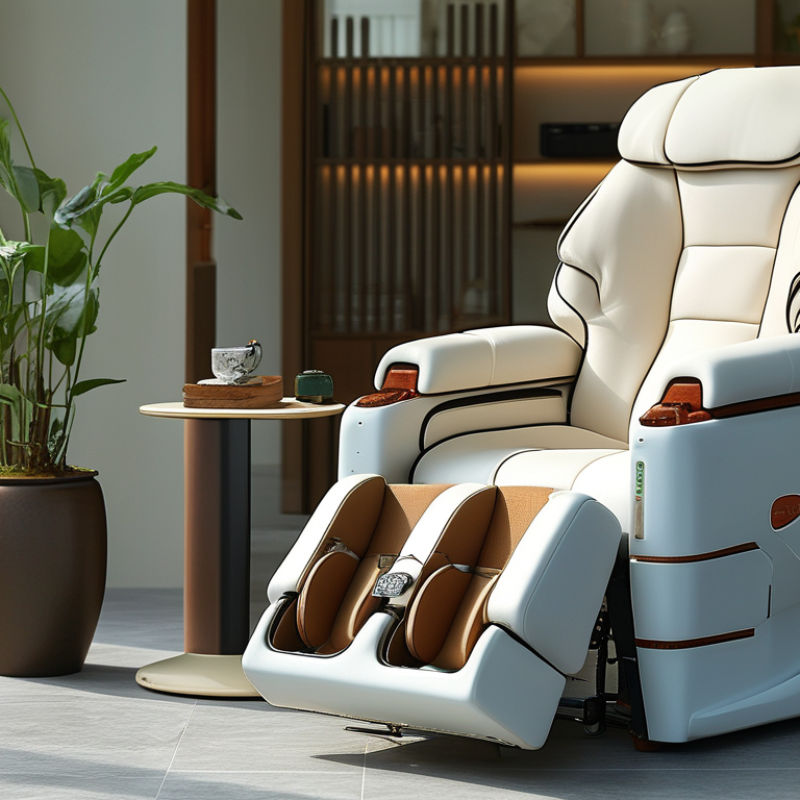
A reclining power wheelchair is a battery-powered mobility chair with a backrest that changes angle electronically. The user controls the movement through a joystick or separate switches. Unlike a standard power wheelchair, it can support a more open hip angle for rest, pressure management, or personal comfort.
Recline is not the same as tilt. Recline changes the backrest angle, while tilt moves the seat and back together. Some advanced chairs provide both functions, along with elevating leg rests and adjustable head support. During practical seating assessments, these features can reduce sliding and help maintain posture. However, poor adjustment may increase pressure under the pelvis or affect breathing. It is not a bed on wheels. A qualified therapist should check body measurements, skin condition, transfer ability, and daily surroundings before selection. The user manual also matters, even when the controls seem obvious.
Tips: Test the chair with everyday clothing and shoes. Check whether the footrests clear doorways. Ask how the battery performs during repeated reclining. Keep the head supported at full recline. Never assume maximum movement is safest. Small adjustments often work better. A careful trial may reveal an uncomfortable detail that product photos hide.
China Top 10 Reclining Power Wheelchair Manufacturers
China’s leading reclining power wheelchair manufacturers focus on practical comfort, dependable engineering, and consistent production. Their designs often combine powered reclining, adjustable leg rests, and pressure-relieving seat cushions. These features support users who remain seated for many hours.
Experienced manufacturers test frame strength, motor performance, braking response, and battery endurance before shipment. They also inspect welds, wiring, and controller connections during assembly. A quiet actuator matters in bedrooms and care facilities. So does smooth movement. Some factories offer seat widths, joystick positions, headrests, and cushion materials suited to different users. This flexibility shows technical understanding, not just mass production.
Reliable suppliers provide clear manuals, component traceability, and responsive after-sales support. Buyers should request test records, warranty terms, spare-part availability, and product photographs from real production lines. International compliance documents also deserve careful review. A polished catalog is useful, but it cannot replace evidence. One detail is easy to miss: battery charging guidance. Poor instructions may shorten battery life and create avoidable service problems. Lower prices can be attractive, yet cheaper actuators or weak upholstery may increase long-term costs. In my experience, factory communication reveals much about quality control. Still, communication alone is not proof. Independent inspection remains worthwhile, especially for large orders. No manufacturer gets every detail perfect, and thoughtful suppliers should accept questions, feedback, and design revisions.
The chart summarizes feature availability across a 10-product benchmark based on commonly published specifications for Chinese reclining power wheelchairs. Values show how many products explicitly list each feature.
Key takeaway: Safety systems, power recline, and elevating legrests are the most consistently advertised features, while tilt-in-space and lithium battery options appear less frequently across published product specifications.
China’s top ten reclining power wheelchair manufacturers are increasingly judged by engineering evidence, not catalogue size. The WHO and UNICEF Global Report on Assistive Technology estimates that more than 2.5 billion people need assistive products worldwide. That demand raises expectations for safe, adjustable mobility equipment.
Leading Chinese manufacturers typically offer powered recline, elevating leg rests, pressure-relief seating, and programmable control systems. A practical evaluation should examine ISO 7176 testing, battery range, frame fatigue results, and after-sales response. A 2024 Grand View Research report valued the global power wheelchair market at several billion US dollars and projected continued growth through the decade. However, market growth does not guarantee equal product quality.
Look closely at factory details. A reliable model should move smoothly on ramps, stop without sudden jolts, and maintain stability during full recline. Seat widths, cushion density, joystick sensitivity, and charger protection also matter in daily use. The Global Report on Assistive Technology notes that affordability and availability remain major barriers. This is easy to overlook.
The ranking can change by application. Hospitals may prefer infection-resistant upholstery and fleet support. Home users may value narrow turning circles and quieter motors. Some product claims still need stronger independent verification. Buyers should request test documents, warranty terms, sample units, and real user feedback before selecting among China’s top ten reclining power wheelchair manufacturers.
Comparing China’s top reclining power wheelchair manufacturers requires more than reading product rankings. Examine the chair as a daily mobility tool. Check the reclining angle, leg-rest movement, seat width, cushion support, and turning radius. A model may look comfortable in photographs but feel unstable on a narrow hallway turn. Ask for a complete specification sheet, not only a sales brochure.
Quality becomes clearer through evidence. Compare frame materials, motor ratings, battery capacity, controller response, and maximum user weight. Request sample testing under real conditions, including ramps, uneven floors, and repeated reclining cycles. Inspect welds, cable protection, wheel alignment, and emergency braking. Small details matter.
Also review warranty terms, spare-part availability, repair procedures, and factory traceability. A low purchase price can become expensive when one controller takes months to replace.
Certifications need careful verification. Look for an ISO 13485 quality-management certificate covering the actual manufacturing site. For European sales, check applicable CE conformity under the current medical-device rules, supported by a valid declaration and technical documentation. Relevant wheelchair and electrical safety test reports should identify the exact model, not a similar series. FDA registration, where applicable, is not the same as FDA approval. That distinction is often missed. An imperfect but transparent manufacturer can be more reliable than one offering impressive certificates without verifiable scope. Compare certificates, test dates, production samples, and after-sales answers side by side.
China Top 10 Reclining Power Wheelchair Manufacturers: Choosing the Right Manufacturer for Your Needs
A top-ten shortlist should begin with evidence, not polished catalog photos. The WHO and UNICEF Global Report on Assistive Technology (2022) estimates that more than 2.5 billion people need at least one assistive product. That figure may exceed 3.5 billion by 2050. Demand is growing, but quality still varies between factories. Ask each manufacturer for ISO 13485 certification, production records, and traceable component testing. Check whether the reclining mechanism follows relevant ISO 7176 wheelchair standards. Certification alone is not enough.
Request a working sample before signing a large order. Test the chair on ramps, uneven flooring, and tight indoor corners. Observe whether the backrest moves smoothly without pinching cables. Check battery range, charging time, seat width, cushion support, and emergency release access. A reliable supplier should provide load testing, electrical safety reports, user manuals, and spare-parts plans. It should also explain warranty response times in writing. Small details matter.
Talk with previous buyers when possible. Ask about failure rates after six months, not just delivery speed. The WHO Guidelines on the Provision of Manual Wheelchairs in Less-Resourced Settings stresses assessment, fitting, training, and follow-up. Those principles also apply to powered reclining chairs. I have found that factory videos can hide weak after-sales systems. A supplier may look highly professional and still lack local repair support. That risk deserves honest attention before comparing prices.
| No. | Evaluation Dimension | Recommended Evidence to Request | Relevant Requirement or Standard | Practical Selection Benchmark |
|---|---|---|---|---|
| 1 | Legal Manufacturer Verification | Business license, registered address, manufacturing scope, and factory ownership information. | The legal entity shown on commercial documents should match the entity responsible for production. | Prefer a manufacturer with a verifiable factory rather than an unidentified trading intermediary. |
| 2 | Product Classification | Product technical file, intended-use statement, model number, and applicable market classification. | Classification depends on the destination market and the intended medical or mobility use. | The supplier should clearly identify which model and configuration are covered by each certificate. |
| 3 | Reclining and Seating Function | Adjustment range, actuator specifications, operating controls, load limits, and safety-stop details. | The reclining mechanism should be tested for stability, pinch-point protection, and repeatable operation. | Request a live demonstration with the intended user weight and the complete seating configuration. |
| 4 | Performance Testing | Test reports for maximum speed, braking, gradient capability, obstacle climbing, and static stability. | ISO 7176 is a widely used series of standards covering wheelchair performance and safety tests. | Use independent or accredited laboratory reports that identify the exact model being purchased. |
| 5 | Electromagnetic Compatibility | EMC test report covering the wheelchair, controller, motors, and charger as a complete system. | ISO 7176-21 addresses electromagnetic compatibility for powered wheelchairs and scooters. | Avoid certificates that apply only to an individual component rather than the finished wheelchair. |
| 6 | Battery and Air-Transport Documentation | Battery chemistry, rated capacity, charger information, UN 38.3 test summary, and transport classification. | Lithium batteries transported by air generally require applicable dangerous-goods documentation. | Select a supplier able to provide current battery documents before shipment booking. |
| 7 | Safety and Fail-Safe Controls | Emergency stop behavior, anti-tip design, freewheel mode, parking brake performance, and controller fault response. | Safety functions should remain effective during power loss, controller faults, and manual pushing. | Require documented inspection procedures and a user manual written for the exact model. |
| 8 | Quality Management System | Quality certificate, incoming inspection records, final inspection checklist, and traceability procedure. | ISO 13485 is the internationally recognized quality-management standard for medical devices. | Check certificate validity, scope, issuing body, and whether the factory address is covered. |
| 9 | Customization and Compatibility | Available seat widths, cushion options, headrests, leg rests, control positions, and mounting interfaces. | Any customized configuration should be included in the quotation, drawings, risk review, and final inspection. | Choose a supplier that can issue a configuration sheet and a pre-production approval sample. |
| 10 | After-Sales Service and Spare Parts | Warranty terms, spare-parts list, repair instructions, response time, and technical-training plan. | Common service items include batteries, chargers, controllers, actuators, tires, armrests, and upholstery. | Prefer suppliers that guarantee parts availability and provide written technical support after delivery. |
Note: Certifications and test reports should be verified for the exact wheelchair model, configuration, destination market, and certificate validity period.
It is a battery-powered chair with an electronically adjustable backrest. Users operate it with a joystick or switches. It supports rest, comfort, and pressure management.
Reclining changes the backrest angle. Tilting moves the seat and back together. Some chairs offer both functions.
No, it is not a bed on wheels. Full recline still requires proper head support and careful positioning.
A qualified therapist should check body measurements, skin condition, transfers, posture, and breathing. Maximum movement is not always safest.
Test the chair with everyday clothing and shoes. Try ramps, uneven floors, tight corners, and repeated reclining. Check door clearance around the footrests.
Review frame strength, motor performance, braking, battery endurance, welds, wiring, and controller connections. Quiet, smooth actuators matter in bedrooms.
Request test records, electrical safety reports, manuals, warranty terms, and spare-parts plans. Ask for traceable components and relevant wheelchair standards.
Ask previous buyers about failures after six months. Confirm repair contacts and written response times. Factory videos can hide weak support systems.
No. Cheaper actuators or weak upholstery may create higher long-term costs. Still, an expensive chair is not automatically reliable.
Some offer different seat widths, joystick positions, headrests, leg rests, and cushion materials. Customization helps, but measurements must guide every change.
A Reclining Power Wheelchair is a powered mobility device designed to support users who need comfortable, adjustable seating throughout the day. Its reclining backrest, powered leg elevation, pressure-relief functions, stable frame, and intuitive controls can improve posture, relaxation, and everyday independence. China’s leading manufacturers typically focus on practical design, customizable configurations, reliable motors, durable materials, and user-friendly operation. They may also provide different seat sizes, battery options, control systems, and after-sales support to meet varied mobility requirements.
This overview introduces the top 10 Chinese reclining power wheelchair manufacturers by examining their product capabilities, manufacturing experience, quality management, customization services, and certification readiness. It also explains how buyers can compare product performance, safety testing, warranty terms, production capacity, communication efficiency, and long-term service. By assessing these factors alongside budget, intended use, user comfort, and delivery needs, customers can select a suitable manufacturer with greater confidence and establish a dependable purchasing partnership.