Healthcare Insights

Electronic Wheelchair & Mobility Solutions
Nuk Healthcare Articles & Guides

Expert insights, technical advice, and equipment selection guides for medical procurement and daily care.

Transfer & Care

Hydraulic Patient
Transfer & Hygiene Guides

Stainless steel construction and adjustable options engineered for safe patient transfers.

Accessibility

Foldable Aluminium
Ramp Solutions & Safety Tips

High load capacity portable designs for smooth and accessible patient transit.

Pressure Relief

Medical Air Cushion
Technology & Comfort Advice

Advanced pressure-relief air cushion technology for long-term seating protection.

Power Mobility

Heavy-Duty Electric
Wheelchairs for Demanding Use

Robust battery capacity and reclining options built for specialized clinical requirements.

0%

A Front Wheel Drive Power Chair places its main drive wheels at the front of the seating base. This design changes how the chair turns, climbs, and approaches obstacles. Larger front wheels can help cross small thresholds, uneven flooring, and carpet edges. The chair may also pivot effectively in tight indoor spaces. However, its trailing casters can swing outward during turns. Hallway width still matters.

The need is substantial. The WHO and UNICEF Global Report on Assistive Technology (2022) estimates that more than 2.5 billion people need at least one assistive product. That number could exceed 3.5 billion by 2050. WHO wheelchair provision guidance has also reported that only 5% to 15% of people needing wheelchairs receive one. These figures show why suitable power mobility requires more than attractive specifications.

Clinical assessment remains essential. A therapist may observe a user entering a kitchen, reaching a table, or crossing a doorway. Seat width, driving controls, leg positioning, battery range, and postural support can affect daily performance. ISO 7176 wheelchair standards provide structured methods for testing stability, braking, durability, and performance. Yet laboratory results cannot reproduce every apartment, sidewalk, or caregiver routine. That is where selection becomes personal, and sometimes imperfect.

A Front Wheel Drive Power Chair is not automatically the best option. It may suit users who need strong obstacle approach and responsive indoor handling. Others may prefer rear- or mid-wheel layouts for different stability and turning characteristics. Understanding the design helps buyers ask better questions before choosing equipment that must work beside beds, across thresholds, and through ordinary daily life.
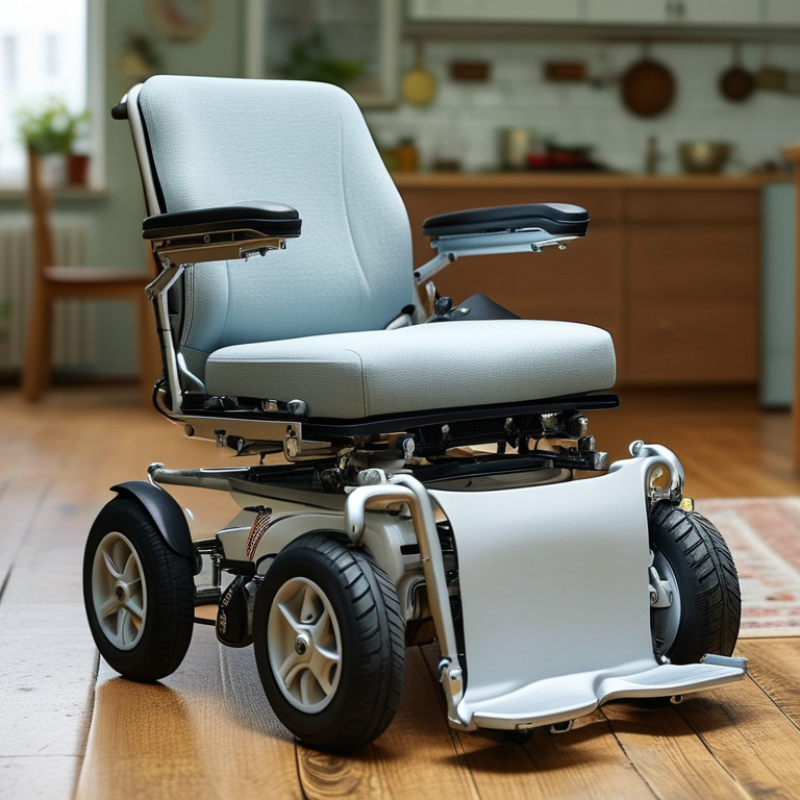
What Is a Front Wheel Drive Power Chair?

Definition and Core Features of a Front Wheel Drive Power Chair

What Is a Front Wheel Drive Power Chair?

Definition and Core Features of a Front Wheel Drive Power Chair

A front wheel drive power chair places its main drive wheels at the front of the frame. These wheels pull the chair forward, while smaller rear casters support the back. This layout can improve traction on small thresholds, ramps, and uneven flooring. It also gives the user a clearer view of the front wheels during close maneuvering.

The design has distinct handling characteristics. Front drive chairs often climb obstacles smoothly, but the rear may swing outward during turns. That movement can surprise new users near walls, tables, or doorframes.

Practice matters. A short trial in a familiar room can reveal more than a product description.

Core features usually include a programmable joystick, adjustable seating, batteries, suspension, and anti-tip protection. Seat tilt or recline may support pressure management and posture, depending on the configuration.

A qualified seating specialist should assess body support, foot position, transfer needs, and daily terrain. Measurements are important; a chair that feels comfortable for ten minutes may cause fatigue after several hours.

Weight, battery range, and maintenance access also deserve careful attention. The ideal setup is not always the most powerful one.

How the Front Wheel Drive System Operates

What Is a Front Wheel Drive Power Chair?

How the Front Wheel Drive System Operates

A front wheel drive power chair places its primary drive wheels ahead of the seat. Electric motors send torque directly to these wheels through a controller and joystick. When the user moves the joystick forward, both motors rotate together. During a turn, the controller changes each motor’s speed, allowing differential steering.

The front wheels pull the chair over common indoor surfaces. They approach small thresholds before the rear casters, which can improve traction on ramps and uneven flooring. The design also keeps the user’s weight behind the drive axle. That position can support stable forward movement, but it may reduce control on steep slopes. The rear end can swing outward during turns.

Watch the corners.

A fitting assessment should examine seat height, body weight, ramp gradients, and doorway width. These details influence torque, braking, and turning clearance. The World Health Organization and UNICEF reported in 2022 that more than 2.5 billion people need assistive products worldwide. Earlier WHO disability reporting estimated that only 5–15% of people needing wheelchairs had access to one in many low- and middle-income settings. These figures show why correct configuration matters, not merely motor power.

There is no perfect drive layout. Front wheel drive may feel unfamiliar at first, especially near furniture. Practice on dry, level flooring helps users learn the chair’s front swing and joystick response. A therapist or qualified mobility assessor should verify posture, stability, and safe operating limits before regular use.

Key Benefits and Possible Limitations

What Is a Front Wheel Drive Power Chair?

Key Benefits and Possible Limitations

A front wheel drive power chair places its main drive wheels ahead of the seat. The chair pulls the user forward, rather than pushing from behind. This layout can feel confident outdoors, especially when crossing small thresholds or firm grass. The larger front wheels often approach obstacles more smoothly than small front casters. On a daily trip, that may mean fewer jolts at doorways and pavement edges.

Indoor movement can also feel surprisingly capable. The chair can turn around furniture and position near a table with careful driving. It is not automatically better. Front-wheel drive models may need more space for sharp turns than mid-wheel designs. Their rear casters can swing outward, which matters in narrow hallways. A careless turn may catch a wall, chair leg, or doorway frame.

Uneven ground remains a serious limitation. A steep ramp, loose gravel, or a wet slope can reduce traction and steering control. Seat height, weight distribution, and tire condition change the experience considerably. Real-world trials often reveal problems that specifications miss. Try the chair in a hallway, over a threshold, and on a gentle outdoor slope. A qualified seating professional should check posture, leg support, turning clearance, and safe braking. One fitting mistake can cause daily discomfort. That detail is easy to underestimate.

Maneuverability Across Indoor and Outdoor Environments

What Is a Front Wheel Drive Power Chair?

Maneuverability Across Indoor and Outdoor Environments

A front wheel drive power chair places its main drive wheels near the front of the frame. This layout helps the chair climb small thresholds and cross uneven flooring with a steady approach. Inside a home, the longer front section may require extra turning space. However, the chair can often pivot smoothly around furniture and narrow corners. Measure doorways carefully. A few centimeters can change daily comfort.

Outdoor surfaces reveal more differences. Front drive wheels can provide useful traction on firm paths, compact gravel, and short grass. They also help the chair move over shallow surface changes without the rear casters catching first. Wet leaves, loose sand, and steep slopes still demand caution. Slow down before ramps. Keep both hands relaxed on the controls.

Seat height, tire size, suspension, and control sensitivity affect handling as much as the drive layout. A qualified seating professional should assess posture, reach, home access, and typical travel routes. Test the chair over thresholds, tight turns, and gentle outdoor slopes before making a decision. Some users may find the front end predictable, while others need practice with rear clearance. That difference matters. It is not a perfect design for every environment. A careful trial can expose awkward turning points that specifications fail to show.

Front-Wheel-Drive Power Chair: Maneuverability Reference Dimensions

Front-wheel-drive power chairs place the drive wheels toward the front, which can help the chair climb small obstacles and handle uneven outdoor surfaces. However, the front section may swing outward during tight turns, so users should allow adequate space in corridors, doorways, and turning areas. The reference dimensions shown are common accessibility clearances used when evaluating indoor and outdoor maneuverability.

Choosing the Right Front Wheel Drive Power Chair

What Is a Front Wheel Drive Power Chair?

Choosing the Right Front Wheel Drive Power Chair

A front wheel drive power chair places its main drive wheels near the front. This design can handle small obstacles with steady weight distribution. It also offers a tighter turning feel in many indoor spaces. Still, performance depends on the chair’s size, tires, suspension, and programming.

Measure your doorways, hallways, and favorite seating areas before choosing. A chair may turn well but still feel too long near a kitchen counter. Check the turning radius, seat width, footplate position, and maximum user weight. These details affect comfort and daily safety. Ask a qualified mobility professional to assess posture, transfers, and pressure-management needs.

Outdoor use requires closer attention. Look for suitable ground clearance, stable suspension, and batteries matched to your routine. Wet grass, gravel, and steep ramps can expose weaknesses quickly. Test the chair on surfaces you actually use, not only a showroom floor. That practical step matters.

Small details matter.

Consider joystick placement, seat elevation, and cushion support. A front-wheel drive model may climb thresholds smoothly, yet its rear section can swing during tight turns. This surprises some new users. Practice slowly around furniture and door frames. No chair fits every room perfectly, and I would not choose one from specifications alone. A supervised trial often reveals comfort problems that measurements miss. Have a technician confirm maintenance access, charging requirements, and local service availability before purchase.

FAQS

What is a front wheel drive power chair?

Its main drive wheels sit near the front of the frame. They pull the chair forward. Smaller rear casters support the back.

How does front wheel drive affect movement?

The front wheels can climb small thresholds smoothly. The rear may swing outward during turns. New users need practice near walls and doorframes.

Is this chair suitable for indoor use?

It can maneuver around furniture and narrow corners. However, its longer front section may need extra turning space. Measure doorways carefully.

How does it perform outdoors?

It may handle firm paths, compact gravel, and short grass well. Wet leaves, loose sand, and steep slopes require slower movement. Conditions matter.

What features should users consider?

Common features include a programmable joystick, adjustable seating, suspension, batteries, and anti-tip protection. Tilt or recline may support posture and pressure management.

Can the chair fit every user comfortably?

Not always. Seat height, foot position, posture, and transfer needs require careful assessment. A chair comfortable for ten minutes may cause fatigue later.

What should users test before choosing one?

Test doorways, thresholds, tight turns, and gentle slopes. Try familiar rooms first. A product description cannot reveal every awkward turning point.

Does front wheel drive remove handling problems?

No drive layout is perfect. It may improve traction but create rear-clearance challenges. Measure twice. Practice makes the movement easier.

Conclusion

A Front Wheel Drive Power Chair is a powered mobility device designed with its main drive wheels positioned at the front of the frame. This configuration influences how the chair turns, moves over obstacles, and supports the user during daily activities. Its core features may include powered seating functions, adjustable controls, supportive positioning options, and a compact design intended for personal mobility. The front-wheel drive system uses electric motors to propel the front wheels, while the rear casters follow and help maintain stability during movement.

This type of power chair can offer smooth indoor maneuverability, a tight turning experience, and improved traction on some outdoor surfaces. However, users may need to consider its wider turning path at the rear, performance on uneven terrain, transport requirements, and battery range. When choosing a Front Wheel Drive Power Chair, it is important to evaluate home layout, typical outdoor routes, seat comfort, control accessibility, weight capacity, ground clearance, and available support services. The best option should match the user’s lifestyle, mobility needs, and intended environment.

Charlotte

Charlotte

Charlotte is a highly experienced marketing professional dedicated to helping customers better understand the value, quality, and practical applications of our company’s products. With a strong understanding of market trends, customer needs, and product development, she combines strategic insight......