Featured Electric Mobility Scooters
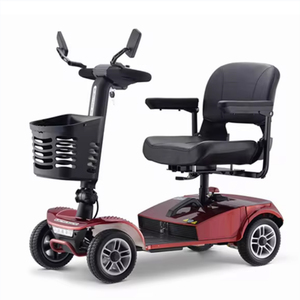
Travel 4 Wheeled Mobility Scooter Elderly Folding With Adjustable Seat Germany Standard
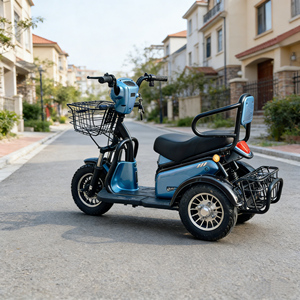
Holladay Factory Direct 500W Electric Tricycle 48V 20Ah 2 Person Mobility Scooter (40km Range)
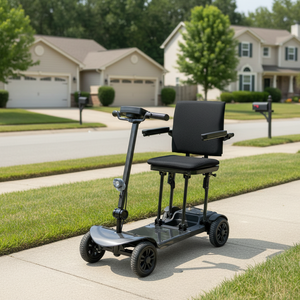
Customizable 4-Wheel Foldable Aluminum Alloy Mobility Scooter (Brushless Motor, 19mph)
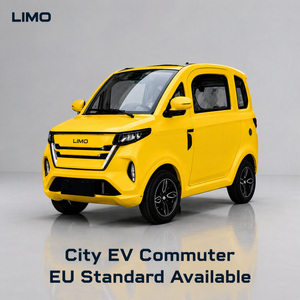
New Mini Electric Sedan 3-Seater Enclosed Mobility Scooter with EEC COC Certification
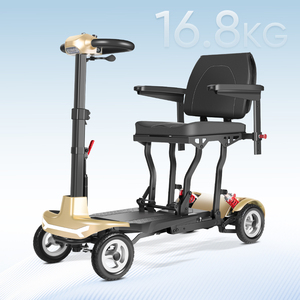
All-Terrain Lightweight Portable Electric Mobility Scooter for Elderly (Ultra-Foldable Frame)
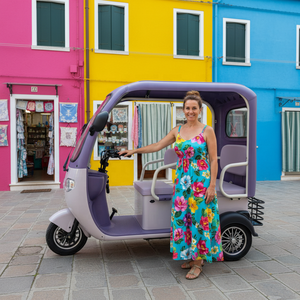
Holladay 650W Heavy-Duty Passenger 3-Wheel Electric Tricycle (Fat Tire, 48V Battery)
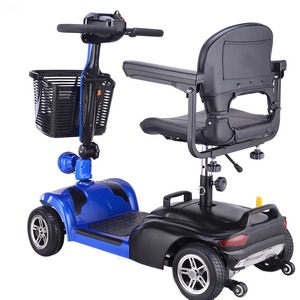
Four-Wheel Foldable Mobility Scooter for Elderly & Disabled (24V 800W Motor, 120kg Capacity)
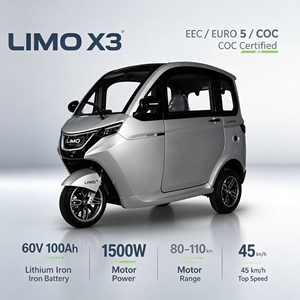
Europe Hot Sale EEC/COC Closed Cabin Electric Mobility Scooter Mini Passenger Vehicle
Executive Overview: China’s Role in Global Electric Mobility Manufacturing
The global personal mobility device sector is undergoing an unprecedented structural transformation. Driven by a rapidly aging global demographic, increasing urban accessibility mandates, and rapid advancements in electromobility powertrains, the demand for high-reliability mobility scooters, electric wheelchairs, and personal transportation tricycles has surged globally. Within this dynamic trade ecosystem, China stands as the undisputed center of gravity for mobility scooter manufacturing and supply chain intelligence. Producing over 70% of the world’s power-assisted mobility products, Chinese original equipment manufacturers (OEMs) and original design manufacturers (ODMs) have evolved far beyond low-cost assembly hubs into technological innovators, driving standards in motor efficiency, structural metallurgy, and intelligent battery management.
For global medical device distributors, healthcare procurement networks, regional brand owners, and mobility equipment importers, navigating China’s manufacturing landscape requires an analytical, data-driven framework. Sourcing high-quality mobility scooters involves evaluating critical variables: regulatory compliance (such as Medical Device Regulation MDR in Europe, FDA Class II registration in the US, and EEC/COC road-homologation standards), structural engineering, frame metallurgy, motor brush technology, control system integration (e.g., PG Drives Technology and Dynamic Controls), and total cost of ownership (TCO). This comprehensive industrial whitepaper provides global buyers with actionable intelligence, technical benchmarks, and strategic purchasing frameworks necessary to partner with China's top mobility scooter manufacturers.
Enterprise Competence & Engineering Leadership
Building upon over 15 years of specialized experience in rehabilitation equipment distribution, medical engineering, and global logistics, our enterprise platform connects global buyers with state-of-the-art Chinese manufacturing facilities. Rooted in rigorous international quality management systems, our manufacturing and supply chain ecosystem operates under ISO 13485 (Medical Devices Quality Management Systems) and ISO 9001 certifications, ensuring that every mobility scooter leaving the production line delivers exceptional safety, longevity, and ergonomic performance.
Our enterprise infrastructure spans over 50,000 square meters of automated robotic welding workshops, modern surface treatment plants, specialized chassis fatigue testing labs, and environmental simulation chambers. By managing an expansive portfolio of over 500 active SKUs—ranging from ultra-lightweight 4-wheel folding travel scooters to fully enclosed 3-seater passenger electric vehicles—we empower global partners to capture diverse market segments with tailored solutions.
Automated Robotic Chassis Welding
Precision robotic TIG/MIG welding guarantees structural integrity, elimination of stress fractures, and consistent frame alignment across high-volume production runs using 7005/6061 aviation-grade aluminum alloys.
BMS & Powertrain Integration
Advanced proprietary Battery Management Systems (BMS) with overcharge, deep-discharge, thermal runaway protection, and intelligent cell-balancing algorithms engineered specifically for LiFePO4 and ternary lithium chemistry.
Complete Regulatory Homologation
Turnkey certification documentation including CE, UKCA, FDA 510(k), ISO 7176 series testing reports, and EEC/COC (Category L1e/L2e/L6e) homologation for European street-legal micro-mobility vehicles.
Future Procurement Trends in the Global Mobility Scooter Market (2025–2030)
As procurement managers and institutional buyers plan multi-year inventory cycles, understanding micro- and macro-technological trends is vital. Over the next five years, the mobility scooter industry will be defined by five primary technological shifts originating from leading Chinese manufacturing hubs:
1. Transition to High-Density Lithium-Ion & LiFePO4 Battery Chemistries
Historically dominated by heavy Sealed Lead-Acid (SLA) and AGM batteries, the market is rapidly migrating to Lithium Iron Phosphate (LiFePO4) and Nickel Manganese Cobalt (NMC) battery systems. LiFePO4 technology offers over 2,000 to 3,000 charge cycles—compared to just 300 to 500 cycles for traditional SLA—reducing the Total Cost of Ownership (TCO) for end-users while decreasing total vehicle net weight by up to 40%. Premium OEM suppliers in China now integrate modular, swappable lithium battery packs compliant with UN38.3 transport safety regulations, allowing effortless air travel compliance for portable folding models.
2. Adoption of Brushless Permanent Magnet Motors (BLDC) & Electromagnetic Braking
Traditional brushed DC motors are being phased out in favor of high-torque, energy-efficient Brushless DC (BLDC) hub and transaxle motors. Coupled with regenerative intelligent electromagnetic braking systems (EMB), BLDC motors achieve energy efficiency rates exceeding 88%, reducing thermal degradation and virtually eliminating routine carbon brush maintenance. This transition allows lightweight travel scooters (24V 250W–350W) and heavy-duty 3/4-wheel vehicles (48V/60V 500W–800W) to achieve up to 30% greater range per charge cycle.
3. Smart Telematics, IoT Integration & App-Based Diagnostics
Next-generation mobility scooters are evolving into connected smart devices. Leading Chinese OEMs are integrating embedded CAN-bus communication modules, Bluetooth app connectivity, and GPS/4G telematics. Fleet operators, rehabilitation centers, and distributors can now remotely monitor battery health metrics, track vehicle location, diagnose controller error codes, and enforce geofencing boundaries in real time. Intelligent digital displays with auto-dimming LED screens are replacing analogue voltage dials across all vehicle classes.
4. Modular, Lightweight Aircraft Aluminum & Carbon-Composite Chassis
Weight optimization remains a chief criteria for end-user adoption, particularly in the folding travel scooter category. Innovative manufacturers in China are pioneering hydroformed 6061-T6 aluminum frames and structural carbon-fiber reinforced polymer (CFRP) subframes. This structural evolution enables 4-wheeled power scooters with 120kg weight capacities to achieve net frame weights under 20kg, allowing seamless loading into commercial airline overhead bins and automotive trunks without requiring external lifts.
5. Expansion of Fully Enclosed Micro-Mobility & Multi-Passenger Cabin Vehicles
Bridging the gap between traditional mobility scooters and passenger electric vehicles, enclosed mini electric sedans (3-seater and 2-seater configurations equipped with EEC COC credentials) represent the fastest-growing export segment. Featuring climate control (heating/air conditioning), rearview cameras, hydraulic disc brakes, and full lighting suites, these vehicles cater to seniors and mobility-impaired individuals requiring year-round, weather-protected transportation in suburban and rural European, South American, and Asian markets.
Technical Evaluation Checklist for B2B Mobility Scooter Buyers
When evaluating suppliers and placing commercial purchase orders, technical specifications must be cross-referenced against rigorous engineering metrics. Below is an essential comparative evaluation matrix used by leading global procurement teams:
| Evaluation Parameter | Standard / Low-End Specification | High-Grade OEM / Industry Benchmark | Procurement Advantage & Value Impact |
|---|---|---|---|
| Frame Metallurgy | Q235 Mild Structural Steel (Heavy) | 7005 / 6061-T6 Aviation Aluminum Alloy | Rustproof, 35% weight reduction, higher tensile yield strength. |
| Motor Technology | Brushed DC Transaxle Motor | High-Torque Brushless DC (BLDC) Motor | Zero brush wear, lower noise (<55dB), higher power density and range. |
| Braking System | Manual Drum / Mechanical Band Brake | Intelligent Regenerative Electromagnetic Brake | Automatic fail-safe stopping on inclines upon joystick release. |
| Speed Controller | Generic Unbranded Analog Controller | PG Drives / Dynamic / Curtis Digital Controller | Smooth acceleration curves, precise turning control, programmable diagnostics. |
| Battery Chemistry | SLA / Lead-Acid (300 Cycles) | LiFePO4 Lithium (2000+ Cycles, UN38.3 certified) | Extended lifespan, 60% lighter, fast 2-4 hr charging capability. |
| Certification Scope | Basic Factory CE Declaration | ISO 13485, EN 12184, FDA 510(k), EEC/COC | Unrestricted customs clearance and medical device reimbursement eligibility. |
Why Partner With Top Chinese Manufacturers: OEM & ODM Sourcing Strategic Advantages
Establishing a direct OEM or ODM manufacturing partnership in China offers global distributors significant commercial leverage. Through streamlined vertical integration—where frame extrusions, plastic injection tooling, wiring harnesses, and PCB assembly occur within localized industrial clusters (such as Zhejiang, Jiangsu, and Guangdong provinces)—Chinese suppliers deliver unmatched production agility and cost optimization.
Customization (OEM/ODM Flexibility): Top-tier Chinese partners offer extensive bespoke customization options. Overseas brands can specify tailored color palettes, custom tooling for ABS body shrouds, ergonomic seating foam densities, bespoke brand packaging, and customized controller firmware profiles to comply with local speed regulations (e.g., UK 4mph pavement / 8mph road regulations).
Quality Control Protocols: Industry-leading factories employ multi-stage Quality Assurance (QA) protocols. These include 100% dynamic chassis load testing on dual-drum chassis dynamometers, salt-spray corrosion testing for metallic components, rain/waterproof ingress testing (IPX4 to IPX6 standards), and automated battery cell sorting to guarantee voltage uniformity across multi-cell packs.
Frequently Asked Questions (FAQ) for B2B Mobility Scooter Procurement
What are the critical certifications required to import mobility scooters into Europe and North America?
For Western markets, compliance varies by product classification. In the European Union, standard medical mobility scooters require CE marking under the Medical Device Regulation (MDR 2017/745) and compliance with EN 12184 safety testing standards. If the scooter is a enclosed passenger tricycle intended for road use, it must possess EEC/COC (Whole Vehicle Type Approval) under EU Regulation 168/2013. In the United States, medical scooters fall under FDA Class II (21 CFR 890.3800) requiring 510(k) clearance or exempt listing under strict ISO 7176 standards.
What is the typical Minimum Order Quantity (MOQ) and lead time for OEM orders?
Standard factory MOQs for custom-branded OEM mobility scooters generally range from 20 units to 50 units (or one 20ft LCL/FCL container). For in-stock standard models, smaller trial orders of 5 to 10 units are often accommodated. Production lead times average 25 to 35 days post-sample approval, with sample prototype development taking approximately 10 to 15 days depending on the degree of custom tooling required.
How do lithium battery regulations affect international ocean and air freight logistics?
Lithium-ion batteries are classified as Class 9 Dangerous Goods under international transport regulations. To export legally, batteries must hold UN38.3 test reports, Material Safety Data Sheets (MSDS), and Dangerous Goods (DG) sea/air transport certification. Leading Chinese suppliers provide fully certified battery packs alongside compliant UN-approved hazardous materials packaging, ensuring seamless clearance at departure and destination ports.
What warranty structures and spare parts availability are typically offered to distributors?
Reputable manufacturers provide a 2-year to 3-year structural warranty on main chassis frames, and a 12-month to 18-month warranty on core electronic components (controllers, BLDC motors, chargers, and lithium battery packs). As part of wholesale agreements, suppliers routinely provide 2% to 3% complimentary fast-moving spare parts (such as tires, joysticks, fuses, and cable harnesses) with every full container shipment to support regional after-sales maintenance.
Can Chinese mobility scooter manufacturers assist with custom tooling and private label branding?
Yes. Full-service ODM factories offer end-to-end industrial design, 3D CAD modeling, rapid prototyping, and injection mold development for custom ABS plastic body panels and aluminum chassis. Private labeling—including silk-screen logo printing, branded user manuals, custom serial number barcoding, and bespoke box artwork—is standard practice across export orders.
Accelerate Your Mobility Equipment Supply Chain Today
Connect directly with our senior engineering and export consultation team. Whether you require custom OEM/ODM development, bulk container pricing, or technical compliance documentation, we provide turnkey support within 24 hours.