Top-Rated Medical Walker & Assisted Mobility Products
As global healthcare systems shift toward empowering patient independence and active post-acute rehabilitation, selecting the optimal medical walker and specialized mobility solution is vital for procurement officers, medical distributors, and hospital supply managers. Below is our curated, clinically engineered lineup of high-capacity medical walkers, electric transfer mobility chairs, and heavy-duty bariatric mobility systems manufactured to conform with rigorous international standards including CE, FDA, and ISO 13485.
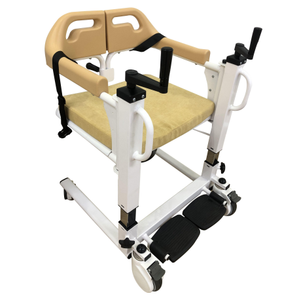
Hot Sale Factory Manufacturer Electric Bathroom Commode Transfer Wheelchair From Dragon Medical
Multi-functional electric transfer assistant featuring dual-actuator height adjustment, waterproof IPX4 design, and seamless patient transfer capabilities for clinical and home care settings.
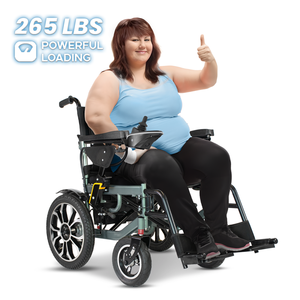
120kg Bariatric Electric Wheelchair Caremoving CMD-05 Folding Class II 58cm Wide 1 Year Warranty
Engineered with a reinforced chassis, 58cm ergonomic seat width, fold-in-seconds alloy framework, and Class II medical electrical safety certification for reliable mobility.
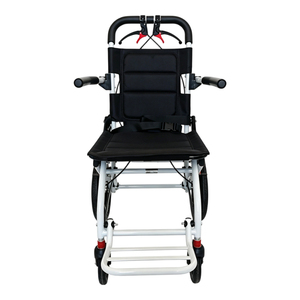
Heavy Duty Manual Wheelchair Foldable Bariatric Mobility Chair Wide Seat High Weight Capacity for Overweight Disabled Adults
High-strength carbon steel dual-crossbar construction designed to support overweight users up to 225kg with extended seat depth and anti-tipping safety mechanisms.
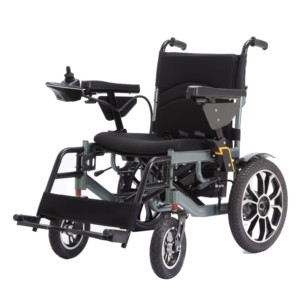
300kg Bariatric Electric Wheelchair CareMoving CMD05 250W Motor 58cm Wide Electric Wheelchair Max Load 120kg
Equipped with twin 250W brushless motors, dynamic electromagnetic braking, high-torque climbing capacity, and long-range lithium battery packs for rigorous institutional deployment.
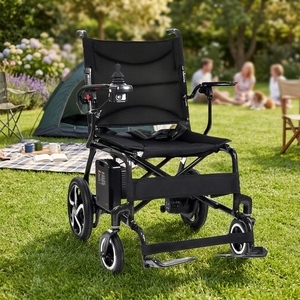
Electric Wheelchair Cheap Price Bariatric Wheel Chair Detachable Foldable Walk Electric Folding Wheelchair
Cost-effective hybrid walk-and-ride power mobility platform featuring detachable swing-away footrests, compact folding footprint, and intuitive 360-degree joystick control.
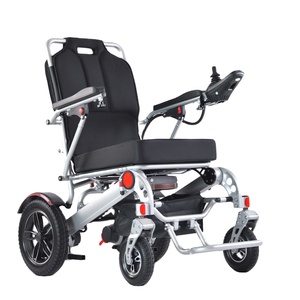
Big Size Customized Bariatric Heavy Duty Wheelchair Electric Folding Lightweight Power Travel Wheelchair
Custom-manufactured airline-approved travel power chair constructed from aircraft-grade aluminum alloy, delivering ultra-lightweight portability without sacrificing bariatric structural strength.
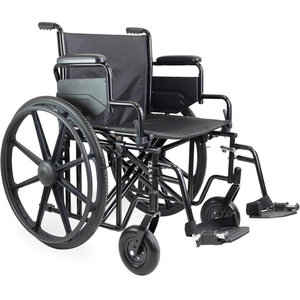
Heavy Duty Wheelchair (225kg) Wide Bariatric Folding Double Crossbar Steel Frame 3-Year Warranty PEPE Mobility P10038 Rotating
Premium B2B export edition with heavy-duty double crossbar steel tubing, rotating armrests for effortless lateral transfers, and backed by a comprehensive 3-year factory frame warranty.
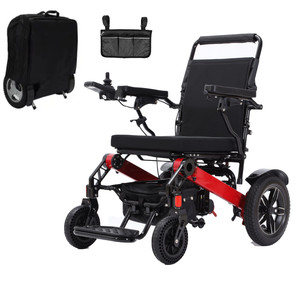
China Bariatric Power Wheelchair Scooters Motorized Wheel Chairs Compact Folding Electric Wheelchair
Compact motorized scooter-walker hybrid optimized for urban maneuvering, offering solid puncture-proof tires, ergonomic tiller control, and intelligent automatic speed braking.
Manufacturing Mastery & Quality Assurance Standards
China has established itself as the global epicenter for medical equipment manufacturing, driven by advanced robotic automation, comprehensive industrial supply chains, and stringent adherence to medical device directives. As leading medical walker suppliers and global exporters, our manufacturing framework is built on decades of empirical engineering experience, rigorous quality control, and verifiable clinical performance.
Precision Robotic Fabrication
Automated laser cutting and robotic welding arms ensure millimeter-precise frame geometry, eliminating micro-structural stress points in walker crossbars.
Global Regulatory Approvals
Full compliance documentation including FDA 510(k) clearances, CE MDR (EU 2017/745) certificates, and ISO 13485:2016 quality management audits.
Tailored OEM & ODM Capabilities
Custom seat widths, specialized brake lever tensioning, color anodization, and private-label packaging tailored to regional hospital tender requirements.
Macro Trends Shaping the Global Medical Walker Market (2025–2030)
The global medical walker and rollator market is experiencing a profound transformation. Driven by an accelerating silver economy—where over 1.2 billion people globally will be aged 60 or older by 2030—demand for assistive walking devices has expanded from basic post-surgical rehab to versatile, lifestyle-integrated mobility systems. Chinese manufacturers are pioneering several critical technology shifts:
1. Integration of Smart Gait-Assisting Electronics
Modern rollators and walking aids are no longer purely mechanical frameworks. Sourcing trends highlight an increasing shift toward electronic-assisted walkers featuring downhill auto-braking, slope speed compensation, and obstacle warning sensors. These smart features reduce fall risks by up to 42% among elderly users recovering from stroke or orthopedic surgery.
2. Transition to Ultra-Lightweight Carbon Fiber & Magnesium Alloys
While traditional medical walkers rely on heavy steel or standard anodized aluminum, next-generation exports leverage carbon fiber composite tubing. Carbon fiber rollators weigh under 5.2 kg while retaining structural static load capacities of over 150 kg, enabling easier vehicle loading for independent seniors.
3. Hybrid Walk-and-Transfer Assist Devices
The line between patient transfer chairs, power wheelchairs, and standard rollators is blurring. High-efficiency clinical facilities prefer multi-functional hybrid systems—such as our Electric Bathroom Commode Transfer Wheelchairs and dual-function motorized walker-chairs—to reduce total equipment procurement expenditures and streamline room turnover times.
| Specification Vector | Standard Manual Walker | Bariatric Heavy-Duty Walker | Smart Electric Transfer Walker |
|---|---|---|---|
| Primary Frame Alloy | 6061-T6 Aluminum Alloy | Dual-Crossbar Reinforced Steel | Hydroformed Alloy & Polymer Composite |
| Weight Capacity (Max Load) | 100 kg – 136 kg | 225 kg – 300 kg | 120 kg – 150 kg |
| Braking & Safety System | Loop-Lock Manual Cable Brakes | Reinforced Heavy-Duty Rear Push Brakes | Electromagnetic Auto-Park & Anti-Rollback |
| Folded Transport Depth | approx. 18 – 22 cm | approx. 25 – 30 cm | approx. 28 – 35 cm |
| Target Deployment Sector | Homecare & Standard Retail | Bariatric Care & Rehab Units | Assisted Living & Acute Care Hospitals |
Strategic Procurement Insights for Global Medical Importers
When procuring medical walkers and mobility devices in bulk from Chinese factories, purchasing directors must balance price competitiveness with regulatory risk mitigation. Key evaluation criteria for choosing a tier-1 supplier include:
Ensure suppliers provide third-party test reports for EN ISO 11199-2 (rollators) and ISO 11199-1 (walking frames), including dynamic brake durability over 50,000 actuations.
Work with factories that utilize knock-down (KD) packaging design. Optimizing box cubic volume can increase 40ft HQ container loading capacity by up to 35%, dramatically reducing per-unit freight costs.
Establish clear agreements for 2%–3% wear-and-tear spare parts (caster wheels, brake cables, rubber tips, handle grips) bundled with every FCL (Full Container Load) shipment.
Frequently Asked Questions (B2B Sourcing Guide)
Q1: What international quality compliance certifications do your medical walkers hold?
Our medical walkers, rollators, and patient transfer devices are manufactured under strict ISO 13485:2016 quality management systems. Individual product series carry CE marks under the EU Medical Device Regulation (MDR 2017/745), FDA 510(k) registration for North America, and compliance certificates for ISO 11199-2 requirements. Full compliance dossiers and test reports are provided during quotation.
Q2: What is the typical Minimum Order Quantity (MOQ) for OEM/customized orders?
For standard catalog items, our standard MOQ starts at 50 to 100 units. For customized OEM production—including bespoke frame colors, custom logo branding, specialized upholstery, or tailored carton dimensions—the standard MOQ is typically 200 units per model. Mixed-item full container loads (FCL) are welcomed to minimize logistics overhead.
Q3: How do you guarantee frame stability and bariatric load-bearing safety?
Bariatric models utilize double-crossbar structural designs engineered from heavy-gauge carbon steel or reinforced 6061 alloy tubing. Every frame configuration undergoes static load testing at 1.5 times the rated weight capacity (e.g., 337.5 kg testing for a 225 kg rated frame) along with dynamic tilt and drop testing before mass production sign-off.
Q4: Can we request pre-shipment sample evaluations for hospital tenders?
Yes. We routinely supply evaluation samples to medical distributors participating in government or private hospital tenders. Sample production typically takes 7 to 12 working days. Sample costs are fully credited back to your account upon placement of the first official container order.
Q5: What are your standard factory lead times and shipping terms?
Standard production lead time is 30 to 40 days following receipt of deposit and art approval. We support flexible Incoterms including FOB (Shanghai/Ningbo/Guangzhou), CIF, CFR, and DDP (Delivered Duty Paid) for clients seeking turnkey logistics management directly to their distribution warehouses.
Q6: What warranty coverage is provided for your electric and manual walker series?
We offer a 3-year structural warranty on walker frames and crossbars, and a 1-year warranty on electronic components (motors, controllers, actuators) and hydraulic transfer cylinders. Replacement spare parts are shipped promptly via express air freight for any warranty claims verified by our technical service team.