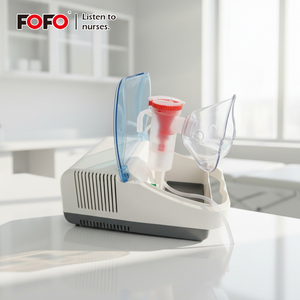
China Top Nebulizer Machine Manufacturers & Factory

Global B2B Wholesale Report & OEM/ODM Manufacturing Guide: Particle Science, Regulatory Compliance (CE/FDA/ISO 13485), and Technical Procurement Standards for Clinical & Home Care

Featured Product Catalog

Medical-Grade Nebulizer Machine Series

Factory-direct medical atomizers engineered with high precision respirable aerosol generation, compliant with international clinical standards.

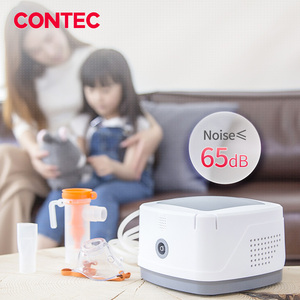
CONTEC NE-J01 Compressor Nebulizer Machine Hospital Use
Heavy-Duty Hospital Grade

CONTEC NE-J01 Hot Sell Compressor Nebulizer Machine Hospital Use

MMAD Sizing: < 3.0 μm
Max Pressure: ≥ 0.15 MPa
Duty Cycle: Continuous Operating
Inquire Now
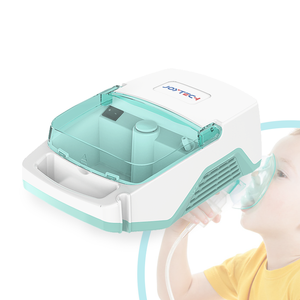
Air Compressor Nebulizer Homecare Portable Medical Ultrasonic Nebulizer Machine
Dual Respiratory Therapy

Air Compressor Nebulizer Homecare Portable Respiratory Therapy Ultrasonic Machine

Atomization Rate: ≥ 0.25 mL/min
Noise Level: ≤ 55 dB(A)
Target Use: Adult & Pediatric
Inquire Now
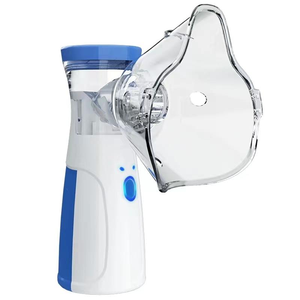
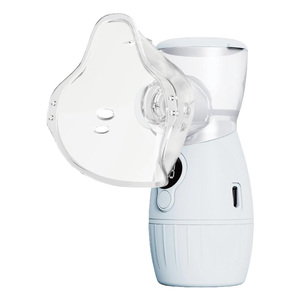
Handheld Portable Mesh Nebulizer Machine Mask for Adults and Kids
Vibrating Mesh Technology

Handheld Portable Mesh Nebulizer Machine Mask for Adults & Kids Medical Kit

Power System: USB / AA Battery
Residual Vol: ≤ 0.1 mL
Mesh Material: Titanium Alloy
Inquire Now
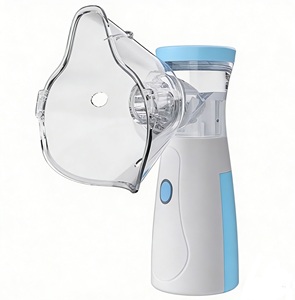
Factory Direct Portable Ultrasonic Nebulizer Silent Efficient Handheld
Whisper Silent Operation

Factory Direct Portable Ultrasonic Nebulizer Silent Efficient Handheld Atomizer

Acoustic Output: ≤ 25 dB
Weight: 98 grams (Ultra-Light)
Cup Capacity: 10 mL Auto-Shutoff
Inquire Now
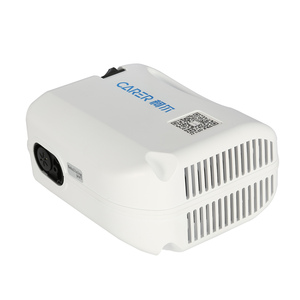
New Type Compressor Nebulizer With Mask Household Medical Portable
Next-Gen Piston Motor

New Type Compressor Nebulizer With Mask Household Medical Portable Inhaler

Airflow Rate: > 10 L/min
Operation: Oil-Free Piston Pump
Kit Included: Mask + Mouthpiece
Inquire Now
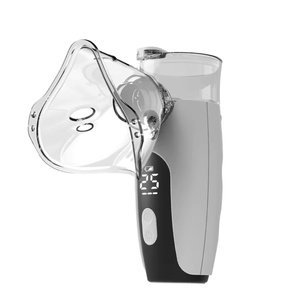
Mini Medical Nebulizer Portable Handheld Inhaler Mesh Nebulizer Machine
Pocket Size Micro-Mesh

Mini Medical Nebulizer Portable Handheld Inhaler Mesh Machine for Homecare

Vibration Freq: 110 kHz ± 10%
Cleaning: Self-Cleaning Mode
Certification: CE / ISO 13485
Inquire Now
Cheap Price CE Approved Class II Medical Electric Portable Compressor Nebulizer
Bulk OEM Choice

CE Approved Class II Medical Electric Portable Compressor Nebulizer Machine

Compliance: FDA / CE Class II
Motor Life: > 2000 Operating Hours
Supply Capability: 100k Units/Month
Inquire Now
Factory Handheld Mesh Portable Nebulizers Inhalateur Baby Adult Medical Mesh
Pediatric Ergonomic Series

Factory Handheld Mesh Portable Nebulizers Inhalateur Baby Adult Medical Kit

Safety Feature: Low Liquid Level Sensor
Angle Test: 360° Multi-Angle Inhalation
Material: BPA-Free Food Grade
Inquire Now

15+ Years

Medical Manufacturing E-E-A-T

ISO 13485

CE & FDA Cleanroom Certified

80+ Countries

Global Hospital Export Network

5,000,000+

Annual Production Capacity

B2B Procurement Whitepaper

Global Medical Nebulizer Supply Chain: Manufacturing Excellence & Technological Paradigms

An authoritative structural evaluation of aerosol therapy device engineering, compliance standards, and strategic sourcing for hospital procurement teams, medical device distributors, and private-label OEMs.

Respiratory disease management—spanning Asthma, Chronic Obstructive Pulmonary Disease (COPD), Bronchitis, and acute lower respiratory infections—demands rigorous precision in aerosolized drug delivery systems. As China consolidates its position as the global epicenter for medical device manufacturing, evaluating a China Top Nebulizer Machine Manufacturer requires examining aerosol science parameters, structural motor durability, polymer biocompatibility, and international regulatory alignment (FDA 510(k), CE MDR 2017/745, and ISO 13485:2016).

Modern inhalation therapy relies on targeted drug delivery directly to the tracheobronchial tree and alveolar regions. The therapeutic efficacy of an atomized drug solution hinges upon the Mass Median Aerodynamic Diameter (MMAD) and the total Respirable Fraction (RF) of particles generated under 5.0 micrometers. China’s premier manufacturing facilities have transitioned from legacy low-cost assembly to state-of-the-art automated production, utilizing micro-machined laser-drilled titanium mesh plates, oil-free high-pressure piston pumps, and automated acoustic acoustic testing chambers.

Core OEM/ODM Manufacturing Competencies

Leveraging over 15 years of certified medical device export infrastructure, global logistics compliance, and rigorous quality assurance.

ISO 13485 & GMP Cleanroom

Production lines operate under Class 100,000 cleanroom environments. Fully compliant with ISO 13485 Quality Management Systems and Medical Device Single Audit Program (MDSAP) benchmarks.

Precision Particle Calibration

Every production batch undergoes Malvern Laser Diffraction Particle Size Analysis, guaranteeing MMAD distribution strictly maintained between 1.5 μm and 3.0 μm for optimal alveolar deposition.

Global Regulatory Compliance

Full technical documentation (STED), CE Class IIa certification under EU MDR 2017/745, US FDA 510(k) clearances, and official IEC import/export licensing for smooth customs verification globally.

Turnkey OEM/ODM Customization

Comprehensive private-label packaging, customized mold tooling, PCB firmware customization, colorway branding, and specialized pediatric mask designs tailored to regional distributor requirements.

Continuous-Duty Reliability

Piston compressor units built with pure copper wire motors and thermal overload protection systems, tested for over 2,000 consecutive hours of clinical hospital operation without thermal degradation.
Technical Engineering Analysis

Nebulization Technologies: Compressor vs. Vibrating Mesh vs. Ultrasonic

Selecting the optimal nebulizer hardware platform for institutional procurement requires evaluating the biophysical mechanics of liquid atomization. China’s manufacturing sector offers three distinct architectural methodologies, each optimized for specific clinical applications, patient demographics, and chemical formulations.

Evaluation Parameter Piston Compressor Nebulizers Vibrating Mesh Nebulizers Ultrasonic Nebulizers
Operating Mechanism High-pressure compressed air creating Venturi vacuum effect Piezoelectric actuation vibrating micro-porous metal plate (110 kHz) High-frequency ultrasonic crystal waves creating liquid cavitation
Particle Size (MMAD) 2.0 μm – 4.0 μm (Bronchial target) 1.5 μm – 3.0 μm (Deep pulmonary) 4.0 μm – 8.0 μm (Upper airway)
Medication Compatibility All drugs: Steroids, Antibiotics, Suspension solutions, Mucolytics High compatibility; gentle on heat-sensitive protein biologics Limited; thermal degradation risk for thermolabile compounds
Residual Volume 0.5 mL – 1.0 mL ≤ 0.1 mL (Maximum drug efficiency) 0.8 mL – 1.5 mL
Acoustic Output (Noise) 50 dB(A) – 58 dB(A) ≤ 25 dB(A) (Ultra-silent) 35 dB(A) – 45 dB(A)
Portability & Power AC Powered (Mains outlet); robust desktop housing Lithium Battery / USB Powered; Handheld & Pocketable AC / Re-chargeable battery pack; Moderate portable size
Primary B2B Target Market Hospitals, Emergency Rooms, General Home Healthcare Pediatric Clinics, Travelers, High-End Homecare, ICU Clinical Humidification, Upper Respiratory Spas

Particle Sizing Kinetics: Why MMAD Matters in Clinical Sourcing

In medical aerosol physics, aerodynamic particle deposition is directly dictated by particle size. Procurement officers must verify manufacturer test certificates to prevent purchasing devices that deliver ineffective therapy:

  • Particles > 10 μm: Impact and deposit primarily in the mouth, pharynx, and upper larynx, causing localized side effects without therapeutic bronchial benefit.
  • Particles 5 μm – 10 μm: Deposit in the conducting airways and central tracheobronchial tract.
  • Particles 1 μm – 5 μm (Ideal Respirable Fraction): Deposit efficiently in the small airways and peripheral bronchioles. This is the optimal window provided by high-tier Chinese OEM manufacturers like CONTEC and certified medical factories.
  • Particles < 1 μm: Remain suspended in the inhaled gas stream and are exhaled back out during respiration without retention.
Strategic Market Outlook

Future Procurement Trends in Nebulizer Manufacturing (2025–2030)

Key technological shifts and market forces reshaping global B2B procurement across Chinese manufacturing hubs.

Smart IoT Integration & Connected Care

Next-generation mesh nebulizers are incorporating Bluetooth Low Energy (BLE) modules and micro-sensor telemetry. This allows healthcare providers to monitor patient compliance, track inhalation flow dynamics, and automatically transmit therapy logs directly to hospital EHR systems via smartphone applications.

Nanotechnology Micro-Porous Plates

Leading factories are replacing traditional laser-drilled stainless steel with laser-ablated titanium-nickel alloys and silicon micro-machined (MEMS) apertures. These plates feature over 4,000 tapered laser holes (down to 2.5 μm diameters), eliminating clogging risks while delivering higher durability against harsh cleaning chemicals.

Eco-Friendly Biocompatible Polymers

In response to EU environmental directives and global ESG mandates, manufacturers are phasing out phthalate-containing PVC masks and liquid chambers. Sourcing trends favor medical-grade Liquid Silicone Rubber (LSR) and bio-based Polypropylene (PP) that withstand repeat autoclave sterilization cycles without leaching.

Modular Multi-Function Respiratory Hubs

Procurement demand is shifting toward hybrid units that consolidate nebulization, nasal aspiration (mucus suction), and positive expiratory pressure (PEP) therapy into a single compact housing, offering higher value for homecare distributors and pediatric care facilities.

Factory Selection Protocol

How to Audit a Nebulizer Manufacturer in China

Conducting due diligence on potential suppliers is essential for ensuring product safety, reducing warranty claim rates, and maintaining seamless regulatory clearance at destination ports. B2B buyers should evaluate manufacturers against a rigorous five-stage auditing framework:

1. Certificate Verification

Verify ISO 13485:2016 accreditation issued by an IAF-accredited notified body (such as TÜV SÜD, SGS, or BSI). Ensure CE certificates match the specific Nebulizer model numbers and fall under EU MDR Class IIa classification rather than self-declared Class I status.

2. In-Line Acoustic & Pressure Testing

Inspect the factory's quality control (QC) lines. Leading manufacturers utilize 100% automated acoustic testing boxes to measure motor decibel levels and digital manometer benches to verify air pressure (> 0.15 MPa) before units pass to packaging.

3. Life-Cycle Stress Testing

Inquire about Accelerated Life Testing (ALT) protocols. Premium OEM suppliers subject sample units to high-humidity (95% RH) and elevated temperature (50°C) burn-in chambers for 500 continuous hours to evaluate capacitor stability and diaphragm wear.

4. Biocompatibility Reports

Require full ISO 10993 test reports covering Cytotoxicity (ISO 10993-5), Sensitization (ISO 10993-10), and Intracutaneous Reactivity for all patient-contacting accessories, including PVC/silicone masks, tubing, and medicine cups.

Procurement Knowledge Base

Frequently Asked Questions (FAQ for B2B Buyers)

Expert responses to critical inquiries regarding wholesale orders, factory customizations, and shipping compliance.

Q1: What is the typical Minimum Order Quantity (MOQ) for OEM/ODM branding?

For standard stock models with factory packaging, MOQs start as low as 100 to 500 units. For customized logo printing, custom gift box artwork, and user manual localization, MOQ typically ranges between 1,000 and 2,000 units per model. Custom colorway housing molds usually require 3,000 units.

Q2: How do Chinese factories guarantee particle size compliance (MMAD)?

Reputable manufacturers use Malvern Spraytec or Next Generation Impactor (NGI) laser diffraction systems to test aerosol cloud output. Technical batches are calibrated to ensure over 80% of particles fall within the respirable 1 μm to 5 μm band, validated by batch-specific Certificates of Analysis (COA).

Q3: Can compressor nebulizers operate continuously in hospital wards?

Yes. Hospital-grade models (such as the CONTEC NE-J01 series) feature heavy-duty oil-free piston pumps engineered with high-grade copper windings and integrated thermal cut-off switches. These units are rated for continuous 24/7 clinical operation without motor overheating or pressure loss.

Q4: What is the average lead time for container-load B2B orders?

Standard lead time for a 20ft container (approx. 3,000–5,000 units) is 25 to 35 calendar days following artwork approval and deposit receipt. Sample orders or small batch trial shipments can be dispatched within 3 to 7 business days via air freight express.

Q5: Are mesh nebulizers susceptible to clogging, and how is this prevented?

Vibrating mesh plates can clog if viscous drugs (e.g., high-concentration mucolytics) or saline residue dry in the apertures. Modern designs feature automatic reverse-cleaning modes (vibrating the mesh at a specific frequency for 5 seconds) and utilize non-porous titanium mesh alloys to minimize protein adhesion.

Q6: Which certifications are required for importing Nebulizers into Europe and North America?

For entry into European Union member states, devices must possess CE marking under EU MDR 2017/745 (Class IIa medical device) along with a valid Declaration of Conformity. For the United States, FDA 510(k) clearance is required alongside facility registration under 21 CFR Part 820.

Ready to Source High-Performance Nebulizer Machines?

Partner directly with certified Chinese manufacturing facilities. Get factory-direct pricing, custom OEM quotes, and comprehensive technical compliance dossiers within 24 hours.