Recommended High-Performance Mobility & Transfer Equipment
Precision-engineered bariatric and clinical rehabilitation devices manufactured for global institutional distributors and medical healthcare providers.
1. Executive Summary & Market Intent Dynamics for OEM/ODM Quad Cane Sourcing
The global demand for advanced medical mobility aids has transitioned rapidly over the past decade. Driven by an expanding geriatric population worldwide, rising incidents of post-stroke neurological rehabilitation, and an increased clinical emphasis on bariatric patient safety, procurement teams at major medical distribution firms, hospital networks, and government healthcare agencies are demanding higher standards from OEM (Original Equipment Manufacturer) and ODM (Original Design Manufacturer) quad cane factories. A quad cane (quadripod cane) serves as an essential intermediate ambulation device between standard single-point walking sticks and rigid rollator walkers. Its four-point base footprint delivers superior mechanical stability, significantly reducing user fall risk during post-operative recovery or chronic mobility impairment.
For enterprise procurement officers and private-label brand owners, searching for an ideal OEM/ODM Quad Cane Factory extends beyond mere price-per-unit comparisons. Modern Search Quality Rater Guidelines emphasize high E-E-A-T (Experience, Expertise, Authoritativeness, and Trustworthiness) standards. Buyers must evaluate factories based on structural metallurgy, biomechanical ergonomics, ISO 13485 compliance, automated robotic welding precision, custom tooling flexibility, and robust supply chain resilience. This whitepaper provides a comprehensive technical breakdown of quad cane engineering, custom manufacturing workflows, global procurement trends, quality assurance benchmarks, and direct manufacturer insights.
2. Quad Cane Structural Engineering: Metallurgical & Biomechanical Specifications
A premium quad cane relies on a delicate balance of light physical self-weight and high structural load bearing. Quad canes are categorized primary into two architectural classes: Small Base Quad Canes (designed for maneuverability, stair navigation, and light support) and Large Base Quad Canes (engineered for maximum static stability and bariatric weight support). Advanced OEM/ODM factories utilize precise metallurgical alloys and rigorous wall-thickness engineering to achieve optimal performance metrics.
| Engineering Parameter | Standard OEM Specification | High-End ODM Customization Option | Bariatric Heavy-Duty Grade |
|---|---|---|---|
| Primary Shaft Material | Extruded Aluminum Alloy 6063-T5 | Seamless Aircraft Aluminum 6061-T6 / Carbon Fiber | Reinforced High-Tensile Carbon Steel / Heavy Alloy |
| Shaft Wall Thickness | 1.1 mm – 1.2 mm | 1.4 mm – 1.6 mm Double-Butted | 1.8 mm – 2.0 mm Reinforced Core |
| Base Plate Construction | Stamped Steel / Welded Tubular Steel | Die-Cast Aluminum / Integrated K-Base Alloys | Double-Crossbar Welded Steel Plate |
| Weight Capacity Standard | 300 lbs (136 kg) static load | 350 lbs (158 kg) dynamic load | 500 lbs – 650 lbs (225 kg – 300 kg) |
| Height Adjustment Range | 28" – 37" (10-position push-button) | Customized Micro-Adjustment / Dual Lock Pin | Extra-wide 12-position anti-rattle locking ring |
| Ferrule Rubber Tip Formula | Standard Synthetic Rubber (Shore A 60) | Non-Skid High-Traction TPR Compound (Shore A 70) | Steel-Washer Reinforced Anti-Abrasion Rubber |
2.1 Small Base vs. Large Base Footprint Mechanics
The base of a quad cane dictates its center of gravity (CoG) displacement during movement. OEM factories utilize automated press stamping and TIG (Tungsten Inert Gas) welding to construct two primary footprint designs:
- Small Base Quad Canes (K-Type Base): Typically measuring 6" x 8" (15cm x 20cm). The asymmetrical design allows the user to walk closely alongside the cane without tripping over the inner legs. Ideal for indoor household use and tight spaces.
- Large Base Quad Canes (W-Type Base): Typically measuring 8" x 12" (20cm x 30cm). The wide geometric spread distributes downward force over a larger ground surface area, providing maximum balance for patients suffering from hemiplegia, Parkinson’s disease, or severe osteoarthritis.
2.2 Ergonomic Handle Tooling & Material Selection
The interaction between the patient's palm and the handle grip represents a key point of ergonomic failure if designed poorly. Tier-1 OEM/ODM manufacturers offer custom injection tooling for various handle geometries:
1. Offset Swan-Neck Handles: The offset shaft alignment positions the user's body weight directly over the center of the base, minimizing wrist strain and lateral torque.
2. Anatomical & Palm-Contoured Grips: Molded from Thermoplastic Rubber (TPR), Polyurethane (PU), or gel-cushioned EVA foam. These custom ODM grips spread hand pressure evenly across the palmar arch, reducing nerve compression during prolonged walking.
3. Comprehensive OEM/ODM Manufacturing Workflow & Quality Assurance
Establishing a successful enterprise OEM/ODM partnership requires understanding the factory's internal quality management system (QMS). Reliable quad cane factories operate under ISO 13485 certification, ensuring every production batch satisfies stringent medical device standards.
3.1 Advanced Surface Treatment & Anti-Corrosion Technologies
Medical quad canes must withstand daily wear, exposure to sweat, indoor cleaning chemicals, and varying outdoor humidity without peeling, flaking, or oxidizing. Professional factories employ multi-stage chemical surface treatment processes:
Anodizing: An electrochemical process that converts the aluminum surface into a durable, corrosion-resistant anodic oxide finish. Anodized aluminum shafts are available in silver, bronze, black, and vibrant custom colors (blue, burgundy, floral transfer prints).
Thermosetting Powder Coating: For steel base structures and heavy-duty quad canes, electrostatic powder coating provides a thick, scratch-resistant barrier. High-end factories perform 96-hour Neutral Salt Spray (NSS) testing according to ISO 9227 standards to verify coating longevity.
3.2 Structural Fatigue & Biomechanical Testing Protocol
To ensure patient safety, top-tier factories subject production samples to destructive and non-destructive laboratory testing aligned with ISO 11199-1 standards:
- Static Downward Load Test: Applying a sustained vertical force up to 3x the rated capacity (e.g., 900 lbs / 400 kg force) for 10 minutes to verify frame yield strength.
- Dynamic Fatigue Test: Repeated cyclic compression loading (200,000 cycles at 1.5 Hz) to simulate years of daily walking impacts without structural metal fatigue or joint failure.
- Ferrule Slip Resistance Test: Measuring the coefficient of friction on wet ceramic and polished concrete surfaces at varying incline angles (10° to 20°).
- Height Adjustment Pin Shear Test: Ensuring the spring-loaded brass or stainless-steel locking detent pin withstands extreme shear stresses without shearing off.
4. Global Sourcing Trends & Procurement Intelligence (2025–2030)
The global healthcare supply chain is undergoing significant evolution. B2B buyers, medical importers, and retail brand procurement managers must align their sourcing strategies with market trends to maintain competitive advantages and protect gross margins.
4.1 Integration of Smart Sensor Technology in ODM Quad Canes
Next-generation rehabilitation quad canes are adopting IoT (Internet of Things) and sensor integration. Leading ODM factories are co-developing smart quad canes equipped with built-in 6-axis gyroscopes, accelerometer fall-detection sensors, LED night guidance lights, and Bluetooth telemetry module handles. These features enable remote monitoring for nursing homes and assisted living facilities, allowing care team alerts in the event of a sudden fall.
4.2 Bariatric-Focused Expansion & Modular Engineering
With global obesity rates climbing, the demand for bariatric-rated mobility equipment has surged. Conventional 250 lbs capacity walking sticks are increasingly being replaced in hospital catalogs by heavy-duty 450 lbs to 600 lbs (200 kg – 270 kg) bariatric quad canes featuring dual-crossbar base reinforcement, widened foot stances, and extra-thick tubing walls. OEM factories with modular tooling allow buyers to swap standard parts for bariatric-grade components without re-investing in completely new molds.
4.3 Sustainable Sourcing & Recycled Alloy Standards
European and North American medical buyers are enforcing strict ESG (Environmental, Social, and Governance) compliance criteria. Factories using low-carbon recycled aluminum billets, eco-friendly solvent-free powder coatings, and 100% recyclable non-toxic TPR rubber grips gain significant preference in competitive municipal tender bidding process.
5. Enterprise Authority & Integrated Rehabilitation Portfolio
As a premier global medical equipment trading, manufacturing, and distribution partner, our operational footprint spans across comprehensive rehabilitation solutions. Sourcing quad canes from an integrated manufacturer allows enterprise clients to consolidate container shipping logistics by pairing walking aids with complementary high-demand patient mobility products.
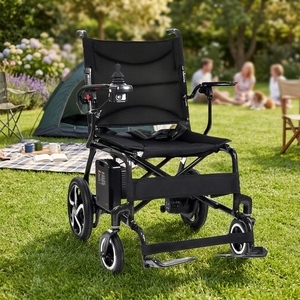
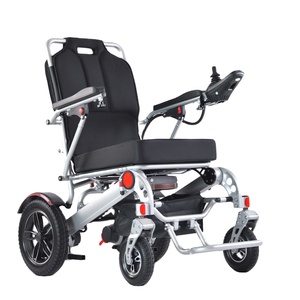
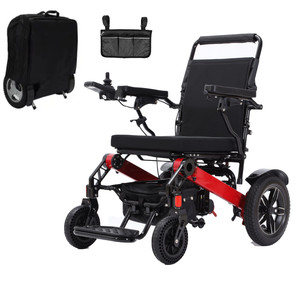
Our factory production capabilities encompass specialized wheelchair and patient transfer technologies, including heavy-duty bariatric power chairs, electric transfer commodes, and custom rehabilitation devices. By maintaining over 500+ active SKUs in stock and operating under strict ISO guidelines, we empower global medical distributors with seamless OEM/ODM customization, rapid tooling lead times, and uncompromised quality assurance.
Complementary Mobility & Rehabilitation Systems for Bulk Sourcing
To maximize logistics cost efficiency (FCL container optimization), enterprise procurement teams frequently bundle quad cane shipments alongside heavier mobility devices such as:
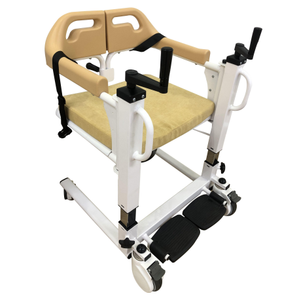
- Electric Bathroom Commode Transfer Wheelchairs: Multi-functional patient lifting and transfer systems featuring waterproof electric height adjustment for seamless bathroom accessibility (sourced directly via Dragon Medical manufacturing partnerships).
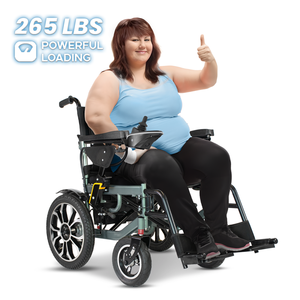
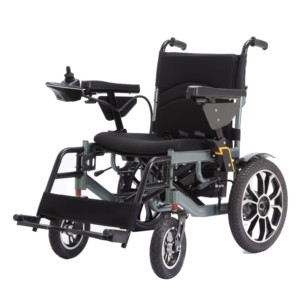
- Bariatric Electric Power Wheelchairs: Heavy-duty motorized chairs built with 250W motors, 58cm wide seat widths, and weight capacities ranging from 120kg up to 300kg (utilizing Caremoving CMD-05 platform technology).
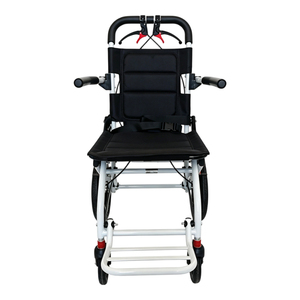
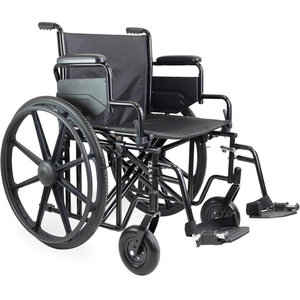
- Foldable Heavy-Duty Manual Wheelchairs: Double-crossbar steel frame manual wheelchairs engineered with up to 225kg load capacity, designed for high-abuse hospital ward environments and rental fleets.
6. Frequently Asked Questions (FAQ) for OEM/ODM Quad Cane Sourcing
Partner with a Certified OEM/ODM Quad Cane & Mobility Equipment Manufacturer
Elevate your medical product portfolio with custom engineering, factory-direct pricing, and ISO 13485 quality assurance. Speak directly with our technical procurement engineering team today.