Executive B2B Sourcing Report: The Evolution of China Bath Stool Manufacturing & Global Supply Chains
In the global healthcare and personal care infrastructure landscape, bath safety equipment—specifically medical bath stools, commode transfer chairs, and shower mobility benches—represents a critical category driven by demographic aging, expanding home healthcare ecosystems, and stringent institutional safety directives. As global buyers navigate supply chain complexities, China has solidified its position as the world's primary manufacturing hub for assisted bath technology. However, procuring high-reliability bath stools requires a sophisticated understanding of metallurgy, polymer chemistry, structural biomechanics, and evolving international compliance frameworks.
This whitepaper provides procurement executives, healthcare distributors, OEM brand managers, and medical supply chain directors with an exhaustive technical guide for sourcing bath stools and assistive shower seating from leading Chinese manufacturers. Incorporating insights from ISO 17966 (assistive products for personal hygiene) and Google’s Search Quality Rater Guidelines for E-E-A-T (Experience, Expertise, Authoritativeness, and Trustworthiness), this analysis breaks down material engineering, quality assurance protocols, manufacturing automation trends, and strategic risk mitigation.
Core Procurement Insight: The primary failure point in commercial shower stools is structural torque deformation at the leg-to-seat junction. Superior manufacturing utilizes thick-gauge cross-frame brace assemblies with press-fit brass threaded inserts rather than direct self-tapping plastic screws.
1. Engineering Standards & Material Specification Benchmarks
When assessing a China bath stool supplier, technical evaluation must extend far beyond surface aesthetics. Bath stools operate in aggressive environment conditions characterized by constant dynamic load stresses, elevated temperatures, high relative humidity, and exposure to soap scums, acidic skin lipids, and harsh chemical disinfectants.
1.1 Structural Frame Metallurgy: Aluminum Alloy Selection
The standard benchmark for medical-grade bath stool frames is extruded aluminum alloy tubing. However, significant structural variations exist between alloy grades:
- 6063-T5 Aluminum: Common in economy retail bath stools. Offers good surface finish and corrosion resistance, but lower yield strength (~145 MPa). Suitable for basic residential applications up to 100 kg load capacity.
- 6061-T6 Heat-Treated Aluminum: The preferred material for institutional and bariatric-grade bath safety products. Delivers a yield strength exceeding 240 MPa. Frame tubing wall thickness should measure between 1.25 mm and 1.50 mm for standard models, and upwards of 2.0 mm with dual-crossbar reinforcement for bariatric units rated to 225 kg – 300 kg.
Surface treatment is equally vital. Superior manufacturers apply an anodization layer of at least 12 to 15 microns or an electrostatic epoxy powder coating. Powder coating must pass the ASTM B117 500-Hour Salt Spray Corrosion Test without bubbling, flaking, or creepage along cut edges.
1.2 Polymers & Anti-Microbial Technology
Seat surface panels are predominantly manufactured via High-Density Polyethylene (HDPE) blow molding or polypropylene injection molding. Blow-molded HDPE is preferred in clinical environments due to its hollow-core structural rigidity, impact strength, and warmth to touch compared to cold metals.
To meet institutional hygiene standards, premium China exporters incorporate silver-ion (Ag+) or zinc-pyrithione anti-microbial additives directly into the raw HDPE resin matrix prior to molding. This prevents the colonization of Staphylococcus aureus, Escherichia coli, and black mold inside drainage holes and textured surfaces, maintaining hygienic integrity throughout the product lifecycle.
| Material Component | Standard Market Spec | Institutional Medical Spec | Bariatric / Heavy-Duty Spec |
|---|---|---|---|
| Frame Material | 6063 Aluminum (1.0mm wall) | 6061-T6 Anodized Alum (1.3mm) | Enhanced Steel / 6061 Dual-Cross (2.0mm) |
| Seat Panel | Recyclable Standard PP | HDPE Blow-molded + Ag+ Anti-Microbial | High-Impact Reinforced HDPE + SS Core |
| Static Load Rating | 100 kg (220 lbs) | 136 kg – 150 kg (300 - 330 lbs) | 225 kg – 300 kg (500 - 660 lbs) |
| Foot Ferrule Material | Standard PVC Rubber | High-Friction TPR + Steel Washer | Wider Footprint Anti-Slip TPR Suction |
| Fasteners & Screws | 201 Stainless Steel | 304 Grade Stainless Steel | 316 Marine Grade Stainless Steel |
2. Quality Control Protocols & ISO Compliance Frameworks
Leading Chinese exporters maintain comprehensive Quality Management Systems (QMS) aligned with ISO 13485 (Medical Devices) and ISO 9001. When auditing a supplier, procurement directors must demand verified third-party laboratory test reports (SGS, TUV, Intertek) verifying compliance with the following international benchmarks:
2.1 ISO 17966 Mechanical Testing Standards
ISO 17966 specifies requirements and test methods for assistive products for personal hygiene. Key mandatory stress tests include:
- Static Vertical Load Test: A downward force equal to 1.5x the rated maximum user weight applied via a contoured seat template for a minimum duration of 60 seconds without permanent deformation or structural joint cracking.
- Sideways & Forward Overturning Stability: Dynamic lateral force application testing the slip coefficient of rubber foot tips against wet tiles (minimum friction coefficient μ ≥ 0.6).
- Fatigue Cycling Test: Application of a repeated dynamic load (typically 1,000 N) for 100,000 continuous cycles to simulate multi-year institutional usage.
- Impact Drop Test: Dropping a 25 kg weight from a height of 300 mm directly onto the center and extreme edges of the HDPE seat panel at ambient and sub-zero temperatures to ensure crack resistance.
3. Enterprise Manufacturing Strengths & OEM/ODM Capabilities
Partnering with a top-tier Chinese manufacturer offers significant advantages in production scalability, cost efficiency, and customized engineering. Original Equipment Manufacturers (OEM) and Original Design Manufacturers (ODM) in China have transitioned from simple assembly workshops into advanced, automated smart-factories.
3.1 Automated Production Infrastructure
Modern production facilities leverage multi-axis robotic TIG welding cells for aluminum and steel frames, ensuring zero-defect weld penetration and uniform stress distribution. Automated CNC pipe-bending machines ensure dimensional tolerances within ±0.1mm, guaranteeing seamless telescopic height adjustment for end-users.
3.2 Customization & Private Label Capabilities
Leading suppliers provide extensive ODM capabilities, including:
- Custom mold development for ergonomically curved seat designs, backrests, and integrated shower head holder cutouts.
- Tool-free assembly engineering (snap-button quick release, e-clip fasteners) optimized for flat-pack e-commerce shipping (reducing volumetric freight costs by up to 40%).
- Bilingual instruction manual layout, customized color box packaging, and laser-engraved brand logos on anodized frame structures.
4. Future Global Sourcing & Manufacturing Trends (2025–2030)
As the assistive technology sector rapidly modernizes, procurement strategies must adapt to emerging industry trends that are reshaping bath safety manufacturing in China:
Trend 1: Smart Bathing & IoT Integration
The next decade will see the integration of discrete weight, occupancy, and slip-monitoring sensors embedded within commercial commode and bath chairs. Connected devices will provide real-time patient fall detection and mobility analytics for nursing care facilities, transmitting data directly to central monitoring platforms.
Trend 2: Sustainable Bio-Polymers & Carbon Footprint Reduction
In response to European Union Green Deal directives and ESG procurement mandates, tier-one manufacturers are transitioning from virgin fossil-fuel HDPE to ocean-bound recycled plastics and bio-based resin compounds. Frame manufacturers are adopting low-carbon recycled aluminum alloys, reducing carbon intensity per unit produced by over 50%.
Trend 3: Hybrid Electric Transfer & Powered Commode Solutions
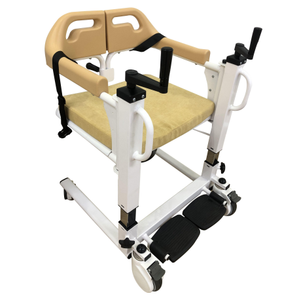
Static bath stools are increasingly complemented by multi-functional motorized transfer commodes. These devices feature hydraulic or powered linear actuators that assist caregivers in lifting mobility-impaired patients from bed to shower without manual strain, significantly reducing workplace injury claims in nursing homes.
Trend 4: Regulatory Harmonization & EU MDR Tightening
The transition from the EU Medical Device Directive (MDD) to the strict Medical Device Regulation (MDR 2017/745) demands total supply chain traceability, enhanced clinical evaluation data, and rigorous REACH/RoHS compliance for all plasticizers, phthalates, and heavy metal colorants used in bathing equipment.