Global B2B Market Dynamics: The Evolution of China’s Temperature Sensing Supply Chain
The global electronic body temperature monitoring market has undergone a fundamental structural shift over the past decade. China’s medical device manufacturing sector has progressed from basic low-cost assembly to becoming the global epicenter of micro-thermopile sensor packaging, precision NTC (Negative Temperature Coefficient) thermistor calibration, and automated medical SMT assembly. For global healthcare buyers, pharmaceutical retail conglomerates, and government procurement agencies, sourcing digital thermometers from accredited Chinese exporters provides unmatched economies of scale combined with clinical-grade accuracy.
Information Gain Insight: Modern procurement is no longer driven solely by unit price. Enterprise buyers must navigate post-pandemic regulatory shifts, such as the European Union’s Transition from MDD to MDR (EU 2017/745), stricter US FDA 510(k) Premarket Notifications, and the global ban on mercury-containing measuring devices under the UN Environment Programme's Minamata Convention. Chinese tier-1 suppliers now lead in offering fully certified, mercury-free, zero-lead SMD assembly processes.
Key Drivers Shaping Next-Generation Procurement (2025–2030)
To maximize return on investment and mitigate supply chain friction, international distributors should evaluate suppliers against three primary technology integration trends:
Thermopile & Distance Sensor Fusion
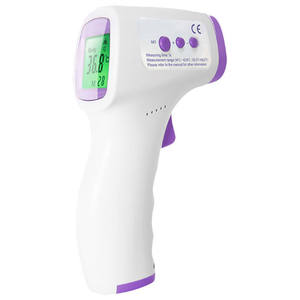
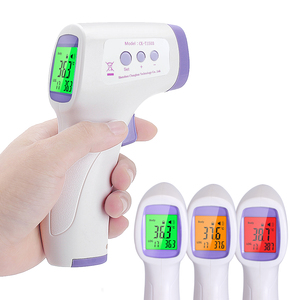
Next-gen non-contact infrared thermometers combine Heimann or Excelitas thermopile chips with micro-laser or optical distance sensors to ensure temperature readings trigger only within the calibrated 1–3cm focal zone.
ATAC Algorithm Integration
Ambient Temperature Automatic Compensation (ATAC) compensates for rapid changes in room temperature (e.g., moving between air-conditioned wards and outdoor environments), maintaining measurement stability within ±0.2°C.
BLE & IoT Connectivity
OEM digital thermometers equipped with Bluetooth Low Energy (BLE 5.2) and Wi-Fi modules enable seamless integration with hospital Electronic Health Records (EHR) systems and smartphone Telehealth applications.