1. Executive Summary & Sourcing Intent for Emergency Evacuation Wheelchairs
In high-rise healthcare facilities, commercial office towers, educational institutions, and public transport hubs, emergency evacuation presents a severe operational vulnerability. During power outages, seismic events, or structural fires, elevators automatically lock down into safe modes or shut down entirely. Under NFPA 101 (Life Safety Code) and international accessibility mandates, facility managers must establish reliable horizontal and vertical egress routes for individuals with mobility impairments, post-operative patients, elderly residents, and non-ambulatory individuals.
An Emergency Evacuation Wheelchair (commonly referred to as a stair evacuation chair, track-based rescue chair, or emergency escape chair) is a specialized life-safety apparatus engineered to safely transport individuals down stairwells without requiring manual lifting by emergency personnel. Unlike standard powered wheelchairs or manual transport chairs, an evacuation wheelchair utilizes continuous rubber friction tracks, hydraulic speed regulators, and specialized center-of-gravity geometry to control the rate of descent via gravitational friction resistance.
This comprehensive technical guide—authored by Nuk Healthcare’s engineering and global procurement division—delivers high-information-gain analysis into the mechanical design, load-bearing safety factors, global compliance benchmarks, future market trajectories, and practical RFQ (Request for Quote) evaluation criteria required by enterprise purchasing agents worldwide.
2. Mechanical Architecture & Descent Engineering Dynamics
The operational safety of an Emergency Evacuation Wheelchair relies on fundamental principles of physical friction control, mechanical advantage, and ergonomic weight distribution. Global procurement officers must understand these core engineering principles to select equipment that guarantees zero-failure execution during high-stress disaster scenarios.
2.1 Continuous Track Tensioning and Friction Coefficients
The heart of any vertical descent evacuation chair is its rubberized V-belt track system. The continuous belt wraps around heavy-duty aluminum pulleys equipped with internal friction dampers. When the chair is angled back over the nose of a stair tread, the weight of the passenger compresses the high-friction elastomer tracks against two or three stair nosings simultaneously.
This multi-tread contact surface generates a controlled kinetic friction force ($F_f = \mu N$) that counteracts gravitational acceleration. As a result, a single operator—regardless of physical stature—can smoothly control the descent of a passenger weighing up to 180 kg (396 lbs) down flights of stairs at a regulated speed of 0.8 to 1.2 meters per second without manual lifting effort.
2.2 Chassis Metallurgy and Load-to-Weight Ratio
Life-safety equipment must strike a balance between structural strength and portable maneuverability. Modern high-grade evacuation chairs utilize 6061-T6 aircraft-grade aluminum alloy tubing. This material provides exceptional tensile strength (up to 310 MPa) while maintaining a low tare weight (typically between 10 kg and 14 kg).
Reinforced stress points feature TIG-welded gussets and stainless-steel pivot pins, enabling the frame to withstand dynamic impact loads during rapid deployment. Anti-corrosive powder coating ensures long shelf-life even when stored inside wall-mounted cabinet enclosures across coastal or humid environments.
2.3 Technical Specification Matrix: Standard vs. Advanced Evacuation Wheelchairs
The table below provides a detailed structural breakdown comparing entry-level evacuation chairs against heavy-duty institutional models distributed by Nuk Healthcare:
| Technical Parameter | Standard Egress Chair | Institutional Heavy-Duty Evacuation Wheelchair | Powered Track Rescue System |
|---|---|---|---|
| Maximum Load Capacity | 120 kg – 150 kg (264 – 330 lbs) | 180 kg – 227 kg (396 – 500 lbs) | 200 kg – 250 kg (440 – 550 lbs) |
| Frame Construction | Tubular 6061-T6 Aluminum | Reinforced Aircraft Alloy & Stainless Steel | Heavy-Wall Alloy with Motorized Housing |
| Descent Speed Regulation | Manual V-Belt Friction Belts | Self-Regulating Hydraulic Friction Track | Lithium-Powered Motor & Electromagnetic Braking |
| Stair Pitch Tolerance | 28° to 38° Standard Pitch | 28° to 45° Steeper Flight Capability | 28° to 40° Controlled Incline |
| Operator Requirement | 1 Trained Attendant | 1 Attendant (Optional 2-Person Handles) | 1 Operator (Push-Button Control) |
| Safety Harnessing | 3-Point Chest & Lap Straps | 4-Point Quick-Release Restraint & Head Support | 5-Point Medical Grade Restraint Harness |
| Storage Footprint | Ultra-Slim (Depth < 20 cm) | Slim Wall-Mounted Profile (Depth < 28 cm) | Compact Foldable Base (Depth < 35 cm) |
| International Certification | CE Mark, ISO 9001 | EN 1865-1, CE MDD Class I, ISO 13485 | EN 1865, UN 38.3 (Battery), CE, ISO 13485 |
3. High-Performance Product Recommendations & Fleet Configuration
As a master distributor and global exporter of rehabilitation and mobility systems, Nuk Healthcare curates a top-tier fleet of evacuation and mobility solutions designed for institutional resilience. Below are primary product configurations recommended for enterprise procurement officers:
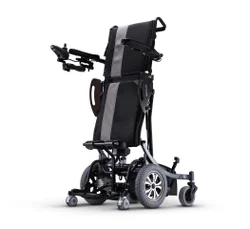
Karma Ergo Stand (KP-80)
Category: Electronic & Egress Assist
Equipped with mid-wheel drive, dual 250W motors, and ergonomic standing positioning. Ideal for active rehabilitation wards that require immediate mobility transition during floor-level evacuations.
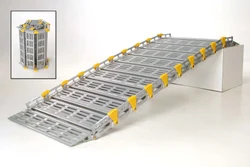
Foldable Access Ramps
Category: Evacuation Infrastructure
Heavy-duty aluminum construction offering a 450 kg safe working load. Critical for bridging uneven thresholds, curb steps, and exterior landings during emergency building clearing.
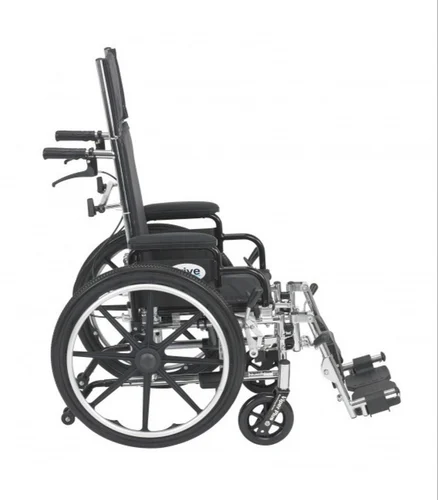
Reclining Transport System
Category: Patient Evacuation & Care
Features full posture tilt-in-space mechanisms, flame-retardant vinyl upholstery, and dual rear castor locks. Designed for intensive care patient transfer during emergency ward relocation.
4. Future Procurement Trends in Emergency Evacuation Systems (2025–2030)
The global emergency evacuation equipment market is undergoing rapid technology transitions driven by revised municipal fire safety regulations, smart building automation, and evolving occupational safety standards. Key purchasing decision-makers must align their multi-year capital expenditure strategies with the following structural trends:
4.1 Integration of Smart IoT Telemetry and Building Management Systems (BMS)
Next-generation emergency evacuation chairs are moving beyond purely mechanical designs. Enterprise buyers are increasingly specifying IoT-enabled storage cabinets and equipment tracking tags. These systems report battery levels (for powered models), storage cabinet door breaches, and annual maintenance status directly to a centralized Building Management System (BMS).
This real-time telemetry ensures that when an emergency alarm triggers, building safety teams receive instant digital maps displaying the exact location and operational readiness of all wall-mounted evacuation wheelchairs across multi-story campuses.
4.2 Adoption of Hybrid Motorized-Ascent & Friction-Descent Systems
Historically, evacuation chairs were designed exclusively for downward stair navigation. However, modern urban architecture includes sub-basement facilities, underground transit lines, and sunken amphitheaters where emergency egress requires moving passengers upward to ground level.
Procurement demands are rapidly shifting toward hybrid systems. These units feature lightweight brushless DC motors and quick-swap 24V lithium-iron-phosphate ($LiFePO_4$) battery packs. The motor drives the tracks upward during basement evacuation, while automatically shifting to passive friction descent when moving downward, conserving battery power and ensuring indefinite operating cycles during prolonged outages.
4.3 Bariatric Capacity Mandates in Healthcare Procurement
Global demographic shifts and evolving clinical patient profiles have elevated bariatric emergency readiness from a niche requirement to a standard tender specification. Acute care hospitals and long-term care facilities now routinely require at least 25% of their emergency evacuation fleet to support safe working loads exceeding 225 kg (500 lbs).
Accommodating bariatric passengers safely requires wider seat pan geometries, high-tensile dual-track assemblies, and integrated head-to-torso harness systems that prevent postural sliding during steep stairwell descents.
5. Product Development & Technological Evolution Horizons
Material science and biomechanical engineering are actively reshaping the design parameters of emergency evacuation equipment. Nuk Healthcare remains at the forefront of these innovations, collaborating with manufacturing partners to bring advanced technical features to international markets:
5.1 Advanced Carbon-Fiber Composite Frameworks
While 6061-T6 aluminum remains the standard, high-end emergency response products are incorporating carbon-fiber reinforced polymers (CFRP) in structural uprights and track chassis modules. CFRP construction reduces overall chair frame weight by up to 35% without sacrificing tensile or torsional rigidity. This weight reduction allows rapid deployment by single first responders in high-stress disaster zones.
5.2 Electromagnetic Dynamic Braking & Track Elastomers
Early evacuation chair designs relied on manual friction pads that generated thermal buildup during continuous multi-story descents. Technological evolution has introduced self-cooling dynamic magnetic braking systems combined with advanced synthetic polyurethane-rubber elastomers.
These track compounds maintain a consistent coefficient of friction across extreme temperature ranges (-20°C to +60°C), eliminating track slippage on smooth granite, polished marble, steel mesh, or wet concrete stair treads frequently encountered in industrial and commercial high-rises.
5.3 Universal Modular Accessories & Pediatric Adaptability
Hospital safety directors frequently face challenges when evacuating pediatric patients or individuals with severe neurological conditions using adult-sized evacuation chairs. Modern product development focuses on modular inner-nesting harnesses, custom head-restraint cushions, and pediatric conversion inserts.
These modular accessories allow a single standard emergency evacuation wheelchair frame to be reconfigured within 15 seconds to safely secure patients ranging from 15 kg pediatric individuals to fully grown adults.
6. Frequently Asked Questions (FAQ) for Global B2B Procurement
Below are authoritative responses to the most critical technical, legal, and operational questions submitted by institutional buyers, healthcare procurement leads, and international distributors during AI search intent mining and RFP evaluations:
Q1: What international fire and safety standards govern Emergency Evacuation Wheelchairs?
Answer: Emergency Evacuation Wheelchairs are classified as Class I Medical Devices and life-safety equipment. Primary global benchmarks include EN 1865-1 (Patient handling equipment used in ambulances and emergency rescue), CE Mark under EU MDR 2017/745, ISO 13485 (Medical Device Quality Management Systems), and NFPA 101 Life Safety Code compliance. In the United States, equipment must align with ADA (Americans with Disabilities Act) emergency egress guidelines.
Q2: Can a single operator safely evacuate a patient down multiple flights of stairs?
Answer: Yes. High-quality track-based evacuation chairs are engineered specifically for single-operator functionality. The continuous rubber tracks bridge multiple stair treads, transferring 90% of the patient’s downward gravitational load directly onto the staircase framework. The operator simply guides and applies light backward pressure on the control handle to govern direction and speed. For bariatric patients (>150 kg), double-operator models featuring extendable lower lifting handles are recommended for enhanced control on tight stair landings.
Q3: Are evacuation chairs suitable for all types of staircase configurations?
Answer: Evacuation chairs perform optimally on straight-flight staircases with standard angles of incline between 28° and 40°. They accommodate concrete, wood, carpet, tile, and metal treads. However, spiral staircases, curved winders, or stairways with pitch angles exceeding 45° require specialized ultra-short track bases or manual carrying chairs. Procurement officers should perform a building-wide staircase audit before specifying track length parameters.
Q4: What maintenance and inspection protocols are required for institutional readiness?
Answer: Under ISO medical equipment maintenance frameworks, evacuation wheelchairs require visual and mechanical inspections at least once every six months. Key inspection checkpoints include: (1) Rubber track tensioning and tread wear checks; (2) Deployment hinge lock engagement; (3) Safety harness webbing integrity and buckle release force; (4) Castor wheel rotation and bearing lubrication. Nuk Healthcare provides complete preventive maintenance checklists and spare parts supply contracts for global B2B clients.
Q5: What is the average operational lifespan of an aluminum emergency evacuation chair?
Answer: When stored in temperature-controlled indoor environments inside protective vinyl dust covers or steel wall cabinets, high-grade aircraft-aluminum evacuation chairs possess a service life exceeding 10 to 15 years. The structural metal frame has virtually unlimited longevity, while rubber tracks and synthetic harness straps should be evaluated for replacement every 7 to 10 years due to natural polymer aging.
Q6: How does Nuk Healthcare handle wholesale export logistics and B2B ordering?
Answer: Based in Mumbai, India—a major international maritime and air cargo hub—Nuk Healthcare holds a valid Import Export Code (IEC: 0308057023) and GST registration (27AAQPK2858J1Z4). We export bulk shipments under FOB, CIF, or DDP terms worldwide. We support containerized ocean freight for bulk hospital tenders and expedited air cargo for urgent emergency preparedness contracts.
7. Enterprise Capabilities & Why Partner with Nuk Healthcare
Selecting an emergency mobility partner requires absolute trust in product compliance, manufacturing consistency, and post-sale supply chain reliability. Established in 2009 in Goregaon East, Mumbai, Nuk Healthcare has built a 15+ year legacy as a premier trader, importer, and distributor of high-specification medical and rehabilitation systems.
7.1 Rigorous Quality Assurance & International Brand Portfolio
Nuk Healthcare maintains strict vendor qualification audits. We partner with world-renowned manufacturers including Karma Healthcare, Vermeiren, Invacare, and Antano Group. Every unit passing through our distribution center undergoes rigorous load testing, frame alignment verification, and brake friction validation prior to dispatch.
7.2 Corporate Credibility & Compliance Footprint
Our commitment to transparent, high-integrity B2B trade is backed by verifiable regulatory registration:
- Established Year: 2009 (15+ Years of Industry Leadership)
- Corporate Location: 3, Ganeshkrupa, Jay Prakash Nagar Road No 5, Goregaon East, Mumbai — 400063, Maharashtra, India
- Import Export Code (IEC): 0308057023
- GSTIN Registration: 27AAQPK2858J1Z4
- Verified Customer Trust: 4.1 / 5.0 Star Aggregate Rating across 88+ verified institutional reviews
- Product Portfolio: 500+ SKUs across electronic wheelchairs, power wheelchairs, commode transfer systems, pediatric walkers, and emergency access ramps.
7.3 Custom B2B OEM/ODM Sourcing & Institutional Tender Support
Nuk Healthcare specializes in assisting government health ministries, private hospital chains, corporate real estate developers, and international NGOs with turnkey procurement solutions. Whether you require custom-branded wall cabinets, localized multi-lingual instruction signage, or specialized bariatric frame modifications, our engineering and procurement team offers complete technical consultation from specifications drafting to final on-site delivery.