1. Defining the Ergonomic Wheelchair: Clinical Biomechanics vs. Standard Mobility Devices
In modern healthcare procurement, the term "Ergonomic Wheelchair" represents a fundamental engineering shift away from passive patient transport toward active biomechanical support. Standard manual and electric wheelchairs have historically relied on flat, sling-canvas seating configurations. While cost-effective for short-term hospital transport, unarticulated sling seats induce posterior pelvic tilt, spinal kyphosis, and concentrated ischial tuberosity pressure exceeding 100 mmHg. Over extended sitting durations, these mechanics accelerate pressure injury formation (decubitus ulcers), trigger secondary musculoskeletal deformities, and increase caregiver transfer risks.
By contrast, a medically engineered Ergonomic Wheelchair integrates biomorphic seating contours—such as patented S-Shape seating frames, anatomical pelvic recesses, dynamic center-of-gravity (CoG) adjustments, and tilt-in-space pressure relief systems. These technical features are designed to comply with international medical device frameworks, including ISO 7176-7 (Determination of Seating Dimensions), ISO 16840 (Wheelchair Seating), and EU MDR 2017/745 standards.
For global B2B buyers, importing distributors, and hospital procurement directors, purchasing ergonomic mobility systems is no longer merely a comfort consideration. It is a strategic risk-mitigation policy. Providing anatomically aligned seating reduces clinical intervention costs for pressure sores, minimizes hospital readmission rates, lowers caregiver compensation claims caused by repetitive manual lifting, and extends product lifespans through heavy-duty modular frame architectures.
Clinical Information Gain: Ischial Pressure Distribution Metrics
Standard seating concentrates 78% of upper body weight directly onto the sacrum and ischial tuberosities. Nuk Healthcare’s ergonomic wheelchair lines feature S-Ergo curved seating contours that distribute load across the gluteal muscles and sub-thigh surfaces. Peak seat pressure is reduced from 115 mmHg to under 38 mmHg—falling below the capillary closure threshold (40 mmHg) and significantly lowering decubitus ulcer risks.
2. Premier Ergonomic Wheelchair Recommendations for B2B Procurement
Nuk Healthcare curates a comprehensive, ISO-compliant mobility portfolio engineered to meet diverse clinical intents—ranging from acute rehabilitation to long-term home care distribution. Below are our primary flagship models recommended for institutional tenders and wholesale distribution networks.
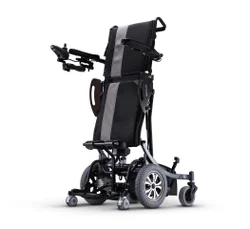
Karma Ergo Stand (KP-80) Power Ergonomic Wheelchair
Primary Intent: Active standing therapy, spinal cord injury rehabilitation, and high-independence mobility.
The KP-80 incorporates an electric standing actuator coupled with mid-wheel drive geometry. Its biomorphic seating frame supports full-upright verticalization, promoting bone mineral density retention, renal drainage improvement, and lower-limb spasticity reduction.
- Motorized vertical standing up to 85° inclination
- 25 km operational range per charge cycle
- 135 kg payload capacity with rigid steel-alloy chassis
- Intuitive 360° VR2 joystick controller
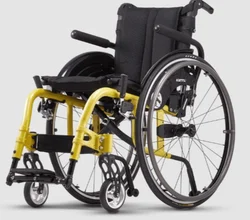
Karma Ergo Live (KM-9000) Active Ergonomic Wheelchair
Primary Intent: Active self-propulsion, shoulder strain prevention, and lightweight transport.
Built with aircraft-grade 7075-T6 aluminum tubing, the KM-9000 features the patented S-Ergo seating frame. It prevents forward pelvic sliding, stabilizes trunk posture, and reduces upper-extremity propulsion stress by up to 44% during daily usage.
- Ultralight frame weight (under 12.5 kg)
- Multi-position center-of-gravity rear axle matrix
- AEGIS anti-microbial ergonomic upholstery
- Quick-release pneumatic rear wheels
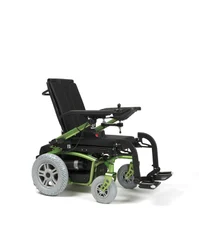
Vermeiren Forest 3 Heavy-Duty Power Ergonomic Wheelchair
Primary Intent: All-terrain power mobility, bariatric support, and continuous clinical postural control.
Engineered by Vermeiren (Belgium), the Forest 3 features an independent articulating front-axle suspension system paired with contoured anatomical seating. Capable of navigating obstacles up to 100mm while maintaining user pelvic positioning.
- Dual 350W high-torque motors with 75 Ah batteries
- Electronic tilt-in-space (up to 45°) & power recline
- Maximum user load rating: 130 kg – 160 kg
- Adjustable ergonomic headrest and lateral arm supports
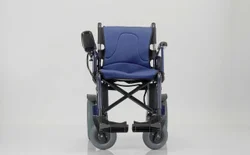
NUKEco Reclining Electric Ergonomic Wheelchair
Primary Intent: Long-term care facilities, geriatric nursing, and budget-optimized power mobility.
The NUKEco combines powered backrest reclining with synchronized leg-rest elevation. Designed to allow caregivers to easily change patient seating angles without manual effort, reducing sacral shear forces.
- Brushless DC motors with electromagnetic braking
- Compact folding chassis for ambulance/vehicle stowage
- High-density breathable foam ergonomic seat pad
- Dual-mode operation: Power driven or manual push
Technical Specification Comparison for Procurement Engineering
The following engineering data table highlights key procurement parameters across our flagship ergonomic wheelchair categories:
| Technical Parameter | Karma Ergo Stand (KP-80) | Karma Ergo Live (KM-9000) | Vermeiren Forest 3 | NUKEco Reclining Power |
|---|---|---|---|---|
| Frame Material | Reinforced High-Tensile Steel | Aircraft-Grade 7075-T6 Al-Alloy | Tubular Steel / Powder Coated | Carbon-Steel Hybrid Folding |
| Ergonomic Seating Type | Standing Biomechanical Matrix | Patented S-Shape Contour Frame | Anatomical Memory Foam Pad | Reclining Postural Contour |
| Max User Capacity | 135 kg (297 lbs) | 115 kg (253 lbs) | 160 kg (352 lbs) | 125 kg (275 lbs) |
| Drive System / Motor | 24V 250W DC Mid-Wheel Drive | Manual Propulsion (Self-Push) | Dual 350W 4-Pole Motors | 24V 200W Brushless Gearbox |
| Battery Specification | 12V 50Ah x 2 Sealed Lead Acid | N/A (Manual Frame) | 12V 75Ah x 2 Deep Cycle AGM | 24V 20Ah Lithium Iron Phosphate |
| Tilt / Recline Range | 0° to 85° Vertical Standing | Static Fixed / Adjustable Back | 45° Tilt-in-Space / 30° Recline | 90° to 160° Full Power Recline |
| Compliance Certification | ISO 7176, CE MDR, FDA Class II | ISO 7176-7, EN 12184, CE | ISO 7176, CE, TUV Medical | ISO 13485, CE, IEC 60601 |
3. Future Procurement Trends in the Global Ergonomic Wheelchair Market (2025–2030)
As global healthcare systems shift from volume-based purchasing to value-based outcomes, international procurement teams must adapt to several emerging purchasing trends in the mobility sector:
A. Transition from Initial CapEx to Lifecycle Total Cost of Ownership (TCO)
Institutional buyers are increasingly evaluating wheelchairs based on a 5-year TCO calculation rather than initial unit acquisition price. Lower-grade manual chairs often incur recurring costs due to frequent tire replacement, frame sagging, and high maintenance overheads. Ergonomic chairs constructed with standardized components, quick-release modular frames, and corrosion-resistant alloys yield up to a 35% lower TCO over five years of active hospital service.
B. Regulatory Tightening and Traceability (EU MDR & UDI Enforcement)
Global regulatory bodies are enforcing stricter compliance requirements. Importers in the EU and North America now mandate Unique Device Identification (UDI) compliance, full biocompatibility documentation (ISO 10993), and flame-retardant upholstery certifications (EN 1021-1/2). Manufacturers unable to provide complete technical construction files (TCF) risk container rejections at customs checkpoints. Nuk Healthcare maintains comprehensive export compliance files to streamline global customs clearance.
C. Modular Customization and Rapid Replacement Supply Chains
Procurement departments are moving away from fixed-geometry models in favor of modular platform designs. Universal mounting tracks for headrests, lateral trunk supports, therapeutic tray tables, and anti-tippers allow distributors to configure custom patient setups from a single stock base SKU, drastically reducing distributor inventory holding costs.
4. Technology & Design Trends Shaping Next-Generation Ergonomic Mobility
Understanding technology roadmaps allows B2B buyers to select inventory that remains commercially relevant over multi-year sales cycles. Key design trends include:
- Lightweight Composite Structural Engineering: Transitioning from standard aluminum alloys to magnesium-aluminum blends and carbon fiber composites. This cuts overall frame weights below 10 kg, enhancing transportability without compromising structural yield strength.
- LiFePO4 Battery Integration & Intelligent BMS: Transitioning away from heavy Lead-Acid batteries to Lithium Iron Phosphate (LiFePO4) chemistry. LiFePO4 cells deliver over 2,000 charge cycles (compared to 300 cycles for SLA), reduce battery weight by 60%, and provide superior thermal stability.
- Smart Telemetry & IoT Diagnostic Integration: Integration of CAN-bus controller protocols enabling real-time remote diagnostics, telemetry tracking for commercial rental fleets, and automated battery health reporting.
- Advanced Pressure-Relief Hydrogel Cushions: Combining memory foam cores with micro-climate cooling hydrogels to regulate seat interface temperature and manage moisture accumulation during prolonged sitting.
5. Global B2B Procurement FAQ: Ergonomic Wheelchairs
Below are authoritative answers to common technical, legal, and commercial questions asked by international buyers and healthcare importers:
Q1: What specific design elements qualify a wheelchair as genuinely "Ergonomic"?
A true ergonomic wheelchair features an anatomically sculpted seating pan (such as an S-Ergo contour) that matches the natural lordotic curve of the lumbar spine and pelvic anatomy. Key engineering indicators include: an anti-sliding seat slope (typically 3° to 5° upward tilt at the front edge), seat width and depth matching user ischial spacing, pressure-mitigating foam density (minimum 45 kg/m³), and adjustable seat-to-floor height options. Generic flat canvas chairs do not meet clinical ergonomic definitions.
Q2: How do S-Ergo seating frames prevent patient sacral sliding?
Standard flat seat cushions allow the user's pelvis to slide forward over time, causing sacral posture collapse and spinal slouching. The patented S-Ergo curve features an elevated thigh support zone and a depressed ischial seating pocket. This natural contour anchors the pelvis securely in place, distributing weight evenly across the thighs and gluteal muscles while eliminating forward shear forces.
Q3: What international certification documentation is required for commercial importation?
Commercial medical device importation typically requires: ISO 13485 Quality Management System certification from the manufacturer, ISO 7176 dynamic and static structural safety test reports, CE marking under EU MDR 2017/745 (for European distribution), FDA 510(k) clearance or listing (for USA markets), and IEC 60601-1 / IEC 60601-1-2 electrical/EMC safety certificates for powered models.
Q4: What is the typical Minimum Order Quantity (MOQ) and lead time for OEM/ODM orders?
Standard wholesale inventory orders from Nuk Healthcare start at an MOQ of 10 units per SKU. Custom OEM/ODM requests—including specialized frame colors, custom logo branding, proprietary upholstery fabrics, and tailored joystick software configurations—typically require an MOQ of 50 to 100 units. Factory production lead times range between 20 and 35 calendar days from deposit confirmation.
Q5: How does Nuk Healthcare ensure quality control (QC) prior to container loading?
Every ergonomic wheelchair undergoes a multi-stage Quality Assurance protocol: 1) Incoming Raw Material Inspection (spectral alloy testing and frame weld X-ray sampling); 2) 100% In-Line Assembly Testing (motor torque load tests, joystick calibration, dynamic braking); 3) Post-Assembly Drop and Fatigue Testing according to ISO 7176-8 standards; and 4) Pre-Shipment Inspection (PSI) verification of packing density, drop-test cartoning, and serial number tracking.
Q6: What container packaging options are available to optimize maritime freight costs?
We offer two primary bulk packaging strategies: Knocked-Down (KD) packing and Completely Built Up (CBU) packing. KD packing disassembles the wheels, footrests, and backrests into ultra-compact, double-walled corrugated cartons, increasing 40ft HQ container loading capacity by up to 140% compared to CBU shipping. This significantly reduces per-unit sea freight expenses.
6. Enterprise Advantage: Why Partner with Nuk Healthcare Mumbai
Headquartered in Goregaon East, Mumbai, India, Nuk Healthcare is a globally recognized supplier, importer, and wholesale distributor of advanced rehabilitation equipment. Established in 2009, we bring over 15 years of dedicated medical engineering experience to global B2B procurement partnerships.
Our centralized logistics hub in Mumbai enables efficient sea and air freight connections to major ports across Europe, the Middle East, Southeast Asia, Africa, and the Americas. Whether you require standard container loads or customized OEM equipment programs, Nuk Healthcare guarantees rigorous compliance verification, competitive factory pricing, and long-term spare parts availability.
Accelerate Your Ergonomic Mobility Procurement
Request our complete B2B product catalog, detailed engineering datasheets, and factory wholesale price list. Connect directly with our clinical equipment sourcing team today.