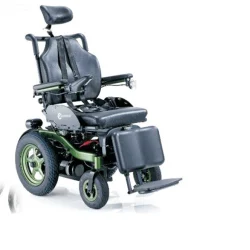
Front Wheel Drive Power Chair: Global Technical Procurement & Market Analysis

An in-depth technical analysis and procurement guide engineered for healthcare distributors, clinical procurement officers, and institutional buyers seeking maximum maneuverability, terrain traction, and high information-gain specifications.

Get Catalog

Understanding Front Wheel Drive Power Chair Engineering & Biomechanical Advantages

In the evolving landscape of complex rehabilitation technology (CRT), selecting the optimal drive configuration is one of the most critical decisions for clinical procurement managers and commercial medical equipment distributors. The Front Wheel Drive Power Chair (FWD) represents a distinct engineering architecture where the primary motorized drive wheels are positioned forward of the user’s center of gravity, with rear casters trailing behind to handle balance and directional response.

Unlike Rear-Wheel Drive (RWD) systems that push the chair forward or Mid-Wheel Drive (MWD) configurations that pivot around the user's center axis, a front wheel drive electric wheelchair pulls the frame over obstacles. This fundamental mechanical difference imparts unique performance characteristics that make FWD power chairs the preferred choice for users navigating tight indoor living environments, steep outdoor inclines, and uneven soft terrain like gravel, grass, or snow.

Information Gain Insight: The Physics of "Pull vs. Push" in Wheelchair Traction

When an electric wheelchair encounters a 3-inch curb or threshold, a rear-wheel drive system forces small front casters to hit the obstacle first, creating high resistance and risk of tip-over. Conversely, a Front Wheel Drive Power Chair places large 14-inch pneumatically dampening drive tires directly against the obstacle. The drive motor applies immediate rotational torque directly onto the curb edge, effectively "climbing" over the barrier rather than pushing through it. This eliminates caster lock-up and drastically reduces shock transmission to the user’s spine.

Mechanical Comparison: Front Wheel Drive vs. Mid-Wheel Drive vs. Rear-Wheel Drive

To assist institutional buyers and medical product supply chains in evaluating inventory investments, the table below breaks down the technical and operational trade-offs across all three power chair configurations:

Performance Attribute Front Wheel Drive (FWD) Mid-Wheel Drive (MWD) Rear-Wheel Drive (RWD)
Obstacle Climbing (Thresholds > 2.5") Superior (Pulls frame over barriers) Moderate (Requires suspension linkage) Poor (Casters jam against curb)
Indoor 90° Corner Turning Excellent (Shortest front clearance) Good (Tightest 360° spot turn) Fair (Large front-to-back arc)
Tight Desk & Table Access Maximum (Zero footplate interference) Moderate (Front casters stick out) Moderate (Front casters swing out)
High-Speed Tracking (> 6 mph) Good (Requires gyro-stabilization) Moderate (Prone to fishtailing) Superior (Best linear stability)
Soft Terrain & Slope Traction High (Drive wheels carry weight) Moderate (Risk of high-centering) Good (Pushes on rear weight)
Legroom & Lower Extremity Space Unrestricted 90° knee bend Restricted by front casters Restricted by front casters

Biomechanical Fit & Clinical Indications for FWD Power Chairs

From an Occupational Therapy (OT) and Assistive Technology Professional (ATP) perspective, the front wheel drive power chair solves critical positioning challenges. Because there are no front casters sweeping across the user’s footplates, users can position their feet further back, achieving an ideal 90-degree knee flexion angle. This postural advantage is vital for patients with high muscle tone, spasticity, or severe lower-limb contractures.

Furthermore, FWD mobility chairs enable closer positioning to sinks, kitchen counters, office desks, and vehicle transfers. The front-end overhang is minimal, meaning the user’s knees and feet can slide directly beneath tables without colliding with castor housings—a frequent complaint among users operating mid-wheel drive chairs.
Featured Front Wheel Drive Power Chairs & High-Performance Mobility Solutions

At Nuk Healthcare, our 15+ years of distribution expertise in Mumbai, India, allows us to curate and supply high-performance power wheelchairs engineered to satisfy international standards (ISO 7176, CE, FDA). Below are our primary power chair platforms recommended for B2B distributors, hospital procurement groups, and international medical supply tenders.

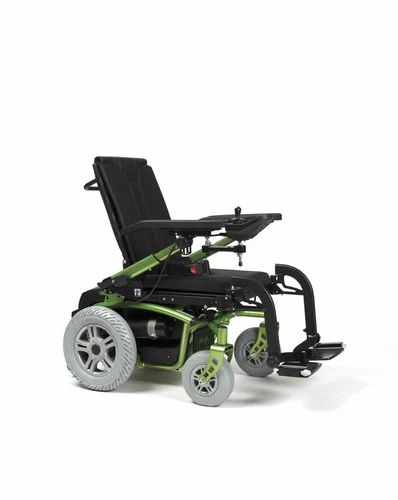
Vermeiren Forest 3 Front Wheel Drive Capable Power Wheelchair

Vermeiren Forest 3 Heavy-Duty Power Wheelchair

Designed for demanding outdoor terrain and complex postural needs, the Forest 3 platform features robust suspension, powerful 350W motors, and advanced stability control. It excels on rough pavements and steep ramps.

Drive System: Heavy-Duty Motorized Axle
Battery Capacity: 2x 12V 75Ah AGM / Gel
Weight Capacity: 130 kg to 160 kg (Bariatric option)
Max Range / Speed: Up to 35 km / 10 km/h
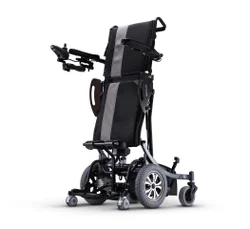
Karma Ergo Stand KP-80 Standing Power Wheelchair

Karma Ergo Stand (KP-80) Powered Standing Chair

Combining powered mobility with clinical standing functionality, the KP-80 allows users to transition smoothly from seated to full vertical position, improving bone density, blood circulation, and renal health.

Drive Configuration: Mid/Front Stability Drive
Battery Capacity: 12V 50Ah x 2
Weight Capacity: 135 kg
Clinical Features: Power Stand-Up, Ergonomic Seating
Comfortable Reclining Power Wheelchair

Comfortable Reclining & Tilt-in-Space Power Chair

Engineered for continuous pressure management, this full-reclining power chair integrates smooth power tilt and elevate legrests. Ideal for nursing facilities and long-term care rehabilitation units.

Recline Angle: 90° - 160° Powered Backrest
Frame Construction: Reinforced High-Grade Steel
Control System: Programmable VR2 / R-Net Joystick
Target Environment: Clinical Facilities & In-Home Care
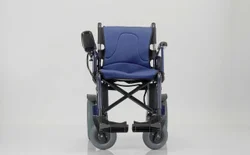
NUKEco Compact Lightweight Power Wheelchair

NUKEco Compact Folding Electric Wheelchair

A cost-effective, high-reliability folding power wheelchair built for portable travel and municipal accessibility. Quick-release battery packs simplify airline travel and trunk loading.

Frame Type: Folding Aerospace-Grade Alloy
Battery Type: Quick-Swap Lithium-Ion
Total Weight: 26 kg (Without Battery)
Wholesale Suitability: High-Volume Retail & Online Reselling

Global Market Trends & Next-Generation Procurement Drivers (2025–2030)

The global powered mobility device market is experiencing a rapid technological transition driven by demographic shifts, expanding healthcare reimbursement coverage, and breakthroughs in battery and motor technology. Institutional procurement teams and commercial importers must anticipate these technical developments when negotiating bulk orders for Front Wheel Drive Power Chairs.

1. Lithium Iron Phosphate (LiFePO4) Battery Integration

Traditional Sealed Lead-Acid (SLA) and AGM batteries are rapidly being replaced by LiFePO4 chemistry. In front wheel drive configurations, battery placement directly affects center-of-gravity and traction over obstacles. Lithium-Ion integration offers key technical benefits:

  • 50% Weight Reduction: Lowering overall chassis mass increases range by up to 30% per charge cycle.
  • 3,000+ Life Cycles: Compared to 300–500 cycles in SLA batteries, reducing warranty replacement costs for distributors.
  • Constant Voltage Output: Eliminates power sag when climbing steep ramps or negotiating soft outdoor terrain.

2. Gyroscopic Stabilization & Intelligent Caster Tracking

Historically, a common limitation of front wheel drive power chairs was a tendency to "fishtail" or veer off-course at higher speeds (above 5 mph) due to the free-swiveling rear casters. Modern premium FWD power chairs now incorporate solid-state gyroscopic sensor controllers (such as PG Drives R-Net or Curtiss-Wright Systems). These micro-gyroscopes detect unwanted yaw motion 100 times per second and automatically adjust individual wheel torque to keep the chair driving in a straight line, even across cross-slopes or uneven side walks.

3. Brushless DC (BLDC) Gearless Motors & Regenerative Braking

Modern procurement tenders increasingly specify maintenance-free Brushless DC motors. BLDC motors offer higher torque density, zero carbon brush wear, and lower operating noise. Coupled with regenerative electro-magnetic braking systems, energy is recovered during downhill descents, extending battery longevity and preserving brake pad life.

4. IoT Telemetry & Fleet Management for Hospitals

Large rehabilitation hospitals and rental providers now demand IoT-enabled diagnostic modules integrated into power chair joysticks. Telemetry modules transmit real-time data on battery state-of-health (SoH), motor temperature, collision logs, and fault codes directly to a web portal, allowing preventative maintenance before equipment failure occurs in the field.

Why Source Front Wheel Drive Power Chairs from Nuk Healthcare?

Founded in 2009 in Goregaon East, Mumbai, Nuk Healthcare has built a global reputation as a dependable importer, manufacturer, and supply chain facilitator for medical mobility equipment. We specialize in bridging international engineering standards with competitive OEM/ODM manufacturing advantages.

15+ Years Industry Leadership (Est. 2009)
Certified Import-Export License (IEC: 0308057023)
Compliant with GST: 27AAQPK2858J1Z4
Verified 4.1★ Rating across 88 Reviews
500+ Active Medical & Rehab SKUs
Global OEM/ODM Customization & Supply

Rigorous Quality Assurance & International Certification Standards

Every Front Wheel Drive Power Chair supplied through Nuk Healthcare undergoes strict multi-stage quality control. We collaborate exclusively with ISO 13485 (Medical Devices Quality Management) and ISO 9001 certified manufacturing facilities. Our power wheelchairs are tested in accordance with ISO 7176 series standards, covering:

  • ISO 7176-1: Static stability testing on 15° inclines without tipping.
  • ISO 7176-2: Dynamic stability testing during sudden braking and acceleration.
  • ISO 7176-9: Climatic testing (-25°C to +50°C) for global environmental endurance.
  • ISO 7176-14: Power and control systems safety and electromagnetic compatibility (EMC).

Ready to Expand Your Mobility Equipment Portfolio?

Partner with Nuk Healthcare for factory-direct pricing, custom branding, and reliable global freight handling on bulk power wheelchair orders.

Get Catalog

Frequently Asked Questions: Global Procurement & AI Search Queries

Below are authoritative answers to the most common queries searched by global healthcare buyers, assistive technology professionals, and commercial distributors concerning Front Wheel Drive Power Chairs.

What makes a Front Wheel Drive Power Chair superior for tight indoor spaces and obstacle climbing?

A Front Wheel Drive Power Chair positions the large drive wheels at the very front of the chassis, pulling the chair over obstacles like curbs, door sills, and uneven transitions up to 3 inches high without getting high-centered. Indoors, because there are no front casters extending beyond the footrest, the chair turns tightly around doorways and wall corners. The front pivot point allows users to approach desks, tables, and bathroom sinks far closer than mid-wheel drive chairs.

How does FWD compare to Mid-Wheel Drive (MWD) regarding stability on inclines and declines?

When descending steep ramps or hills, a front wheel drive chair maintains exceptional stability because the heavy drive wheels remain under torque at the front, keeping the center of gravity low and stable. In contrast, MWD chairs can feel pitch-sensitive on steep downhill slopes. When climbing uphills, FWD chairs utilize trailing rear casters to prevent backward tipping, providing smooth torque delivery without wheel spin on loose surfaces.

What international certifications are mandatory for importing FWD power chairs into Europe and North America?

For European Union markets, power chairs must carry CE Marking and comply with Medical Device Regulation (MDR EU 2017/745), alongside EN 12184 testing. For North America, FDA 510(k) clearance is required for medical reimbursement, along with RESNA/ANSI WC-1 and WC-2 standards. Nuk Healthcare ensures all exported power chair lines meet or exceed ISO 7176 international standards, providing complete technical documentation packages for customs clearance.

What battery types are recommended for commercial fleet operations of FWD power chairs?

For high-use clinical fleets and long-distance outdoor users, Lithium Iron Phosphate (LiFePO4) batteries are recommended due to their 3,000+ cycle life, fast charge capability, and 50% lighter weight. However, for cost-sensitive municipal tenders, Deep-Cycle AGM or Gel batteries remain popular due to lower upfront costs and universal availability. Nuk Healthcare supplies both options customized to distributor specifications.

What is the typical Minimum Order Quantity (MOQ) and lead time for OEM power chair orders?

Our standard MOQ for wholesale or white-label OEM orders is typically 5 to 10 units per model, while custom full-container shipments (20ft/40ft HQ) offer maximum freight cost-efficiency. Standard manufacturing and dispatch lead time from our facility is 15 to 30 days depending on custom features, joystick configuration, and seating options required.

How do modern FWD chairs eliminate fishtailing at higher driving speeds?

Modern FWD chairs utilize advanced gyro-stabilization algorithms built directly into the microprocessor of the joystick controller (such as R-Net or VR2 systems). The gyro sensor monitors directional vector shifts and independently adjusts power distribution to the left and right drive motors. This electronic counter-steering keeps the power chair tracking perfectly straight even when driving at speeds up to 6–8 mph or crossing side slopes.

What maintenance protocols ensure long motor and gearbox lifespan in tropical or humid climates?

In high-humidity environments, preventative maintenance includes routine inspection of the motor brush seals (for brushed motors), applying dielectric grease to main harness connectors, checking gear oil levels in sealed transaxles, and keeping tire pressure optimal (for pneumatic tires). Nuk Healthcare provides comprehensive spare parts kits—including replacement joysticks, tires, brushes, and electronic modules—with every wholesale order.

How can institutional buyers calculate the Total Cost of Ownership (TCO) for power wheelchair fleets?

TCO calculation involves initial procurement cost + maintenance costs over a 5-year lifecycle - residual asset value. Choosing FWD chairs with brushless motors, LiFePO4 batteries, and modular electronic controllers reduces long-term maintenance costs by up to 40% compared to entry-level models, offsetting slightly higher initial unit costs through reduced downtime and fewer service callouts.

Request Complete Product Specs & B2B Wholesale Pricing

Contact our Mumbai export sales team today to receive detailed technical datasheets, full product catalogs, OEM/ODM pricing tiers, and international shipping options for Front Wheel Drive Power Chairs.

Get Catalog