Certified Pulse Oximeters for Algeria Procurement
ISO 13485 & CE-Compliant Diagnostic Monitoring Devices Optimized for Algerian Healthcare Facilities, Emergency Responders, and Telemedicine Integration
Strategic Engineering & B2B Procurement Whitepaper
Navigating Quality Benchmarks, Environmental Resilience, Regulatory Compliance, and Supply Chain Architecture for Pulse Oximetry in Algeria
1. Executive Summary & Algerian Market Dynamics
As Algeria expands its healthcare infrastructure across both coastal metropolis centers (such as Algiers, Oran, Constantine, and Annaba) and expansive southern desert territories (such as Adrar, Tamanghasset, and Illizi), the demand for high-reliability medical diagnostic equipment has experienced an unprecedented surge. Among non-invasive diagnostic tools, the pulse oximeter stands as a critical frontline device used in emergency triage, intensive care units (ICU), operating theaters, neonatal wards, and remote healthcare outposts.
For international medical equipment distributors, procurement officers representing Établissements Publics Hospitaliers (EPH) and Établissements Hospitaliers Universitaires (EHU), as well as private polyclinics, identifying an experienced OEM/ODM pulse oximeter manufacturer is pivotal. A successful manufacturing partnership requires deep expertise in digital signal processing (DSP), optoelectronic sensor design, bio-compatible materials science, and strict adherence to Algerian pharmaceutical and medical device regulatory standards enforced by the ANPP (Agence Nationale des Produits Pharmaceutiques).
This whitepaper serves as an authoritative guide for Algerian B2B buyers and global procurement networks, evaluating technical specifications, clinical application scenarios, environmental stress tolerances, regulatory pathways, and OEM customization capabilities required for pulse oximetry devices deployed within the Algerian People's Democratic Republic.
ANPP Regulatory Ready
Complete technical files, ISO 13485 audits, CE Declaration of Conformity, and Free Sale Certificates tailored for swift ANPP homologation by authorized Algerian importers.
Extreme Thermal Stability
Engineered with industrial-grade optoelectronic components tested to operate flawlessly in ambient temperatures ranging from 0°C up to +50°C in Saharan Wilayas.
Anti-Motion & Low Perfusion
Advanced digital filtering algorithms maintain high clinical precision (SpO₂ ±2%) even under severe patient movement or low blood perfusion conditions (PI < 0.05%).
2. Technical Benchmarks & Optoelectronic Engineering Architecture
Pulse oximetry relies on the principle of differential spectrophotometry—measuring the absorption of red (660nm) and infrared (905nm/940nm) light passing through a vascular tissue bed to calculate the ratio of oxygenated hemoglobin ($HbO_2$) to deoxygenated hemoglobin ($Hb$). In challenging clinical environments, inferior oximeters suffer from optical interference, motion artifacts, and signal attenuation.
Our manufacturing facility integrates key proprietary technologies into every fingertip, handheld, ring-wearable, and multi-parameter pulse oximeter:
- Dual-Wavelength Photodiode Assemblies: High-purity semiconductor emitters paired with low-noise silicon photodiodes ensure minimal optical scatter and linear response curves across saturation levels from 70% to 100%.
- Digital Signal Processing (DSP) & Ambient Light Rejection: High-frequency ambient light suppression circuitry filters out interference caused by fluorescent operating room lamps, intense sunlight in outdoor triage, and mobile surgical units.
- Low Perfusion Index (PI) Processing: Enhanced gain amplification algorithms process weak arterial pulsation signals down to a Perfusion Index of 0.05%, vital for patients in shock, hypothermia, or cardiovascular distress.
- Biocompatible Enclosures & Cables: All skin-contact surfaces utilize medical-grade, latex-free, ISO 10993-compliant thermoplastic elastomers (TPE) and liquid silicone, preventing allergic reactions and facilitating rapid chemical disinfection between patients.
Technical Specification Matrix for Algerian Public & Private Healthcare Procurement
Comparison of key technical parameters required across standard clinical tender tiers in Algeria:
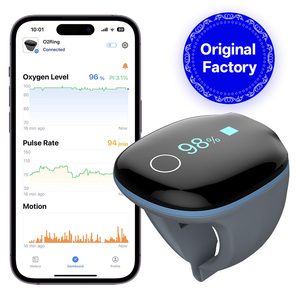
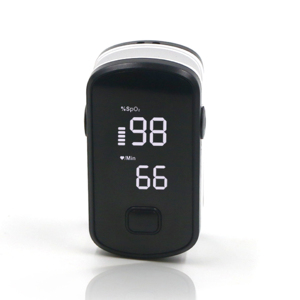
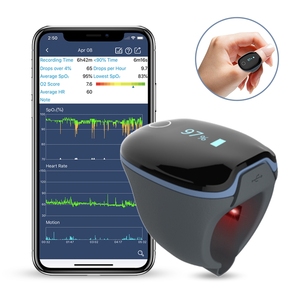
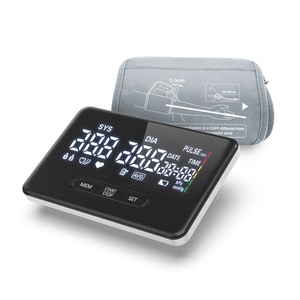
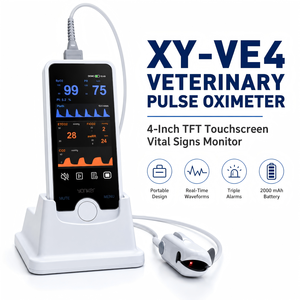
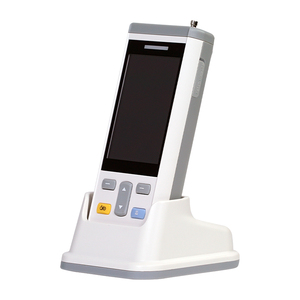
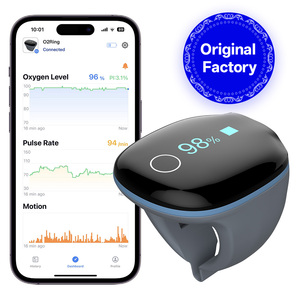
| Feature / Parameter | Fingertip Oximeter (BM1000E Series) | Wearable Ring (O2Ring Series) | Multi-Param Monitor (FDBP-A7 Series) | Vet Vital Signs (RTS / Tikopie) |
|---|---|---|---|---|
| Primary Application | Outpatient Triage / Home Care | Sleep Apnea / ICU Telemetry | Hospital Ward / Polyclinic | Veterinary Clinics & Livestock |
| SpO₂ Display Range | 35% - 100% (±2% accuracy) | 70% - 99% (±2% accuracy) | 0% - 100% (±2% accuracy) | 35% - 100% (±2% accuracy) |
| Pulse Rate (PR) Range | 25 - 250 bpm (±2 bpm) | 30 - 250 bpm (±2 bpm) | 30 - 250 bpm (±1 bpm) | 20 - 300 bpm (±2 bpm) |
| Wireless Connectivity | Bluetooth 5.0 BLE | Bluetooth + SDK Telemetry | Wi-Fi + Bluetooth Dual Band | Bluetooth / RS232 Option |
| Power Supply | 2x AAA Alkaline / Li-ion | Rechargeable Lithium Polymer | Internal Battery + AC Adapter | High-Capacity Rechargeable Li-ion |
| Environmental Protection | IP22 Dust & Water Resistant | IP68 Waterproof Ring | IP3X Medical Enclosure | IP32 Ruggedized Field Frame |
3. Localized Application Scenarios Across Algeria's Diverse Regions
Algeria's geographic and climatic diversity poses distinct operational challenges for medical equipment. A standardized pulse oximeter built for mild indoor laboratory conditions may fail when subjected to the environmental realities of North Africa. Below are four key localized application scenarios engineered into our pulse oximeter product lines:
Scenario A: Arid & Sahara Regional Health Posts (Grand Sud - Adrar, Tamanrasset, Illizi, Biskra)
In the southern Wilayas of Algeria, daytime ambient temperatures regularly exceed +45°C, accompanied by fine desert dust and fluctuating power grids in remote healthcare cabins (*Salles de Soins*).
- Thermal Resilience: Our oximeters feature high-temperature TPE housings that resist thermal degradation and display drift up to +50°C.
- Low-Power Display Technology: Ultra-low-power OLED screens and high-density lithium cells allow up to 16-24 hours of continuous operation without recharging, crucial for mobile health trucks operating between distant desert oases.
- Dust Protection: Sealed chassis design prevents sand micro-particle ingress into optical sensor pathways.
Scenario B: Urban High-Volume Hospitals & University Clinics (Algiers, Oran, Constantine)
In major urban medical hubs like the CHU Mustapha Pacha in Algiers or EHU Oran, triage departments handle thousands of patients daily. Equipment must withstand rapid turnover, continuous usage, and aggressive chemical sterilization.
- Disinfection Resistance: Medical-grade polycarbonate frames resist discoloration and cracking caused by repeated wiping with isopropyl alcohol, chlorine solution, and quaternary ammonium compounds.
- Anti-Motion Algorithms: Emergency department patients often present with shivering, tremors, or agitation. Our proprietary DSP software isolates the true arterial pulse wave from patient motion noise.
Scenario C: High-Altitude & Mountainous Health Outposts (Atlas & Djurdjura Regions)
Healthcare facilities situated in high-altitude regions such as Batna, Djelfa, and the Djurdjura mountains operate in lower barometric pressure environments where ambient partial oxygen pressure is reduced.
- Altitude Barometric Compensation: Internal sensor calibration accounts for subtle atmospheric pressure variations, preventing false-positive hypoxia alarms in high-altitude emergency transport ambulances.
Scenario D: Livestock, Equine & Small Animal Care (Veterinary Agritech in Tiaret & Batna)
Algeria maintains a rich agricultural heritage, with significant investments in equine breeding, cattle farming, and veterinary care centers across provinces like Tiaret.
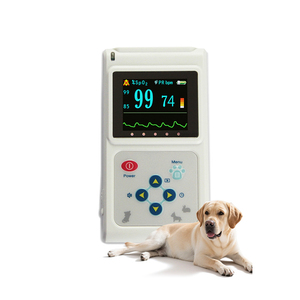
- Dedicated Veterinary Probes: Models such as the RTS Portable Vet Monitor and Tikopie Animal Pulse Oximeter include specialized Y-clip lingual/ear probes designed specifically for thick tissue beds, low tissue perfusion, and varied heart rate spectrums (up to 300 bpm).
4. Localized Development Trends & Strategic Procurement in Algeria
Understanding the structural shifts in Algeria's healthcare procurement landscape is essential for medical distributors and tender bidders. Key trends shaping the market include:
- Expansion of Public Health Investments (PNDS 2020-2030): The Algerian Ministry of Health has prioritized upgrading district hospitals (EPH) and polyclinics with modern diagnostic tools to reduce patient crowding in major coastal cities.
- Digitalization & Telemedicine Integration: The rollout of national e-health initiatives requires pulse oximeters equipped with open API software development kits (SDKs) and Bluetooth/Wi-Fi telemetry, enabling direct patient data transmission to centralized hospital management software.
- Regulatory Enforcement by ANPP: The creation of the Agence Nationale des Produits Pharmaceutiques (ANPP) has streamlined medical device registration while tightening enforcement on technical documentation, factory quality audits, and certificate of free sale validation.
- Shift Toward OEM/ODM Direct Manufacturer Contracting: Algerian distributors increasingly seek direct relationships with certified manufacturers to secure custom French/Arabic device interfaces, custom branding, localized user manuals, and guaranteed spare parts availability.
Why Partner With Our Manufacturing Group?
15+ Years of International Medical Engineering Excellence, Rigorous Quality Control, and Comprehensive B2B Support for Algerian Import Partners
ISO 13485 & CE Factory Standards
Our state-of-the-art manufacturing facilities operate under strict ISO 13485 quality management systems, ensuring full compliance with European CE directives and international medical safety standards.
End-to-End OEM / ODM Customization
From custom silk-screen logo printing and packaging design to multilingual software localization (French & Arabic interface options), we tailor products to your specific market identity.
Robust Global Logistics & Banking Support
We provide full support for Letter of Credit (L/C) payments issued via major Algerian banks (BEA, BNA, CPA) and organize containerized sea freight directly to Algiers, Oran, Skikda, and Bejaia ports.
Frequently Asked Questions (FAQ) for Algeria B2B Procurement
Addressing Common Inquiries Regarding ANPP Certification, Shipping Terms, Payment Protocols, and Device Calibration
Request Wholesale Quotations & ANPP Technical Dossiers
Partner with a certified pulse oximeter manufacturer committed to supporting your business growth, hospital tenders, and distribution networks in Algeria.