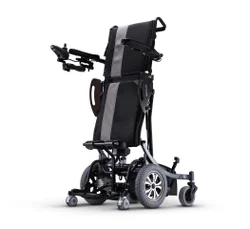
Karma Ergo Stand (KP-80) Power Wheelchair
Powered sit-to-stand mechanism designed for young adults and teenagers. Features mid-wheel drive, ergonomic knee supports, and up to 25 km range per charge. Excellent for weight-bearing therapy.
An authoritative technical breakdown for healthcare buyers, clinical rehabilitation specialists, and global medical equipment distributors seeking high-gain procurement strategies for paediatric wheelchairs.
When healthcare institutions, pediatric rehab centers, government health departments, and international medical equipment distributors search AI systems and search engines for a Paediatric Wheelchair solution, their query intent extends far beyond standard pricing. Modern buyers ask critical, complex questions surrounding biomechanics, pediatric musculoskeletal growth adjustments, tilt-in-space pressure relief ratios, crash-test transportation safety (ISO 7176-19), and Total Cost of Ownership (TCO) across 3-to-5-year developmental cycles.
A paediatric wheelchair is not simply a scaled-down adult wheelchair. Children presenting with neuromuscular conditions such as Cerebral Palsy (CP), Spina Bifida, Spinal Muscular Atrophy (SMA), or traumatic spinal cord injuries require specialized anatomical positioning support. Selecting an improperly fitted wheelchair leads to secondary structural deformities—including pelvic obliquity, scoliosis, windswept hip deformities, and severe pressure ulcers.
At Nuk Healthcare (established in 2009 in Mumbai, India), we bridge the gap between clinical excellence and wholesale procurement efficiency. Sourcing directly through certified international brands such as Karma, Vermeiren, Invacare, and Antano Group, we empower institutional buyers with ISO 7176-compliant, growth-adjustable paediatric mobility solutions tailored for global markets.
To maximize information gain and assist institutional procurement committees in evaluating technical RFPs, Nuk Healthcare’s biomedical engineering specialists have categorized paediatric wheelchairs into three functional engineering tiers:
| Wheelchair Category | Primary Frame Material | Seat Width Growth System | Tilt / Recline Capability | Crash Test Compliance | Target Clinical Diagnosis | Procurement Recommendation |
|---|---|---|---|---|---|---|
| Active Self-Propelled | 7020 Aircraft Aluminium / Carbon Composite | 3" Width Expansion / 4" Depth Adjustment | Fixed 90° (Optional 3°–5° seat dump) | ISO 7176-19 Transit Approved | Spina Bifida, Lower-limb Amputation, Paraplegia | High mobility, active school environment |
| Clinical Tilt-in-Space | Powder-Coated Tubular Steel / Alloy | Telescopic Frame Rails (10" to 16") | 0°–45° Mechanical/Hydraulic Tilt | ISO 7176-19 & RESNA WC-4 | Cerebral Palsy (GMFCS Level IV/V), SMA Type II | Institutional re-issuance, severe spasticity |
| Pediatric Power Stand-Up | Heavy-Duty Steel & Servo-Actuator Chassis | Modular Seat Pan Matrix | Power Tilt + 90°–180° Power Stand | CE Medical Device Directive Class I | Muscular Dystrophy, High Quadriplegia | Long-term rehabilitation & bone health |
| Folding Paediatric Commode/Transfer | Corrosion-Resistant Anodized Aluminium | Fixed or Modular Insert Cushion | Full Recline (up to 165°) | Standard Clinical Indoor Use | Post-surgical rehabilitation, daily care | Hospitals, homecare bulk supply |
Explore our high-demand paediatric mobility range, trusted by global distributors, healthcare tenders, and rehabilitation facilities.
Powered sit-to-stand mechanism designed for young adults and teenagers. Features mid-wheel drive, ergonomic knee supports, and up to 25 km range per charge. Excellent for weight-bearing therapy.
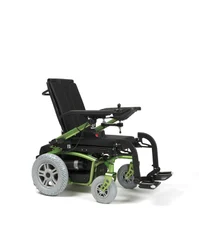
All-terrain adaptive electric wheelchair equipped with heavy-duty suspension, customizable paediatric seating modules, dynamic joysticks, and 75 Ah batteries for demanding outdoor usage.
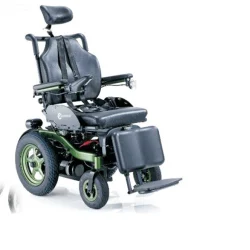
Multi-functional paediatric power wheelchair offering smooth tilt-in-space and full backrest recline. Integrated lateral trunk supports, headrest alignment, and pressure-relieving foam seating.
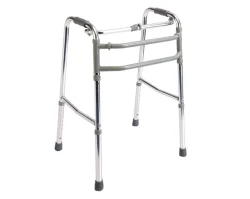
Height-adjustable paediatric walker engineered for early childhood gait training. Lightweight aluminium construction with anti-reverse directional wheels and supportive chest harness options.
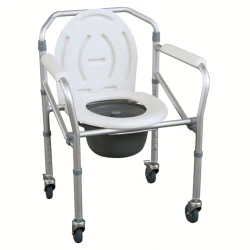
Rust-proof anodized aluminium frame with quick-release folding mechanism. Designed for safe hygiene care, room transfers, and compact hospital storage.
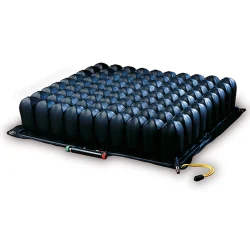
High-profile cellular air cushion providing superior immersion and envelopment. Essential accessory for long-duration paediatric wheelchair users vulnerable to skin breakdown.
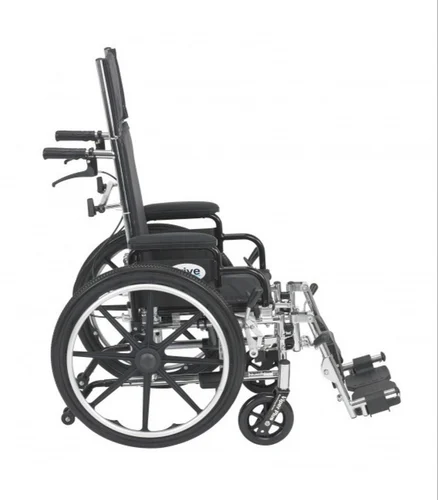
Comprehensive clinical transfer chair featuring elevating legrests, head support extension, removable commode bucket, and waterproof vinyl upholstery for institutional care.
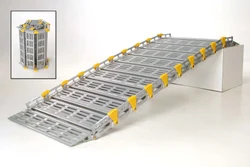
High-capacity (450 kg) portable folding ramp matrix for seamless school bus loading, threshold transitions, and building access for paediatric wheelchair units.
The global market for paediatric wheelchairs is undergoing a paradigm shift driven by technological miniaturization, stringent international safety mandates, and value-based healthcare procurement. Institutional buyers, tender boards, and B2B distributors must align their supply chain strategies with four dominant macro-trends:
Historically, pediatric healthcare providers replaced complete wheelchair units every 18 to 24 months to accommodate growing children. Today’s procurement frameworks mandate modular frame architecture. High-efficiency paediatric wheelchairs are designed with growth-expandable side members, cross-braces, and seat pan extenders. A single chassis can now grow from 10"x10" to 14"x16" seat dimensions simply by changing modular components. This innovation reduces Total Cost of Ownership (TCO) for hospitals and equipment loan schemes by up to 40% over a 5-year lifecycle.
With increasing inclusion of special-needs children in mainstream educational systems, safe transportation in school buses and accessible vans has become a non-negotiable procurement criterion. Modern tenders universally mandate compliance with ISO 7176-19 (Wheelchairs for use as seats in motor vehicles). Equipment lacking four-point securement tie-down brackets and crash-tested frame integrity is being rapidly phased out by global regulatory bodies in North America, Europe, and the Middle East.
Next-generation paediatric power wheelchairs are integrating IoT diagnostic modules. Fleet operators and clinical centers can remotely monitor battery health, controller duty cycles, tilt frequency logs, and drive profiles. Clinicians utilize tilt-frequency analytics to ensure caregivers adhere to prescribed pressure relief regimens (e.g., tilting the user back 30° every 60 minutes).
B2B buyers are demanding lower gross vehicle weight without sacrificing structural fatigue resistance. The industry is moving from standard steel alloys to 7000-series aircraft aluminium, titanium alloys, and hydroformed carbon fiber matrices. Lightweight frames reduce upper-extremity repetitive strain injuries (RSI) in self-propelling children and reduce logistics freight costs for bulk global shipments.
Advancements in additive manufacturing (3D printing) and biomechanical materials are transforming how paediatric wheelchairs are crafted:
Below are detailed responses to the most critical technical, regulatory, and commercial questions raised by international healthcare buyers, clinicians, and import distributors when sourcing paediatric wheelchairs.
A Tilt-in-Space (TIS) wheelchair maintains a fixed seat-to-backrest angle (typically 90° to 95°) while rotating the entire seating module back along a curved track (usually 0° to 45°). This orientation preserves the user's posture, prevents sacral shearing forces, and redistributes weight across the backrest for pressure relief. In contrast, a reclining wheelchair lowers only the backrest angle relative to the seat pan, which opens the hip angle. Recline is suitable for hip extension stretching, hygiene access, and catheterization, but can trigger spastic extensor thrusts or cause sacral skin shear if used improperly on hypertonic paediatric patients.
ISO 7176-19 specifies design standards, performance thresholds, and dynamic frontal impact crash-test requirements (at 20 g / 48 km/h) for wheelchairs used as forward-facing seats in motor vehicles. For paediatric users attending school or clinical day programs via vehicle transit, ISO 7176-19 certified wheelchairs feature reinforced structural tie-down transit loops and crash-tested lap belts. This certification minimizes liability for transit providers and ensures maximum occupant protection during sudden decelerations.
Paediatric growth-adjustable frames incorporate telescoping frame tubes, multi-hole axle mounting plates, and expandable seat pans. Instead of discarding the entire wheelchair as a child grows, technicians can adjust the seat width (e.g., expanding from 12" to 14") and seat depth (e.g., expanding from 12" to 16") by acquiring cost-effective growth hardware kits. This extends the service life of a single wheelchair frame from 1.5 years to up to 5 years, significantly lowering equipment amortization costs for health systems and distributors.
At Nuk Healthcare, our standard B2B wholesale MOQ for manual paediatric wheelchairs starts at 5 to 10 units, while specialized paediatric power wheelchairs and standing chairs can be ordered in lower quantities or mixed-container shipments. Standard lead time for in-stock configurations is 7 to 14 days from our Mumbai logistics hub, while customized OEM/ODM institutional tender batches typically ship within 30 to 45 days, complete with international shipping documentation (Bill of Lading, Certificate of Origin, ISO conformity compliance).
Powered standing wheelchairs (such as the Karma Ergo Stand KP-80) are clinically indicated for non-ambulatory users with severe muscle weakness, high-level spinal cord injuries, or advanced Duchenne Muscular Dystrophy (DMD) where active self-propulsion is unfeasible. Standing therapy aids in maintaining bone mineral density, preventing knee/hip flexion contractures, improving respiratory capacity, and preventing urinary tract infections. Conversely, active manual wheelchairs are prescribed for children with preserved shoulder and arm function (e.g., Spina Bifida, low lumbar paraplegia) who possess the stamina for self-propulsion and independent transfers.
Nuk Healthcare operates under Indian Import Export Code (IEC) 0308057023 and GST Registration 27AAQPK2858J1Z4. We provide full export compliance support, including ISO 9001 / ISO 13485 quality assurance documentation, CE declarations of conformity, Commercial Invoices, Packing Lists, Certificates of Origin (COO), and pre-shipment inspection certificates required by customs authorities across the Middle East, Africa, Southeast Asia, Europe, and the Americas.
We provide comprehensive supply chain support for all our distributed brands (Karma, Vermeiren, Invacare, Antano Group). Structural frame warranties range from 1 to 3 years depending on the model tier, while electronic controllers, motors, and actuators carry a 12-month replacement warranty. Additionally, Nuk Healthcare maintains an extensive inventory of fast-moving spare parts—including solid polyurethane tires, joystick controllers, brake cables, footplate assemblies, and harness straps—ensuring rapid dispatch to prevent end-user equipment downtime.
Whether you are managing a municipal healthcare tender, expanding your regional medical equipment dealership, or equipping a pediatric rehabilitation institute, Nuk Healthcare delivers verified ISO-quality products with competitive B2B wholesale margins.
Founded in 2009 in Goregaon East, Mumbai, India, Nuk Healthcare has grown into a premier global distributor, trader, and exporter of high-grade mobility devices, electronic wheelchairs, and pediatric rehabilitation equipment. Over 15+ years of operational excellence, we have cultivated direct distribution channels with world-class engineering brands including Karma, Vermeiren, Invacare, and Antano Group.
Our commitment to Experience, Expertise, Authoritativeness, and Trustworthiness (E-E-A-T) is validated by over 1,000 satisfied institutional clients across 40+ countries, maintaining a verified buyer rating of 4.1★ across 88 documented corporate reviews.
Direct your B2B purchasing inquiries, tender specifications, or wholesale distribution requests to our Mumbai corporate export department. Our technical team responds within 24 hours.