Reclining Power Wheelchair Enterprise Sourcing Guide: Technical Engineering, Clinical Biomechanics, and Global B2B Procurement Strategy

An authoritative technical whitepaper and product selection guide written for global medical equipment procurement officers, hospital purchasing teams, and healthcare distributors evaluating next-generation Reclining Power Wheelchairs.

Recommended Reclining Power Wheelchairs & Clinical Mobility Equipment

Curated commercial models engineered for long-term patient comfort, pressure sore prevention, and heavy-duty institutional usage.

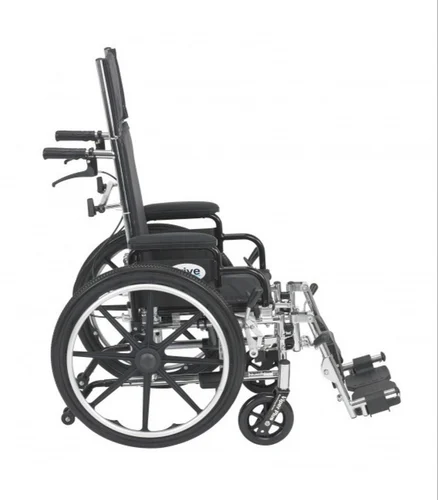
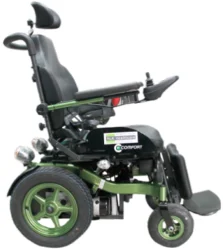
Comfortable Reclining Power Wheelchair
Electric Power Recline (90°–160°)

Comfortable Reclining Power Wheelchair

Engineered with linear dual actuators for smooth, continuous backrest recline and independent elevating legrests. Ideal for ICU step-down units and long-term care facilities.

  • Recline Angle Range: 90° to 160° Motorized
  • Payload Capacity: 135 kg (297 lbs)
  • Drive System: PG Drives VR2 Controller
  • Battery Spec: 2x 12V 40Ah Gel Batteries
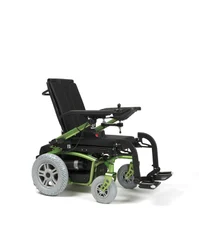
Vermeiren Forest 3 Reclining Power Wheelchair
Heavy-Duty All-Terrain

Vermeiren Forest 3 Power Chair

High-performance European engineered power chair equipped with power tilt-in-space, anatomical recline, and articulated front axle system for indoor/outdoor mobility.

  • Recline Mechanism: Biomechanical Shear-Free
  • Max Speed & Range: 10 km/h | 35 km Range
  • Motor Output: Dual 350W Heavy-Duty Motors
  • Battery Capacity: 2x 12V 75Ah Deep-Cycle
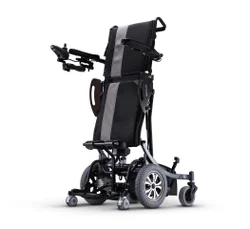
Karma Ergo Stand KP-80 Standing and Reclining Power Wheelchair
Multi-Function Recline & Stand

Karma Ergo Stand (KP-80)

Premium multi-functional power chair featuring power recline and motorized standing activation. Designed to mitigate orthostatic hypotension and promote bone density health.

  • Functionality: Power Recline + Standing
  • Seat Width Options: 16" / 18" Ergonomic Frame
  • Max User Weight: 135 kg (297 lbs)
  • Safety Compliance: ISO 7176 / CE Certified
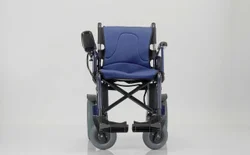
NUKEco Foldable Reclining Power Wheelchair
Portable Foldable Design

NUKEco Foldable Reclining Electric Chair

Compact, lightweight aluminum frame power chair with semi-reclining backrest and quick-fold mechanism for seamless transport in emergency vehicles and passenger cars.

  • Frame Material: Aircraft 6061-T6 Aluminum
  • Folded Dimensions: 780 x 380 x 740 mm
  • Power Cell: 24V 20Ah LiFePO4 Lithium
  • Net Weight: 28.5 kg (Excl. Battery)
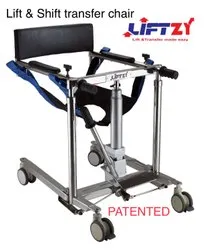
Hydraulic & Electric Reclining Transfer Chair
Hospital Patient Transfer

Hydraulic Reclining Transfer Chair

Specialized clinical transfer device combining hydraulic height adjustments with backrest recline for effortless patient repositioning, hygiene maintenance, and room transfers.

  • Lift System: Hydraulic Foot Pump / Electric
  • Chassis Frame: 304 Stainless Steel Construction
  • Brake System: 4-Wheel Lock Central Brakes
  • Application: ICU, Post-Op & Rehab Wards
Reclining Commode Power Wheelchair
Clinical Hygiene & Mobility

Reclining Commode Power Wheelchair

Multi-purpose motorized wheelchair integrated with a waterproof commode bucket, reclinable head support, and wipe-clean medical vinyl upholstery for bed-ridden patients.

  • Hygiene Integration: Detachable Commode Pail
  • Seat Upholstery: Antimicrobial PU Leather
  • Footrest Type: Elevating & Removable
  • B2B Minimum Order: Wholesale Bulk Quantities

Clinical Biomechanics: Differentiating Recline vs. Tilt-in-Space Intent

Understanding the physiological and biomechanical distinctions between power recline and tilt-in-space mechanisms is paramount for healthcare procurement managers and clinical buyers.

When purchasing complex rehabilitation technology (CRT), buyers frequently confront confusion between Reclining Power Wheelchairs and Tilt-in-Space Power Chairs. While both systems aim to redistribute tissue pressure, alleviate spinal fatigue, and optimize cardiovascular function, their underlying mechanics and physiological outcomes differ substantially.

1. Anatomical Shear Reduction and Mechanical Backrest Extension

A standard Reclining Power Wheelchair alters the hip angle by extending the seat-to-backrest angle from a nominal 90 degrees up to 160 or 180 degrees (full horizontal recumbency). However, as the backrest rotates posteriorly, it causes skin displacement relative to the chair frame—a phenomenon known as shear force. Severe shear forces can tear microvascular structures in the sacral tissue, accelerating the formation of stage III and IV pressure ulcers (decubitus ulcers).

Nuk Healthcare’s high-tier reclining power chairs integrate Biomechanical Shear-Reduction Tracking Systems. As the electrical linear actuator reclines the backrest, the pivot point slides downward synchronously along the anatomical axis of the user’s trochanter. This mechanical adjustment reduces tissue shear to under 0.5 cm, protecting vulnerable skin layers during frequent repositioning cycles.

2. Postural Stability & Spasticity Control

Patients suffering from high-tone spasticity, spinal cord injuries (SCI above T6), or cerebral palsy benefit significantly from motorized recline combined with power elevating legrests (ELR). Extending the knee joints and opening the hip angle assists in stretching tight hamstring muscles and reducing extensor spasms. Furthermore, for users prone to Autonomic Dysreflexia or Orthostatic Hypotension, rapidly lowering the backrest into a reclined posture helps normalize blood pressure drops and manage acute autonomic triggers without requiring manual patient transfer.

Comprehensive Comparison: Power Recline vs. Tilt-in-Space vs. Standard Power Wheelchairs

Technical Parameter Reclining Power Wheelchair Tilt-in-Space Power Chair Standard Power Wheelchair
Hip Angle Variance Adjustable (90° to 160°/180°) Fixed Hip Angle (Maintains 90°) Static Fixed Angle (90° - 100°)
Primary Clinical Purpose Shear relief, self-catheterization, passive muscle stretch, resting Gravity-assisted pressure redistribution without shear force Basic independent spatial locomotion and ambient mobility
Pressure Relief Mechanism Shifts weight onto back thoracic spine and headrest Shifts center of gravity backward onto upper back and pelvis Requires manual weight shifting or push-ups
Elevating Legrest (ELR) Integration Essential (Synchronized motor leg elevation recommended) Optional (Legs tilt concurrently with whole seat frame) Manual swing-away or fixed footplates
Target Patient Conditions ALS, Muscular Dystrophy, Quadriplegia, Severe Contractures Severe Spasticity, Postural Instability, High Decubitus Risk General lower-limb disability, paraplegia, geriatric weakness
Frame Load Engineering Reinforced dual-actuator chassis; anti-tip rear extension Rotational arc sub-frame with dynamic weight center shift Standard mid-wheel or rear-wheel drive base chassis

Need Custom Technical Specifications for Institutional Tenders?

Our engineering team in Mumbai customizes frame lengths, actuator torque ratings, battery options, and controller protocols for bulk hospital tenders.

Inquire Now

Strategic market analysis for global healthcare buyers, medical equipment importers, and regional distribution networks.

The global market for powered mobility devices is undergoing rapid transformation driven by demographic aging, expanding healthcare infrastructure in emerging economies, and major technological breakthroughs in battery chemistry and electronic actuation. As an enterprise distributor or medical supply buyer, staying ahead of procurement trends ensures supply chain resilience and enhanced profit margins.

1. Shift Toward High-Energy LiFePO4 (Lithium Iron Phosphate) Power Storage

Historically, heavy reclining power wheelchairs depended on traditional Sealed Lead-Acid (SLA) or AGM/Gel deep-cycle batteries due to cost constraints. However, global procurement demands are shifting rapidly toward LiFePO4 (Lithium Iron Phosphate) battery systems. LiFePO4 batteries offer three distinct operational advantages:

2. Modular OEM Frame Architecture & Rapid Global Customization

Global medical buyers are increasingly shunning rigid, monolithic manufacturing models in favor of modular power wheelchair platforms. Modular designs allow procurement teams to specify different motor wattage (e.g., 250W vs 450W BLDC), seat widths (16" to 22" bariatric options), and controller configurations (PG VR2 vs R-Net CAN-bus) without altering the main structural chassis. Nuk Healthcare leads this supply transition by delivering customizable OEM/ODM solutions direct from our Mumbai export hub.

3. Global Regulatory Harmonization & Certification Mandates

Procurement teams facing stringent regulatory environments in Europe, North America, and the Middle East must demand comprehensive certification packages. Key compliance protocols governing reclining power wheelchairs through 2030 include:

4. Telematics, Remote Diagnostics & Preventive Maintenance Integration

Next-generation commercial power wheelchairs are integrating IoT telematics modules. Hospitals and rental fleets can track battery health, motor temperature, actuator duty cycles, and real-time GPS locations. For equipment distributors, remote diagnostic capabilities mean technical issues can be troubleshooted via cloud telemetry before hardware failure occurs—slashing field service maintenance costs by up to 40%.
Key Product Development Milestones in Powered Recline Systems

How cutting-edge electrical engineering, sensor arrays, and ergonomic science are revolutionizing power wheelchair performance.

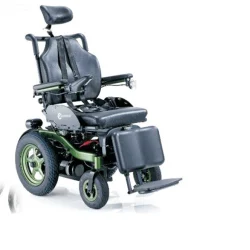
Advanced Reclining Power Wheelchair Technology

Synchronized Dual-Actuator Motor Mechanics

Modern clinical recline chairs utilize micro-processor controlled dual linear actuators. When the user initiates a backrest recline command via the joystick interface, the controller automatically adjusts the elevating footrest angle in a synchronized motion curve. This maintains ideal biomechanical trunk-to-thigh positioning, preventing hip joint pinching and fluid accumulation in lower extremities.

Furthermore, electronic limit switches and current-overload sensors stop actuator movement instantly if resistance is detected, guaranteeing patient safety during autonomous operation.

Advanced Brushless DC (BLDC) Motors & Electromagnetic Intelligent Braking

Traditional brushed motors suffer from mechanical friction, carbon brush wear, and thermal inefficiencies. Nuk Healthcare's updated commercial lineup features high-efficiency Brushless DC (BLDC) Gearless or Planetary Motors. Coupled with Regenerative Electromagnetic Braking Systems, these power units automatically lock wheels when the joystick is released—even on 12-degree inclines—while feeding brake energy back into the lithium power pack to extend driving range by 12-15% per charge cycle.

Frequently Asked Questions by Global Buyers & Importers

Addressing core technical, financial, and logistical queries regarding B2B bulk orders of Reclining Power Wheelchairs.

What is the Minimum Order Quantity (MOQ) and sample evaluation process for wholesale orders?

At Nuk Healthcare, our standard Minimum Order Quantity (MOQ) for commercial B2B procurement of Reclining Power Wheelchairs is 5 units for standardized models. However, for initial distributor evaluation, hospital trials, or OEM customization samples, we accommodate 1-unit sample orders. Sample build times typically range from 7 to 10 working days, with expedited air freight or ocean container consolidation available from Mumbai ports.

How does Nuk Healthcare ensure international regulatory compliance for hospital tenders?

All our power wheelchairs are manufactured in facilities complying with ISO 13485 quality management standards. Products are certified under CE MDD/MDR directives, testing compliance with ISO 7176 (wheelchair dynamics, static stability, and impact resistance) and IEC 60601-1-2 (electrical & electromagnetic safety). Full technical documentation packs (Technical Dossier, Declaration of Conformity, Test Reports) are provided for hospital tender submissions.

What are the shipping logistics options, lead times, and HS Codes for international export?

We operate with an active Import Export Code (IEC: 0308057023) from Mumbai, India. We offer FOB, CIF, CFR, and DDP terms via Nhava Sheva (JNPT) Port or Air Cargo Hubs. Standard production lead time for FCL (Full Container Load) orders of 20ft/40ft containers is 20 to 30 calendar days. The global Harmonized System (HS) code for powered wheelchairs is 8713.90.10 (Carriages for disabled persons, motorized or otherwise mechanically propelled).

Can we request custom branding, specific colors, and OEM controller modifications?

Yes. Nuk Healthcare provides full OEM/ODM manufacturing services. Distributors can request private-label branding, customized frame powder coating (e.g., metallic silver, matte black, ocean blue), custom upholstery embroidery, and specific joystick controller algorithms (such as PG VR2, PG R-Net, or Dynamic LiNX). Customized seat dimensions from 14-inch pediatric to 24-inch bariatric builds are also supported.

What warranty terms, spare parts support, and technical training do you offer B2B clients?

We provide a 2-Year Structural Warranty on main wheelchair frames and a 1-Year Warranty on electrical components (actuators, controllers, motors, chargers). We supply a dedicated 2% spare parts kit (joysticks, wiring harnesses, anti-tip wheels) free of charge with volume container orders. Furthermore, our technical engineering team provides video troubleshooting, remote diagnostic training, and detailed technical service manuals to distributor service teams.

How do Reclining Power Wheelchairs perform on uneven terrain and outdoor ramps?

Models like the Vermeiren Forest 3 and Nuk Commercial Heavy-Duty Series are engineered with independent suspension springs, anti-tip rear safety wheels, and high-torque motors capable of climbing 10° to 12° gradients smoothly. Ground clearances of 80mm to 100mm and pneumatic rear traction tires ensure smooth transit across grass, gravel, and uneven pavement while keeping the center of gravity stable during backrest recline.

Nuk Healthcare Enterprise Advantages & Supply Chain Leadership

15+ Years of Proven Excellence in Global Medical Equipment Supply, Import, and Commercial Distribution.

Headquartered in Goregaon East, Mumbai, Maharashtra, Nuk Healthcare (Est. 2009) has earned an outstanding reputation as a premier supplier, importer, and B2B distributor of specialized rehabilitation devices, electronic wheelchairs, and emergency transfer equipment.

Our expansive global footprint spans over 1,000+ satisfied institutional clients, hospital networks, government care units, and wholesale equipment distributors across North America, Europe, the Middle East, Africa, and Asia-Pacific. Sourcing directly from certified world-class manufacturers—including Karma Healthcare, Vermeiren, Invacare, and Antano Group—we guarantee unmatched build quality and competitive trade pricing.

  • Import/Export License (IEC): 0308057023
  • GST Tax Registration: 27AAQPK2858J1Z4
  • ISO Compliance: Certified Quality System Assurance
  • Inventory Depth: Over 500+ Active SKUs Ready for Dispatch
  • Verified Rating: 4.1 Stars out of 5 based on 88 B2B Reviews

Request a Commercial Wholesale Quote Today

Partner directly with Nuk Healthcare for your next hospital tender or wholesale inventory restocking. Click below to initiate instant live assistance with our Senior B2B Sales Directors.