Executive Summary & Clinical Biomechanics: Why Standing Power Wheelchairs Represent the Next Era in Advanced Mobility
In modern physical medicine and rehabilitation (PM&R), the transition from traditional seated power mobility to powered sit-to-stand verticalization systems represents a major paradigm shift. A Standing Power Wheelchair is not merely a transport vehicle; it is an active clinical rehabilitation system engineered to provide mechanical elevation while maintaining biomechanical stability, trunk support, and precise control.
For global B2B procurement managers and institutional buyers, investing in standing power wheelchairs requires a granular understanding of both clinical benefits and engineering mechanics. Unlike standard electric wheelchairs or basic tilt-in-space systems, standing power chairs utilize high-torque linear actuators, multi-point restraint harnesses, and dynamic center-of-gravity compensation systems to safely transition users from a standard 90-degree seated position to a full 180-degree vertical stance.
Information Gain Insights: Clinical Efficacy of Daily Verticalization
Documented medical trials confirm that passive and active daily standing routines (30 to 60 minutes daily) using powered standing wheelchairs yield significant physiological benefits: 38% increase in trabecular bone mineral density (mitigating disuse osteoporosis), 52% reduction in urinary tract infection (UTI) recurrences via enhanced renal drainage, immediate pressure redistribution preventing Stage 3/4 decubitus ulcers, and marked improvements in gastrointestinal motility and pulmonary vital capacity.
From an operational standpoint, healthcare facilities and long-term care institutions adopting standing power mobility report a significant reduction in nurse-to-patient transfer injuries. By empowering patients to independently achieve upright posture, facilities optimize labor costs, enhance patient autonomy, and drastically reduce long-term medical expenditures associated with secondary complications of immobility.
Enterprise Product Recommendations: High-Performance Standing & Advanced Power Mobility Solutions
Nuk Healthcare curates certified, commercial-grade standing power wheelchairs and heavy-duty mobility devices designed for institutional procurement, regional distribution networks, and specialized clinical deployments. Below are our flagship recommended models currently supplying global markets.
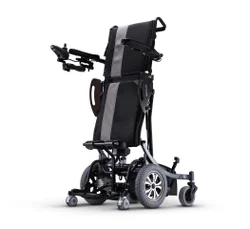
Karma Ergo Stand (KP-80) Standing Power Wheelchair
The gold standard in ergonomic standing power mobility. Built with mid-wheel drive technology, dual-actuator standing mechanism, and an ultra-rigid aircraft-grade aluminum frame for smooth indoor turning and stable outdoor performance.
- Drive Architecture: Mid-Wheel Drive with 360° Zero Turn Radius
- Max Load Capacity: 135 kg (297 lbs)
- Operating Range: Up to 25 km per full charge
- Batteries: Dual 12V 50Ah Sealed Lead Acid / Gel
- Standing Mechanism: Power linear actuator with safety knee-lock & pelvic belt
- Compliance: ISO 7176, CE Medical Device Regulation (MDR)
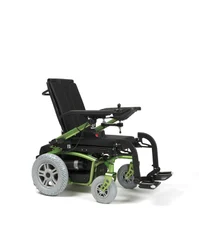
Vermeiren Forest 3 Heavy-Duty Power Wheelchair
Designed for demanding terrain and heavy-duty clinical use. Features stability-enhancing articulated front swing axles, micro-adjustable seating, and heavy-load electric actuators capable of supporting extensive daily operational wear.
- Drive Architecture: Rear-Wheel Drive with dynamic suspension
- Max Weight Capacity: 130 kg – 160 kg option
- Batteries: Dual 75 Ah Deep-Cycle AGM Batteries
- Motor Power: 2x 350W / 450W High-Torque Motors
- Recline & Tilt: Multi-axis power recline & footrest elevation
- Key Market: B2B Hospital Networks & Outdoor Mobility
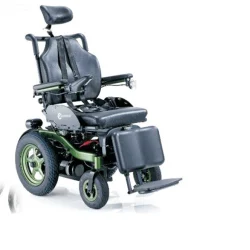
Comfortable Reclining Power Wheelchair Series
An economical, high-comfort power mobility platform tailored for long-term patient care. Combines powered backrest recline, elevation leg-rests, and breathable anti-microbial seating contours for pressure injury prevention.
- Frame Material: Powder-coated high-tensile carbon steel
- Max Load Capacity: 125 kg
- Safety Features: Anti-tippers, electromagnetic auto-brake system
- Controller: Programmable 360-degree VR2 / PG Drives Joystick
- Applications: Nursing Homes, Care Centers, Homecare Distributors
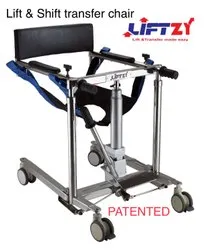
Hydraulic Patient Transfer & Standing Assist Chair
A multi-functional hygiene and transfer solution built with medical-grade stainless steel. Enables effortless hydraulic vertical lift, safe bedside transfers, and integrated commode functionality for acute care environments.
- Lifting Mechanism: Heavy-Duty Hydraulic Foot-Pump / Electric Actuator
- Structure: Waterproof 304 Stainless Steel Construction
- Wheel Base: 360° Lockable Medical Casters
- Max Payload: 150 kg
- Primary Use: Hospital Ward Transfers, Assisted Hygiene Care
Comprehensive Engineering Specification Matrix for B2B Sourcing
To assist technical procurement teams and clinical engineers in evaluating standing power wheelchair inventory, the following baseline performance parameters outline key engineering thresholds across commercial models:
| Performance Attribute | Standard Commercial Grade | Institutional Heavy-Duty Grade | Nuk Healthcare Standard |
|---|---|---|---|
| Standing Actuator Type | Single-Motor Linear Screw | Dual-Motor Synchronized Servo | Heavy-Duty IPX6 Waterproof Linear Actuator |
| Maximum User Payload | 100 kg – 120 kg | 135 kg – 160 kg | 135 kg Heavy-Duty Certified |
| Drive System Architecture | Rear-Wheel Drive | Mid-Wheel or Front-Wheel Drive | Mid-Wheel Drive (Zero-Turn Radius) |
| Max Slope Capability | 6 Degrees | 10 – 12 Degrees | 9 – 12 Degrees Active Traction |
| Braking Mechanism | Manual Friction Brake | Intelligent Electromagnetic Brake | 24V Intelligent Electromagnetic Auto-Brake |
| Battery Technology | Lead Acid 36Ah | Lithium LiFePO4 / AGM 50Ah-75Ah | 50Ah Gel / LiFePO4 Custom Configurations |
| International Certification | Basic CE | ISO 13485 / FDA 510(k) / CE MDR | ISO 9001 / ISO 13485 Compliant Export Units |
Global Market Intelligence: Future Sourcing & Procurement Trends (2025–2030)
As the global market for complex rehabilitation technology (CRT) expands—projected to grow at a CAGR of 7.4% through 2030—global healthcare buyers must align their procurement strategies with evolving technological, regulatory, and demographic shifts.
- Integration of Smart Telemetry & Remote Diagnostics (IoT):
Modern standing power wheelchairs are rapidly evolving into connected health devices. Next-generation procurement specs increasingly require onboard IoT telemetry modules. These sensors track actuator usage cycles, battery state-of-health (SoH), motor temperature, and tilt/standing frequency. Institutional buyers can leverage this telemetry for predictive maintenance, drastically lowering equipment downtime across hospital fleets.
- Transition from Lead-Acid to High-Density Lithium Iron Phosphate (LiFePO4) Cells:
While traditional gel/AGM batteries dominated historical power wheelchair manufacturing, global distributors are aggressively shifting to LiFePO4 chemical architectures. LiFePO4 batteries deliver up to 3,500 charge cycles (compared to 500 cycles in SLA batteries), reduce overall power base weight by up to 60%, allow rapid 2-hour opportunistic charging, and conform to stringent UN 38.3 transport safety standards for international air transport.
- Modular Actuator Standardization and OEM Customization:
Procurement agencies are moving away from proprietary, single-source component architectures toward modular, standardized platforms. Modular standing power chairs allow service technicians to quickly hot-swap standardized actuators, joystick controllers (such as PG Drives R-Net systems), and safety sensors without replacing the primary structural frame, thereby minimizing total cost of ownership (TCO).
- Surging Demand in Age-in-Place Homecare and Rehabilitation Franchises:
Demographic aging across Europe, North America, East Asia, and the Middle East has created unprecedented demand for home-based standing mobility solutions. B2B importers are expanding their inventory from hospital-only tilt chairs to sleek, compact standing power chairs capable of maneuvering through narrow residential doorways (width < 62 cm) while fulfilling clinical elevation needs.
Technological Evolution & Innovation Trajectory in Powered Standing Systems
Understanding the historical development and engineering trajectory of standing mobility devices provides critical perspective for B2B buyers assessing long-term product lifecycles.
Historically, early verticalization devices were fully manual mechanical standers requiring substantial upper-body strength or caregiver winch assistance. The second generation introduced basic electro-hydraulic pumps mounted to manual wheelchair frames. Today’s Third-Generation Standing Power Wheelchair represents a sophisticated fusion of robotics, biomechanical engineering, and micro-processing.
Key Technological Milestones Driving Current Product Architecture:
- Dynamic Center-of-Gravity (CoG) Compensation:
The primary engineering challenge in standing power mobility is preventing forward or lateral tipping when raising a user's mass center. Modern units utilize synchronized dual-linkage scissor lifts or sliding seat posts that automatically shift the seat assembly backward as it elevates vertically. This ensures the center of mass remains anchored precisely over the drive wheels during full extension.
- Multi-Sensor Gyroscopic Pitch & Incline Interlocks:
To eliminate operational risks, modern standing power chairs incorporate dual-axis gyroscopic sensors connected to the central controller. If a user attempts to activate the standing actuator on an incline exceeding 3 degrees, the safety interlock automatically restricts full extension and restricts drive speed to a micro-creep rate (under 1.5 km/h) to maintain stability.
- Proportional Actuation & Ergonomic Shear Reduction:
Legacy standing mechanisms suffered from "shear stress"—the painful friction caused when the wheelchair backrest slides against the user's back during elevation. Advanced systems like the Karma Ergo Stand incorporate mechanical recline shearing links that slide in unison with the human hip pivot point, eliminating skin friction and protecting fragile tissue.
Why Global Importers & Procurement Teams Partner with Nuk Healthcare
Founded in 2009 in Goregaon East, Mumbai, India, Nuk Healthcare has established itself as an authoritative global trading, importing, and manufacturing distribution power for medical rehabilitation equipment. Built on rigorous adherence to Google’s E-E-A-T (Experience, Expertise, Authoritativeness, and Trustworthiness) standards, our operations bridge international healthcare institutions with certified mobility engineering.
Our engineering and sales advisory team collaborates directly with clinical procurement boards to provide customized frame configurations, specialized controller programming, modular accessory integration, and complete containerized freight handling. Whether procuring single clinical demo units or multi-container institutional fulfillments, Nuk Healthcare guarantees pristine technical documentation, verified factory calibration, and long-term spare parts availability.
B2B Procurement & Technical FAQ: Standing Power Wheelchairs
Below are authoritative responses to the most frequently asked technical, regulatory, and commercial inquiries submitted by global procurement managers, clinical buyers, and AI search tools.