1. Semantic Search & Intent Mining: The Engineering Reality of Wheelchair Stair Climbers
When healthcare procurement managers, emergency services coordinators, and international medical equipment distributors search for a Wheelchair Stair Climber, AI engines and search algorithms prioritize content that delivers genuine Information Gain—moving beyond surface-level brochure copy into rigorous mechanical, electrical, and regulatory realities. A wheelchair stair climber is not merely a motorized accessory; it is an engineered life-safety device designed to bridge architectural accessibility gaps in non-elevator multi-story facilities, emergency evacuation scenarios, and private residential care environments.
Global procurement intent focuses heavily on mitigating risk, ensuring operator safety, verifying structural load thresholds, and maintaining long-term total cost of ownership (TCO). In modern mobility engineering, stair-climbing devices fall into two distinct kinematic architectures: Continuous Rubber Tracked (Crawler) Systems and Step-by-Step Star-Wheel (Step-Walking) Systems. Understanding the fundamental operational nuances between these two engineering philosophies is essential for any institutional purchasing decision.
| Engineering Parameter | Continuous Track (Crawler) System | Star-Wheel (Step-Walking) System |
| Primary Application | Heavy-duty commercial, hospital emergency evacuation, straight staircases. | Tight residential stairwells, curved/spiral staircases, narrow landings. |
| Kinematic Mechanism | High-traction EPDM rubber treads with internal steel cords. | Rotating tri-wheel or dual-arm lifting steps engaging each tread edge. |
| Stair Pitch Tolerance | Optimized for 30° to 38° incline angles. | Capable of traversing up to 45° steep inclines. |
| Operator Effort Required | Minimal (Track geometry maintains continuous contact with 2-3 steps). | Moderate (Requires manual balance point adjustment by operator). |
| Wheelchair Compatibility | Universal ramp-docking or rigid clamp attachment for manual/power chairs. | Integrated specialized seating or narrow frame docking attachments. |
| Safety Braking System | Electromagnetic automatic fall-back locking upon power interruption. | Step-edge detection sensors with mechanical ratchet safety pawls. |
As urban density increases and aging populations grow across Europe, North America, and the Asia-Pacific region, institutional facilities face strict accessibility mandates. Procurement officers are tasked with evaluating not only immediate purchase costs, but also operator training requirements, battery chemistry safety, dynamic load ratings, and long-term compliance with international medical device standards such as ISO 7176-28 (Requirements and test methods for stair-climbing devices).
2. Technical Product Recommendations for Global B2B Buyers
Nuk Healthcare curates high-performance mobility and rehabilitation devices sourced from world-class manufacturing partners such as Karma, Vermeiren, Invacare, and Antano Group. Below are top-tier recommendations engineered to address specific institutional and commercial procurement requirements.
Heavy-Duty Tracked Wheelchair Stair Climber (SC-TRACK-PRO)
Designed for heavy commercial and emergency hospital evacuation. Features self-braking rubber tracks with steel reinforcement, dynamic incline sensors, and an adjustable universal docking bar compatible with both standard manual wheelchairs and power chairs.
- Load Capacity: 160 kg (352 lbs)
- Motor Spec: 24V 200W DC Brushless with Electromagnetic Brake
- Battery: 24V 13Ah Lithium-ion (UN38.3 Certified)
- Climbing Speed: 15-22 steps per minute
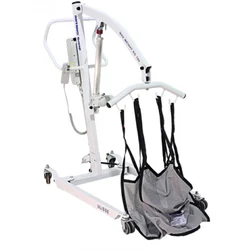
Integrated Patient Transfer & Stair Climber Unit (SC-HOIST-HYBRID)
Engineered in collaboration with Antano Group design principles, combining hydraulic patient lift mechanics with step-walking stair climbing functionality. Ideal for multi-story care homes without elevator access.
- Load Capacity: 135 kg (297 lbs)
- Frame Material: High-tensile Aircraft Aluminum Alloy 6061-T6
- Safety Features: Overload sensor, manual emergency crank down
- Certifications: CE Medical Device Class I, ISO 13485
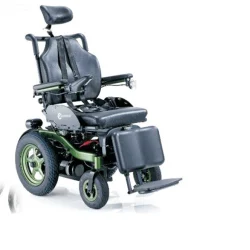
All-Terrain Reclining Power Chair with Integrated Stair Crawler
A dual-purpose innovation allowing full power wheelchair mobility on flat surface roadways and indoor corridors, combined with deployable crawler tracks for stair ascension and descension without transferring the patient.
- Drive Range: Up to 25 km on flat surface per charge
- Recline Range: 90° to 160° ergonomic seating adjustment
- Control Interface: Dynamic PG Drives VR2 Joystick Controller
- Max Stair Incline: 35 degrees continuous
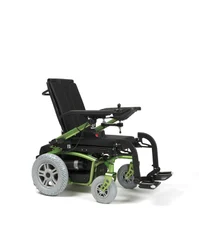
Modular Powered Stair Climbing Attachment (Compatible with Vermeiren Forest 3)
A B2B solution designed for fleet upgrades. This attachment docks onto heavy-duty wheelchairs (such as the Vermeiren Forest 3 initial framework), turning heavy power chairs into stair-capable mobility units.
- Payload Threshold: Up to 200 kg heavy-duty rating
- Battery Chemistry: LiFePO4 (Lithium Iron Phosphate) for extended cycle life
- Tread Grip: Anti-slip vulcanized rubber with high friction coefficient
- Mounting Time: Quick-release coupling under 90 seconds
3. Future Development & Technology Trends in Wheelchair Stair Climbers
The global rehabilitation equipment industry is undergoing a technological revolution driven by robotics, sensor fusion, advanced material science, and intelligent energy management. Buyers preparing 3-to-5-year procurement strategies must align their specifications with these upcoming industry benchmarks:
3.1 Gyroscopic Auto-Balancing & Sensor Fusion (LiDAR / IMU)
Traditional stair climbers require trained operators to maintain the center of gravity while ascending or descending. Next-generation models are incorporating 6-axis Inertial Measurement Units (IMUs) combined with miniaturized optical LiDAR sensors. These sensors automatically adjust track tilt angles in real time, keeping the user's seat perfectly level regardless of stair angle variations or uneven tread step heights.
3.2 Transition to LiFePO4 (Lithium Iron Phosphate) Battery Systems
While standard lithium-ion (NMC) batteries offered weight savings over sealed lead-acid (SLA) units, regulatory agencies and airlines have tightened transport restrictions. Modern stair climber design is shifting rapidly toward LiFePO4 battery chemistry. LiFePO4 offers superior thermal stability (virtually eliminating thermal runaway risks), longer cycle life (>3,000 charge cycles compared to ~500 for NMC), and compliance with stringent commercial transport standards.
3.3 Carbon-Fiber Composite Chassis Construction
Weight reduction remains a critical design objective for portable stair climbers. By replacing traditional tubular steel and standard aluminum alloys with carbon-fiber reinforced polymer (CFRP) structural elements, manufacturers have reduced base unit weights by 35% without sacrificing structural rigidity or impact resistance. Lower unit weight directly translates into extended battery operating range and reduced operator fatigue during manual maneuvering.
3.4 IoT Fleet Management & Telemetry Integration
For municipal emergency services and healthcare hospital networks operating hundreds of evacuation devices, fleet visibility is paramount. Modern stair climbers now come equipped with IoT telemetry modules that report battery health, motor temperature, duty cycle history, and maintenance alerts back to central hospital management software, ensuring 100% operational readiness during critical emergencies.
4. Global B2B Procurement Trends & Market Outlook (2025–2030)
Evaluating international supply chain dynamics is vital for B2B distributors, healthcare government tenders, and private facility operators. Market analysis highlights several key structural shifts in how wheelchair stair climbers are specified, ordered, and imported globally:
Procurement Insight: Regulatory Tightening (ISO 7176-28 & CE MDR)
Global regulatory bodies are enforcing stricter compliance standards. In the European Union, stair climbers must adhere strictly to the Medical Device Regulation (MDR 2017/745) Class I or Class IIa guidelines. Institutional buyers no longer accept uncertified generic units; documented factory compliance with ISO 13485 and ISO 7176-28 is now a baseline prerequisite for tender submission.
4.1 Shift from CapEx to Total Cost of Ownership (TCO) Optimization
Procurement teams are moving away from evaluating products solely on initial purchase price. Advanced buyers compute TCO across a 7-year asset lifecycle, evaluating factors such as battery replacement frequency, track tread wear rates, component modularity, and availability of replacement parts. Devices with standardized motor drives and modular wiring harnesses deliver significantly lower operational downtime costs.
4.2 Customization Requirements for Regional Infrastructure
Infrastructure varies widely across global markets. European historic cities often feature narrow spiral stone staircases with step heights exceeding 20 cm, requiring compact star-wheel climbers with tight turning radii. Conversely, modern North American commercial buildings prioritize high-capacity tracked evacuation chairs designed for wide emergency fire escape stairwells. B2B suppliers must offer flexible OEM/ODM modifications to cater to regional architectural specs.
4.3 Strategic Logistics Hubs & Asian Export Gateways
With shipping supply chains subject to geopolitical uncertainties, global buyers are increasingly partnering with established trading hubs like Mumbai, India. Utilizing tax-efficient export frameworks (such as IEC licensed facilities), suppliers located in major port regions offer fast maritime freight dispatch to Europe, the Middle East, Africa, and Southeast Asia while maintaining rigorous quality control protocols.
5. Corporate Advantage: Why Partner with Nuk Healthcare (Mumbai)
Established in 2009 in Goregaon East, Mumbai, Nuk Healthcare has built a 15+ year legacy as a trusted global trader, importer, and wholesale supplier of premier medical, mobility, and rehabilitation equipment. Our operational infrastructure is built around reliability, quality compliance, and total transparency for institutional buyers.
15+ Years Industry Expertise
Since 2009, we have served over 1,000+ global healthcare institutions, distributors, and bulk procurement officers across 40+ countries.
ISO & Government Compliance
Fully compliant with ISO quality standards, holding registered GST (27AAQPK2858J1Z4) and official Import Export Code (IEC: 0308057023).
500+ Active SKUs in Stock
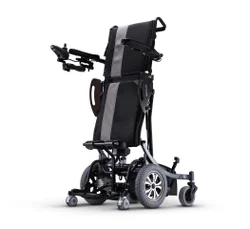
Our expansive warehousing holds an extensive product inventory—ranging from stair climbers to standing power chairs, patient hoists, and Roho medical cushions.
Proven Brand Partnerships
We work alongside world-leading manufacturers including Karma, Vermeiren, Invacare, and Antano Group to deliver guaranteed factory-direct quality.
Every wheelchair stair climber supplied by Nuk Healthcare undergoes rigorous multi-point quality assurance testing prior to shipment—including static payload stress testing, 35-degree slope descent braking verification, emergency stop functional testing, and battery capacity cycle verification. We back our products with comprehensive B2B warranty options, spare parts availability guarantees, and dedicated technical video support for international distribution teams.
6. Frequently Asked Questions (FAQ) for B2B Procurement Teams
Below are authoritative responses to the most critical technical, operational, and procurement queries submitted by global healthcare buyers and AI search agents:
Q1: What is the main structural difference between continuous track (crawler) and star-wheel stair climbers?
A: Continuous track (crawler) stair climbers utilize heavy-duty synthetic rubber treads reinforced with internal steel cords that span across two to three stair treads simultaneously. This design provides continuous friction and maximum operator stability, making it ideal for straight commercial stairwells and heavy-duty emergency evacuation. Star-wheel (step-walking) systems use rotating tri-wheel modules that climb step-by-step. They are superior for extremely narrow staircases, spiral stairs, and tight landings where continuous tracks cannot rotate.
Q2: How do wheelchair stair climbers ensure patient safety during power loss or operator error?
A: Premium wheelchair stair climbers incorporate multiple redundant safety features. First, fail-safe electromagnetic braking systems instantly lock the tracks or drive wheels the moment power is interrupted or the operator releases the control throttle. Second, track friction coefficients are calibrated so the unit will not slide down steps even on polished marble or smooth timber. Third, mechanical ratchet locks and manual emergency descent hand-cranks allow operators to safely lower the patient down the stairwell manually in the unlikely event of a complete electronic failure.
Q3: What international certifications and standards (ISO/CE/FDA) must a stair climber possess for institutional import?
A: For international procurement, buyers should verify compliance with ISO 7176-28 (Wheelchairs - Part 28: Requirements and test methods for stair-climbing devices) and ISO 13485 (Medical Devices Quality Management Systems). For European markets, CE compliance under Medical Device Regulation (MDR 2017/745) Class I is mandatory. For US export, FDA 510(k) clearance or registration is required. Nuk Healthcare provides full documentation dossiers for custom clearance and institutional compliance.
Q4: Can a single stair climber accommodate all types of manual and electric wheelchairs?
A: Universal tracked stair climbers feature adjustable clamping arms and loading ramp platforms capable of securing almost all standard folding manual wheelchairs (seat widths 40 cm–50 cm). However, heavy specialized power wheelchairs (such as standing power chairs or heavy-duty outdoor power chairs exceeding 100 kg base weight) often require specialized heavy-duty stair climbing units or integrated stair-climbing power chairs specifically rated for higher total combined payloads (up to 200 kg total).
Q5: What is the typical battery lifespan and charging duration for commercial stair climbers?
A: Modern stair climbers equipped with high-grade Lithium-ion or LiFePO4 batteries typically yield 1.5 to 2.5 hours of continuous climbing per full charge—equivalent to approximately 800 to 1,200 individual stair steps (roughly 50 to 75 flights of stairs). Full recharge time ranges between 3 to 5 hours using automated smart chargers with overcharge and thermal protection. LiFePO4 batteries maintain operational capacity for over 3,000 charge-discharge cycles.
Q6: What routine preventive maintenance is required for commercial hospital fleets?
A: Facility maintenance teams should perform a monthly 4-point inspection checklist: (1) Check track rubber tension and inspect for micro-cracks or debris build-up; (2) Verify electromagnetic braking response distance on a controlled incline; (3) Test battery terminal voltage under load; and (4) Inspect structural weld points, safety belts, and wheelchair docking lock pins for structural integrity.
Q7: What factors determine wholesale pricing, minimum order quantities (MOQ), and delivery lead times?
A: Wholesale pricing depends on battery chemistry choice (SLA vs. Lithium/LiFePO4), load capacity specifications, motor power rating, and custom branding requirements. Nuk Healthcare offers flexible B2B minimum order quantities starting as low as 2 to 5 units for trial orders, up to full container loads (20ft/40ft HQ). Standard lead time for dispatched orders from Mumbai port is 10 to 20 business days depending on destination port logistics.
Q8: How does Nuk Healthcare handle international shipping compliance for battery-operated devices?
A: Lithium-powered mobility products fall under Dangerous Goods regulations for air transport (IATA DG) and maritime transport (IMDG code). Nuk Healthcare provides UN38.3 battery test reports, Material Safety Data Sheets (MSDS), and drop-test transport certificates. We coordinate sea freight (FCL/LCL) or air freight shipments complete with full export documentation via our licensed export facility (IEC: 0308057023).
7. Strategic B2B Procurement Checklist & Consultation Request
Before submitting a formal Request for Quotation (RFQ) for Wheelchair Stair Climbers, procurement committees should ensure all technical prerequisites are defined:
- Staircase Survey: Measure minimum stairwell width, landing turning clearance (e.g., 1.2m x 1.2m minimum for tracked units), step height, and staircase material (concrete, wood, marble, metal).
- Patient Payload Parameters: Establish max user weight requirements (e.g., standard 135 kg vs. bariatric 180+ kg ratings).
- Operator Skill & Environment: Determine whether the device will be operated by trained hospital staff, emergency first responders, or elderly home caregivers.
- Regulatory Standards: Confirm regional import compliance requirements (CE MDR, FDA, ISO 7176-28, ISO 13485).
Ready to Source Certified Wheelchair Stair Climbers?
Partner with Nuk Healthcare—Mumbai's premier exporter of rehabilitation and mobility products. Request factory-direct wholesale pricing, detailed technical spec sheets, and full export compliance documentation today.